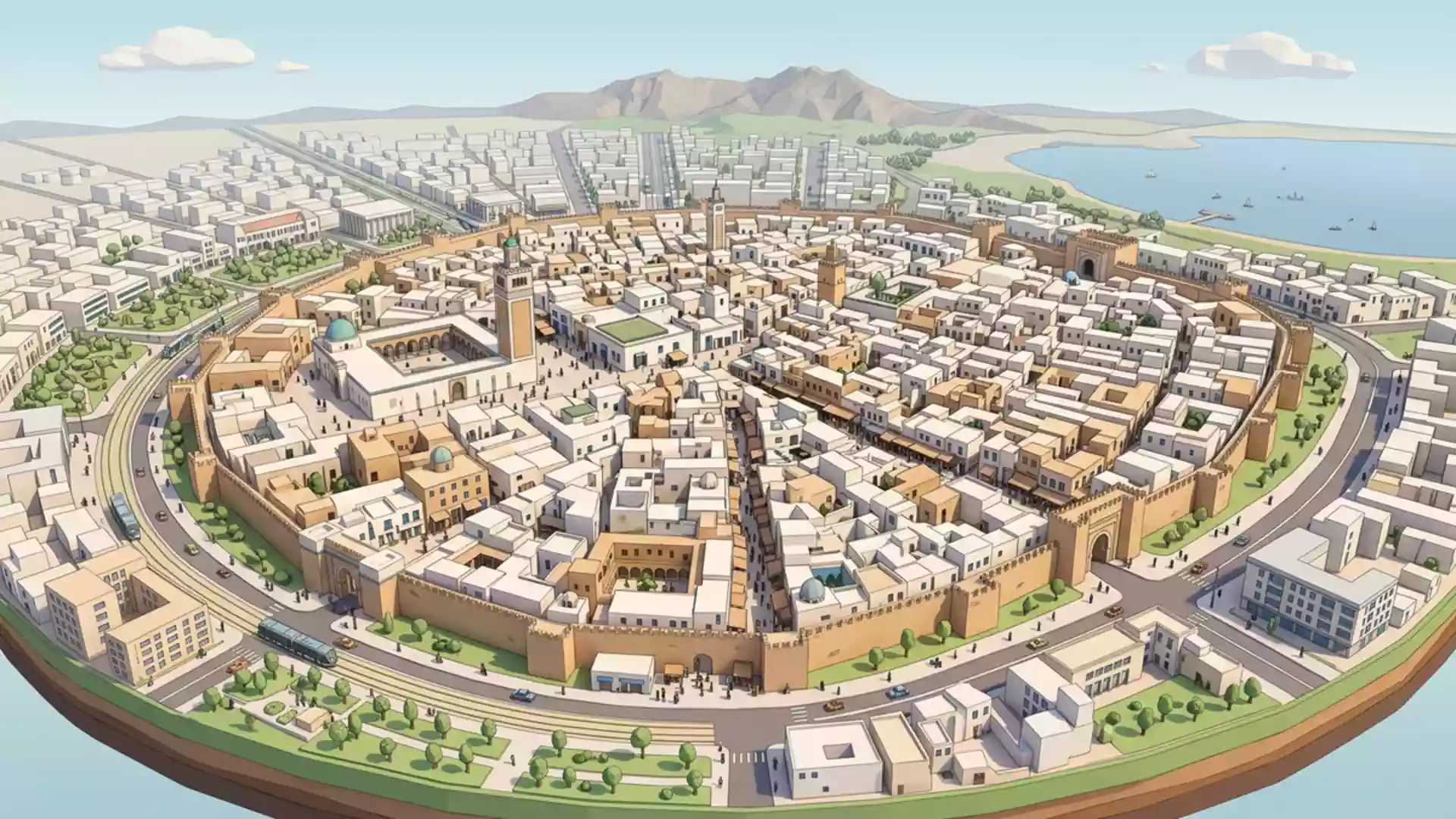
Ministry lists two Tunis Medina monuments on 30 October
Published on 10/31/2026 at 12:32 | Editorial responsibility: Rafael Müller, Editor-in-Chief AD HOC NEWSNew heritage recognition
- The Ministry of Cultural Affairs announced the listing of Dar Hussein and Tourbet of the Husseinite Beys on 30 October 2026.
- The ALECSO register is intended to support documentation, restoration and expert cooperation for the two monuments.
- Tunis Medina has been on the UNESCO World Heritage List since 1979 and contains about 700 historic monuments.
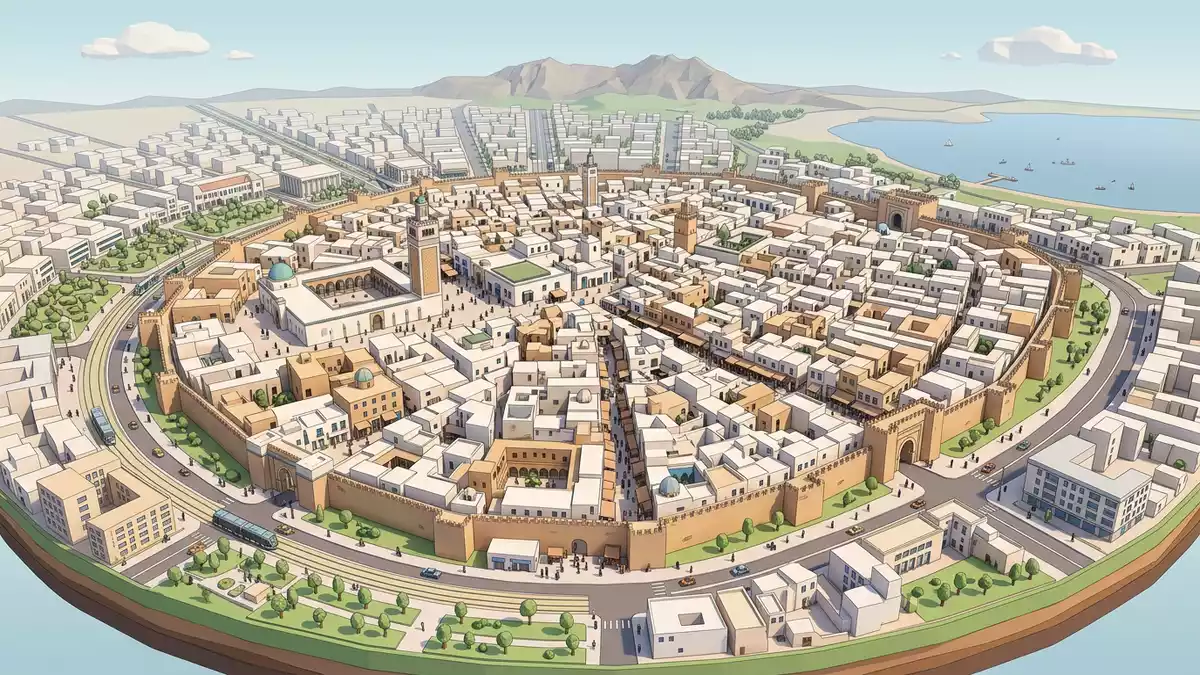
The Ministry of Cultural Affairs announced a new heritage listing for two monuments in Tunis Medina (Médina de Tunis) on 30 October 2026. Dar Hussein palace and the Tourbet of the Husseinite Beys were added to the Register of Architectural and Urban Heritage in Arab Countries, giving travellers a current reason to place the historic quarter on a Tunis itinerary.
Two Tunis Medina monuments enter an Arab heritage register
The announcement came during the eleventh session of the Observatory of Architectural and Urban Heritage in Arab Countries. The session took place at the headquarters of the League of Arab States in Cairo from 25 to 27 October 2026. The Ministry of Cultural Affairs was the announcing authority, while the register belongs to the Arab League Educational, Cultural and Scientific Organisation, known as ALECSO.
The two entries are Dar Hussein and the Tourbet of the Husseinite Beys. The official announcement describes both as prominent buildings in the historic quarter. The ministry announcement places the listing on 30 October 2026 and names the two monuments in the same report.
Recognition links Dar Hussein and Tourbet el-Bey
Dar Hussein is a palace associated with the traditional architecture of Tunis. The Tourbet of the Husseinite Beys is a funerary monument linked to the Husseinite period. Their shared listing connects a residential palace and a funerary site within one recognition of the quarter's architectural range.
The ministry said the registration is intended to strengthen preservation through documentation and restoration programmes, together with scientific exchanges coordinated by ALECSO. It therefore gives the announcement a conservation dimension beyond a ceremonial distinction. For visitors, the practical result is a clearer heritage context for two named sites already embedded in the urban fabric.
Tunis Medina remains a dense World Heritage ensemble
UNESCO inscribed the historic quarter on the World Heritage List in 1979. Its heritage property includes the eighth-century central medina, thirteenth-century neighbourhoods to the north and south, and about 700 historic monuments. The documented ensemble includes palaces, mosques, mausoleums, madrasas and fountains.
UNESCO identifies Tunis as one of the first Arab-Muslim towns of the Maghreb, with origins recorded in 698. Under the Almohads and Hafsids, from the twelfth to the sixteenth centuries, the city became one of the major and wealthiest centres of the Islamic world. UNESCO's urban heritage record describes narrow, twisting streets, courtyard houses, city-wall remains and markets such as Souq el-Attarine.
Why the 2026 listing matters for the historic quarter
The 30 October 2026 decision adds a regional heritage register to the quarter's existing international status. Dar Hussein and the Tourbet of the Husseinite Beys can consequently be read within two overlapping preservation frameworks, one global and one Arab regional.
The decision also reflects the range of places encountered on foot through the old city. Palaces, religious buildings, funerary monuments, markets and residential courtyards occupy a compact historic fabric. The two newly listed monuments are therefore not isolated attractions but parts of a wider protected urban landscape.
Visiting Tunis Medina: what travellers from Western Europe should know
- The heritage listing was announced on 30 October 2026 and concerns Dar Hussein and the Tourbet of the Husseinite Beys in Tunis Medina.
- The announcement covers heritage recognition and preservation cooperation; it does not announce a new entrance, closure or revised access rule.
- Visitors encounter narrow, twisting streets, courtyard buildings, markets and remains of historic city walls, as recorded by UNESCO.
- Tunisia's official language is Arabic and its national currency is the Tunisian dinar.
Searching for Tunis Medina on social platforms
These links open searches for Tunis Medina on each platform.
Frequently asked questions about Tunis Medina
What happened at Tunis Medina on 30 October 2026?
The Ministry of Cultural Affairs announced that Dar Hussein and the Tourbet of the Husseinite Beys had been added to the Register of Architectural and Urban Heritage in Arab Countries.
Where is Tunis Medina and how do you get there?
It is the historic quarter of Tunis in Tunisia. UNESCO places it in north-eastern Tunisia, a few kilometres from the sea.
What is Tunis Medina?
It is a historic urban ensemble inscribed on the UNESCO World Heritage List in 1979. The property includes about 700 monuments and urban elements such as markets, courtyard houses and city-wall remains.