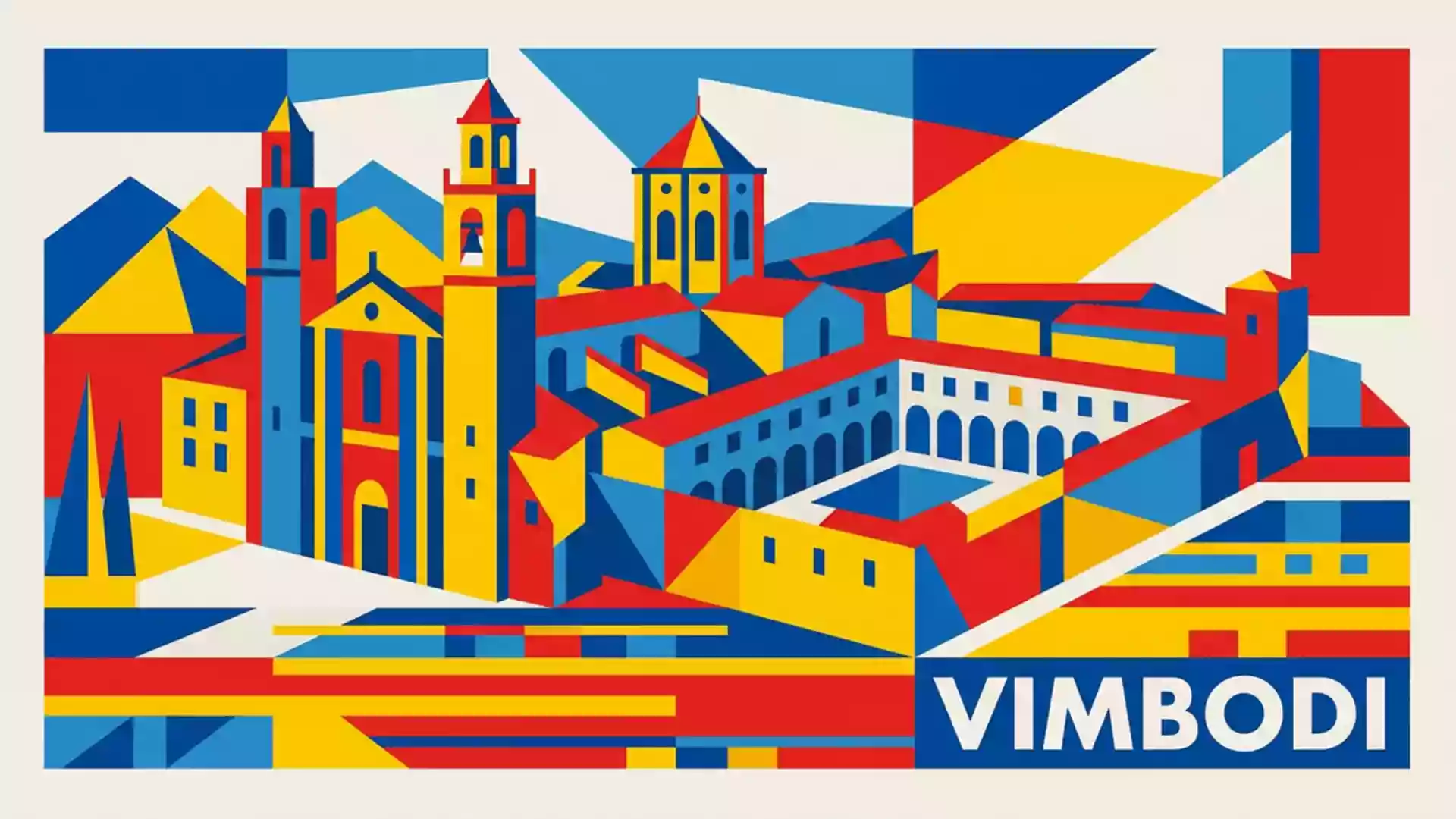
Monestir de Poblet, a stone-built Cistercian world of walls and cloisters
Published on 08/30/2026 at 15:06 | Editorial responsibility: Rafael Müller, Editor-in-Chief AD HOC NEWS
Monestir de Poblet near Vimbodi in Catalonia is a Cistercian monastery built in stone, enclosed by fortified walls and dominated by a church surrounded by cloisters and communal buildings. Founded in the twelfth century and later shaped through the thirteenth to fifteenth centuries, it became a royal burial place for the Crown of Aragon and is recognised as a UNESCO World Heritage Site.
Stone, walls and the enclosed monastic world
Monestir de Poblet is formally known as the Royal Abbey of Santa Maria de Poblet, a Cistercian monastery at the foot of the Prades Mountains in the Conca de Barberà region of Catalonia.Royal Abbey of Santa Maria de Poblet The complex stands on largely level ground at the eastern edge of the municipality of Vimbodí i Poblet, with cultivated fields and the wooded Poblet forest close by.situat a l’extrem de llevant del terme municipal de Vimbodí This setting gives the monastery a rural character, separate from dense urban streets and framed by the low foothills of the Prades range.
The abbey’s core is a thirteenth-century church built in a sober Cistercian style, surrounded by cloisters, dormitories, refectories and workshops arranged inside a single walled precinct.built in the 12th to 15th centuries around a church that dates to the 13th century Thick defensive walls, gateways and towers give the ensemble a fortified profile, marking a clear boundary between the monastic interior and the surrounding countryside.fortified royal residence Within those walls, stone construction dominates: façades, cloister arcades, pavements and tombs are all carried by masonry, creating a continuous palette of pale, weathered stone.
A medieval Cistercian foundation and royal pantheon
Monestir de Poblet is a Cistercian foundation dating from the mid-twelfth century, linked to the wider expansion of the order across Catalonia and the Iberian Peninsula.founded in 1151 The first community of monks arrived under the patronage of Ramon Berenguer IV, count of Barcelona, who granted the site and handed it to Cistercian monks from the French abbey of Fontfroide.founded by Ramón Berenguer IV of Barcelona and handed over to Cistercians in 1149 From this foundation, the monastery grew into a major religious and cultural centre.
The kings of the Crown of Aragon adopted Monestir de Poblet as a royal burial place from the later part of the fourteenth century until the end of the dynasty in the fifteenth century.panteão real da Coroa de Aragão Inside the church lie the tombs of monarchs of Catalonia and Aragon, making the abbey both a monastic house and a dynastic pantheon where stone effigies and heraldic decoration mark the burial places.contains the pantheon of the kings of Catalonia and Aragon The ensemble of church, cloisters and royal tombs gives the site a layered character: daily monastic life shared space with the memory of a medieval crown.
UNESCO World Heritage and the Cistercian route
Monestir de Poblet has been recognised as a cultural World Heritage Site since 1991, inscribed under criteria that highlight both its architectural quality and its role as an outstanding example of a monastic complex.Inscribed 1991 The World Heritage listing notes its scale and completeness, describing it as one of the largest and most complete Cistercian abbeys.one of the largest and most complete Cistercian abbeys in the world The protected area extends across around 18 hectares, covering the walled precinct and its immediate surroundings.Area: 18 hectares
Alongside this international recognition, Monestir de Poblet forms part of the Ruta del Cister, a cultural itinerary linking several major Cistercian monasteries in Catalonia.Forma parte de la Ruta del Cister Earlier in the twentieth century the complex had fallen into decay following nineteenth-century confiscations, but restoration began around 1930 and monastic life returned from 1940, re-establishing a living community within the historic walls.restauração iniciada em 1930 The combination of living monastic practice, royal tombs and fortified architecture is central to the monastery’s character.
Visiting Monestir de Poblet: what travellers from Western Europe should know
- Monestir de Poblet lies in the municipality of Vimbodí i Poblet in Tarragona province, Catalonia, and is reached by road, including the local T-700 route from nearby Espluga de Francolí.la carretera local T-700 mena al conjunt monumental
- The complex is enclosed by substantial stone walls, with gateways leading to courtyards, cloisters and long interior corridors, so a visit involves walking over stone surfaces and through vaulted spaces.
- The monastery stands on relatively level terrain at the foot of the Prades Mountains, with cultivated fields and the Poblet forest nearby, so views from the precinct take in both farmland and wooded slopes.al peu de l’anomenat bosc de Poblet, als darrers contraforts de la serra de Prades
- The official language in this part of Spain is Spanish alongside Catalan, and the national currency is the euro.
Searching for Monestir de Poblet on social platforms
These links open searches for Monestir de Poblet on each platform.
Frequently asked questions about Monestir de Poblet
Where is Monestir de Poblet?
Monestir de Poblet is in the municipality of Vimbodí i Poblet in Tarragona province, Catalonia, Spain, at the foot of the Prades Mountains.located at the foot of the Prades Mountains, in the comarca of Conca de Barberà
What can visitors expect on a visit?
Visitors encounter a walled Cistercian monastery built largely in stone, with a medieval church, cloisters, communal buildings and the tombs of kings of Aragon gathered inside one complex.austere, majestic monastery, which has a fortified royal residence and contains the pantheon of the kings of Catalonia and Aragon
What makes Monestir de Poblet distinctive?
Monestir de Poblet is distinctive as a large, enclosed Cistercian abbey that combines fortified architecture, a thirteenth-century church, royal tombs of the Crown of Aragon and World Heritage recognition.one of the largest and most complete Cistercian abbeys in the world