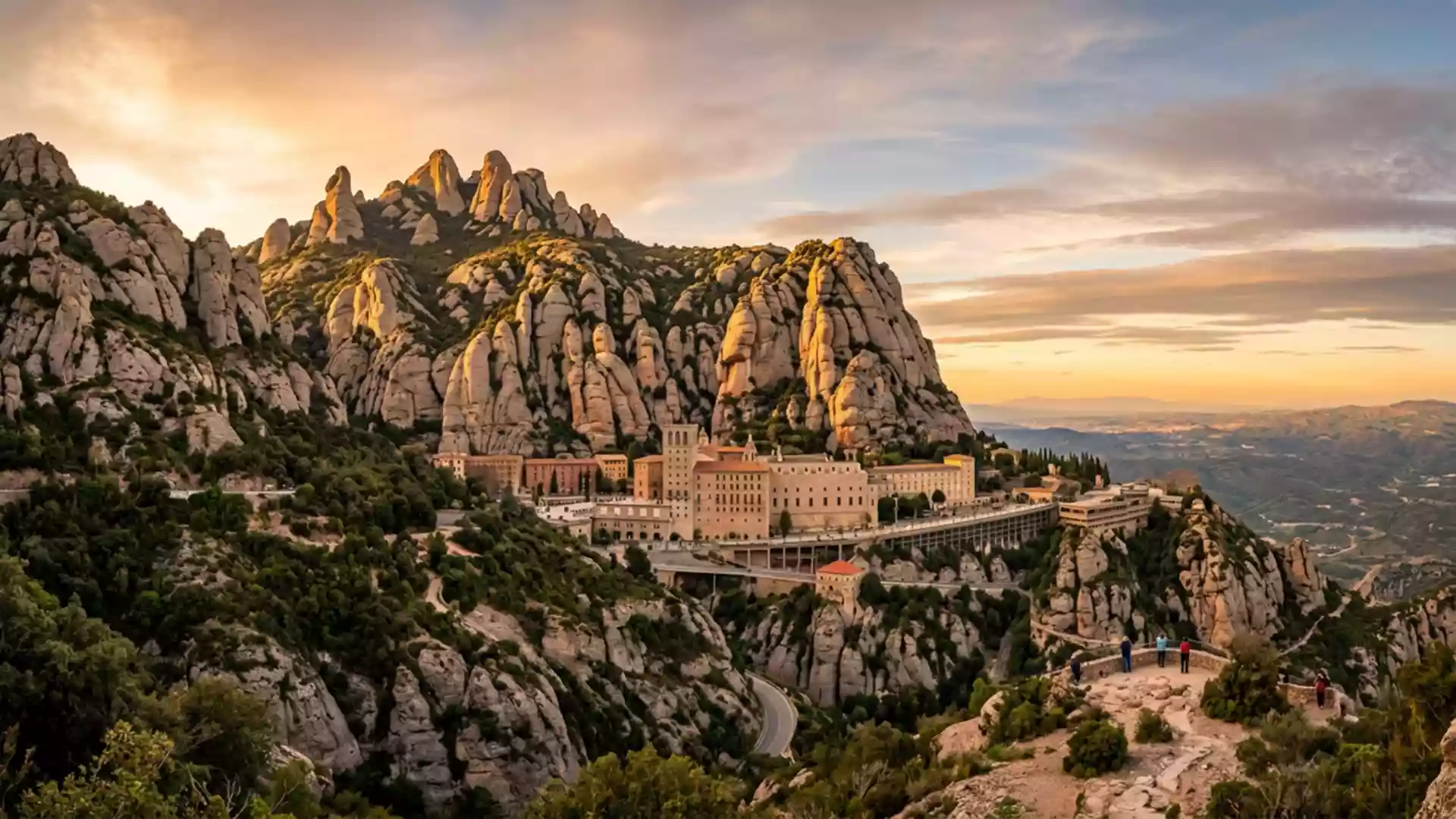
Montserrat Abbey begins facade restoration on 23 October
Published on 10/31/2026 at 12:21 | Editorial responsibility: Rafael Müller, Editor-in-Chief AD HOC NEWSConservation work in view
- Abbey officials began the facade restoration at Montserrat Abbey on 23 October 2026.
- Scaffolding supports cleaning, stone consolidation and protective treatments on the atrium facade.
- Montserrat was founded in 1025 under Abbot Oliba and the present facade dates from 1901.
- The site can be reached by road, on foot, rack railway or cable car from Catalonia.
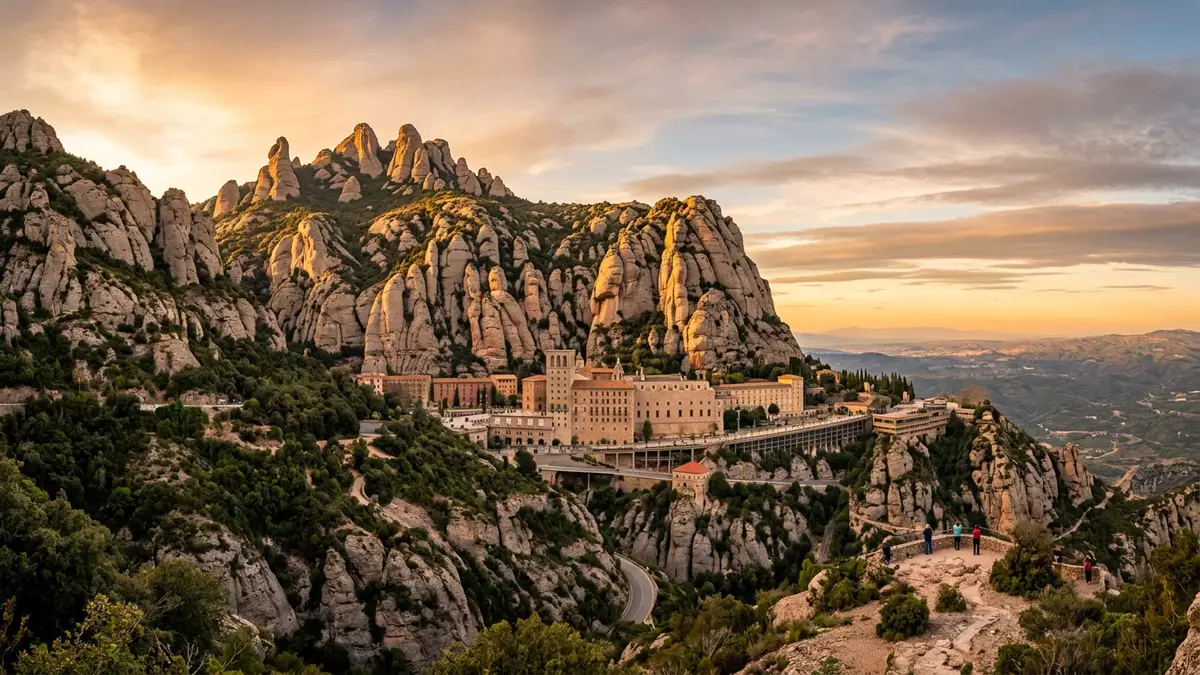
Montserrat Abbey (Monestir de Montserrat) began a facade restoration on 23 October 2026, giving visitors to Montserrat in Spain a current view of conservation work at the basilica. The project concerns the facade in the atrium and is scheduled to continue over the coming weeks.
Montserrat Abbey begins restoration work on its facade
The restoration was announced by the Abbey of Montserrat on 23 October 2026. Scaffolding has been installed so conservation teams can work on the architectural and sculptural elements of the facade. The notice describes the project as a response to natural deterioration in heritage features.
The work includes cleaning the facade, identifying surface alterations and consolidating its stone. The intervention will also apply water-repellent and final protective treatments, followed by a periodic maintenance plan based on the findings made during the work. restoration details from the abbey identify Murcia stone and Alicante stone as the materials used on the facade.
The project has the support of the provincial councils of Barcelona, Girona, Tarragona and Lleida. The last facade restoration took place between 1986 and 1996, making the 2026 work a new conservation phase rather than a routine seasonal change.
The 1901 facade links Montserrat history with the work
The current facade dates from 1901, after the abbey was rebuilt following destruction during the Peninsular War. Villar Lozano designed it with the help of his son, Francesc de Paula Villar Carmona. The facade includes Christ the Savior, the twelve apostles, a rose window, a clock and an entablature with a cross.
That combination of stonework and sculpture explains why the current project reaches beyond surface cleaning. It addresses both the material fabric and the carved elements that give the basilica its public face. The official account says the treatments are intended to limit future risks of stone detachment and extend the durability of the work.
The monastery itself was founded in 1025 under Abbot Oliba. The basilica is a sixteenth-century building with Romanesque remains and a Gothic structure, while the image of Our Lady of Montserrat has stood in a silver retable in the upper apse since 1947. These layers of history place the 1901 facade within a much older religious and cultural site. Catalonia heritage information confirms the foundation date and the main visitor routes.
Visiting Montserrat Abbey: what travellers from Western Europe should know
- The restoration began on 23 October 2026 at the basilica facade in the atrium of Montserrat Abbey.
- Scaffolding is part of the work. The announcement describes conservation activity but does not state that the atrium or basilica is closed.
- Montserrat is in Catalonia, Spain. The site can be reached on foot, by car, by rack railway or by cable car.
- The facade presents carved figures of Christ the Savior and the twelve apostles, alongside a rose window and a clock.
Searching for Montserrat Abbey on social platforms
These links open searches for Montserrat Abbey on each platform.
Frequently asked questions about Montserrat Abbey
What has changed at Montserrat Abbey?
Facade restoration began on 23 October 2026. The work includes scaffolding, cleaning, stone consolidation and protective treatments.
Where is Montserrat Abbey and how do you get there?
The abbey is in Catalonia, Spain, and can be reached on foot, by car, rack railway or cable car.
What is Montserrat Abbey?
It is a Benedictine monastery founded in 1025 under Abbot Oliba, with a basilica containing Romanesque and Gothic elements.