
Mu Ko Similan and the granite landscapes of Phang Nga
Published on 09/23/2026 at 22:00 | Editorial responsibility: Rafael Müller, Editor-in-Chief AD HOC NEWS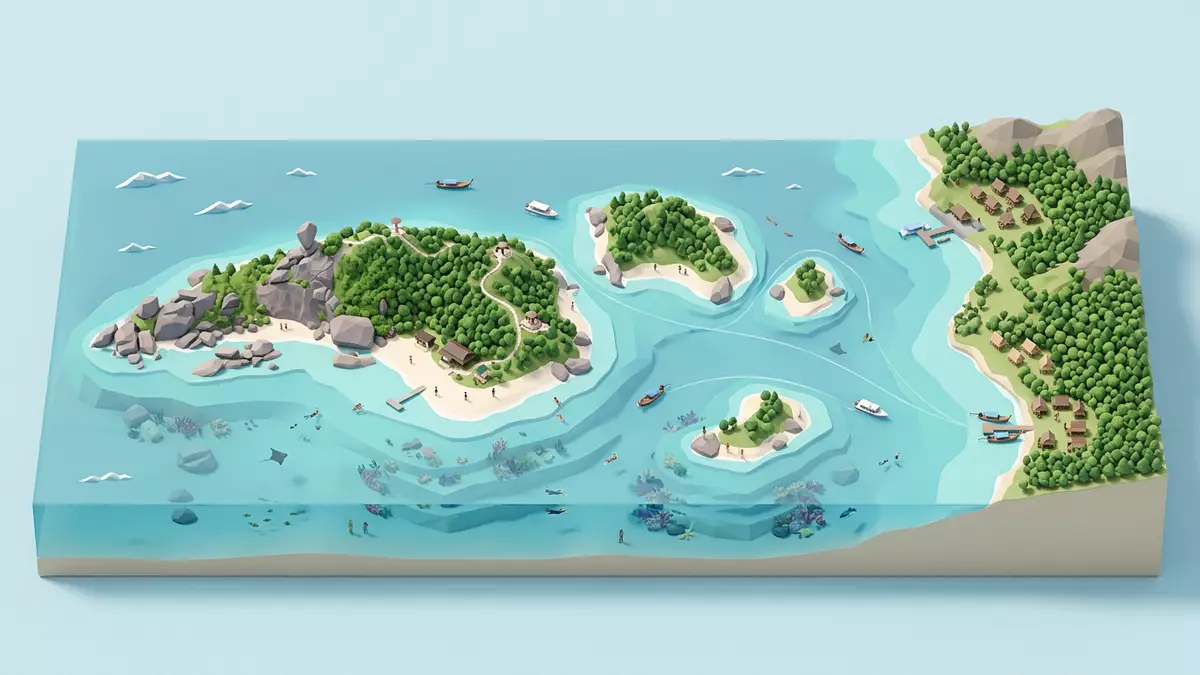
Mu Ko Similan rises from the Andaman Sea as a chain of granite islands, pale beaches and reef-fringed water. The archipelago lies off Phang Nga Province in southern Thailand and forms Mu Ko Similan National Park, established in 1982.
Granite islands in the Andaman Sea
Mu Ko Similan is a continental archipelago off Thailand’s western coast, separated from the mainland by open Andaman waters. Its name is associated with the original group of nine islands, while the wider protected park includes additional islands to the north.
The islands extend along a north–south chain. Their shores alternate between steep rocky edges and sandy beaches, creating a clear visual meeting of dark granite, pale sand and blue sea. The island group lies about 70 kilometres from the Andaman coast, with mainland connections centred on Phang Nga’s coastal districts.
The park covers approximately 140 square kilometres, including islands, reefs and surrounding sea. Its offshore position gives Mu Ko Similan the character of a marine landscape rather than a single beach destination. Mu Ko Similan National Park is recorded within the Andaman Sea off Phang Nga.
Rock, reef and forest above the water
Granite forms the geological foundation of Mu Ko Similan. The rock belongs to an intrusive granite landscape associated with the Tertiary–Cretaceous period, around 65 million years ago. Marine erosion and glacial action shaped the exposed rock into rounded boulders, sloping hills and broken coastal forms.
The highest hill reaches about 244 metres above sea level. Inland slopes carry dry-evergreen forest and beach vegetation, while granite outcrops appear between wooded ground and the shore. Large boulders are visible on land and continue into the surrounding underwater terrain.
Below the surface, reefs occupy the sea around the islands. The protected seascape includes coral formations, sandy seabeds and submerged rock. The Andaman Sea Nature Reserves nomination describes Mu Ko Similan as an offshore area of steep granite mountains, beaches and varied rock formations.
Marine life includes reef fish, hard corals, sea turtles, manta rays, dolphins and whales. Green turtles use beaches within the park for nesting, while the islands provide habitat for birds, bats, reptiles and mammals adapted to an isolated tropical setting.
National park land and protected sea
Mu Ko Similan became Thailand’s 43rd national park in 1982. The designation covers both terrestrial and marine environments, joining forested islands, beaches, reefs and open water within one protected area.
The park belongs to the offshore-island environment of Thailand’s Andaman coast. Granite islands also occur farther north in the Mergui Archipelago, creating a geological connection across the region. Mu Ko Similan’s setting combines island rock, tropical vegetation and marine habitats within a compact offshore chain.
The landscape has two distinct faces. On exposed coasts, granite slopes and boulder fields meet open water. On more sheltered shores, pale sand borders vegetation and shallow reef areas. Neither side replaces the other; both belong to the visible character of the archipelago.
The protected status also gives the surrounding sea a central role. A visit is not limited to landfall on an island, because the reefs, seabed and water between the islands form part of the park’s identity. Mu Ko Similan National Park is presented as a marine attraction within Phang Nga.
Visiting Mu Ko Similan: what travellers from Western Europe should know
- Mu Ko Similan lies off the west coast of Phang Nga Province. Boats reach the islands from mainland piers near Lam Kaen and Thai Mueang, crossing the Andaman Sea.
- The islands combine steep granite slopes, uneven rock, boulders and soft sand. Shore routes can include short climbs and beach walking.
- The official language is Thai and the currency is the baht.
- Entry requirements depend on your nationality; UK travellers can check the FCDO travel advice at gov.uk/foreign-travel-advice, Irish travellers the Department of Foreign Affairs at ireland.ie.
Searching for Mu Ko Similan on social platforms
These links open searches for Mu Ko Similan on each platform.
Frequently asked questions about Mu Ko Similan
Where is Mu Ko Similan?
Mu Ko Similan is an archipelago in the Andaman Sea, off Phang Nga Province in southern Thailand. The islands form Mu Ko Similan National Park.
What can visitors expect on the islands?
Visitors encounter granite hills, boulder-strewn shores, pale beaches, tropical vegetation and reef-filled water. Boat travel connects the mainland with the offshore park.
What makes Mu Ko Similan distinctive?
Its defining combination is granite geology above the water and protected coral and marine habitats below it. The park brings islands, beaches, reefs and surrounding sea into one landscape.


