Musee du Bardo in Tunis and its palace of Roman mosaics
Published on 09/02/2026 at 09:36 | Editorial responsibility: Rafael Müller, Editor-in-Chief AD HOC NEWS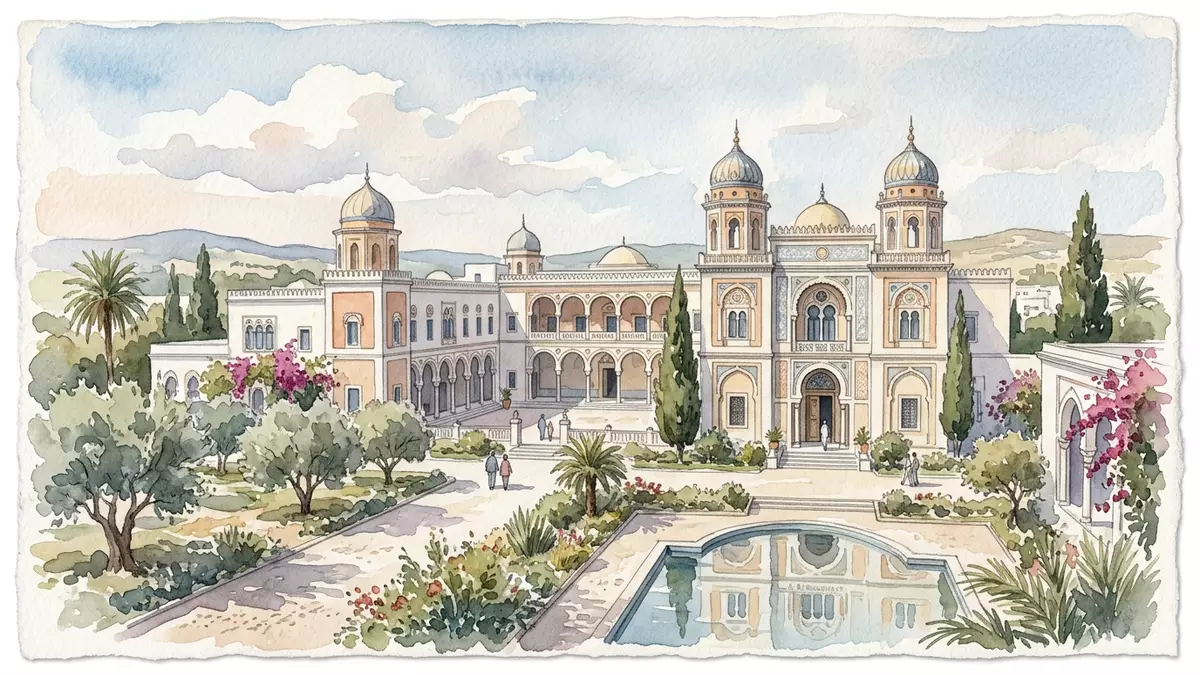
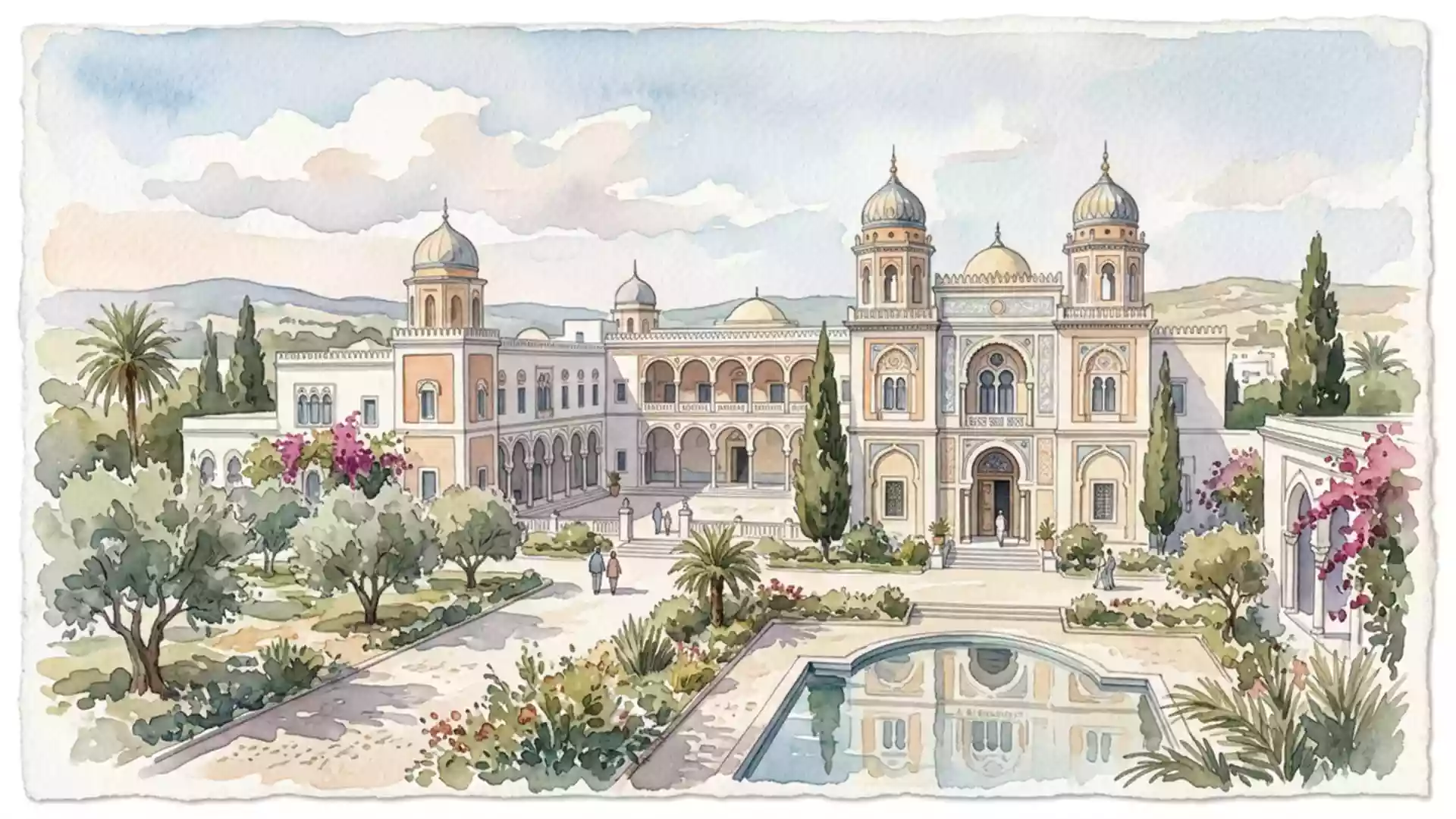
Musee du Bardo in Tunis, also known as the Bardo National Museum, occupies a former beylical palace from the nineteenth century whose rooms are lined with archaeological treasures. Within this palace, an unparalleled concentration of Roman mosaics and artefacts from Punic, Roman, early Christian and Islamic Tunisia turns a suburban residence into a condensed history of the country.
A beylical palace turned national museum
The palace that houses Musee du Bardo stands in Le Bardo, a suburb west of the historic medina of Tunis, and once served as a residence for the Husainid beys who ruled Tunisia under Ottoman suzerainty.a residence for the Husainid beys Its architecture blends Andalusian-Moorish, Ottoman and Italianate elements that were fashionable among Mediterranean elites in the nineteenth century, visible in its courtyards, galleries and ornate interior decoration.Andalusian-Moorish, Ottoman and Italianate elements
The museum was founded in 1888 as a national archaeological museum for Tunisia, making it one of the earliest major museums in the Maghreb devoted to the region’s material heritage.founded in 1888 as a national archaeological museum Its collections were assembled from excavations and finds across the country, turning a royal residence into a national institution that presents Tunisia’s history from prehistory through the Roman and Byzantine eras to the Islamic period.presents Tunisia’s history from prehistory
Walking through a world of Roman mosaics
Musee du Bardo is renowned for its extensive Roman mosaic collection, which lines the walls and floors of many rooms and staircases and forms one of the largest assemblies of Roman mosaics in the world.one of the largest assemblies of Roman mosaics in the world Many mosaics were lifted from villas, bath complexes and public buildings at sites such as Carthage, Dougga, Hadrumetum, Utica and other Roman and Byzantine settlements in what is now Tunisia.sites such as Carthage, Dougga, Hadrumetum and Utica
Among the most cited works is the Virgil Mosaic, which shows the Roman poet Virgil seated with two muses beside a text panel from the “Aeneid”, encapsulating the place of classical literature in Roman North Africa.the Virgil Mosaic Other mosaics depict banquet scenes, hunting parties, marine creatures, circus games, seasonal personifications and abstract geometric designs, giving a visual record of myth, religion and daily life in Roman and early Christian Tunisia.a visual record of myth, religion and daily life
Layers of Tunisian history under one roof
Although the mosaics draw much of the attention, the museum’s collections extend far beyond Roman floors and wall panels and trace many layers of Tunisian history. Prehistoric tools and figurines, Punic stelae from Carthage, Roman statues and inscriptions, Christian baptisteries and Islamic ceramics and manuscripts appear in galleries arranged broadly by period.galleries arranged broadly by period
Highlights include Punic jewellery and funerary objects, sarcophagi carved for Roman elites and early Christian artefacts such as the mosaic-covered baptistery from Kelibia, which illustrates the adaptation of mosaic art to Christian symbolism in North Africa.the mosaic-covered baptistery from Kelibia Islamic-period rooms display carved woodwork, metalwork, ceramics and Qur’anic manuscripts, showing how artistic traditions continued and transformed under successive dynasties centred on Tunis.Islamic-period rooms display carved woodwork
Visiting Musee du Bardo: what travellers from Western Europe should know
- Musee du Bardo stands in Le Bardo, west of central Tunis, and is reached by road from the city centre and from Tunis–Carthage International Airport.
- The museum occupies a multi-level palace with staircases, corridors and large galleries, so a visit involves walking and climbing steps between floors.
- The official language is Arabic and the currency is the Tunisian dinar.
- Entry requirements depend on your nationality; UK travellers can check the FCDO travel advice at gov.uk/foreign-travel-advice, Irish travellers the Department of Foreign Affairs at ireland.ie.
Searching for Musee du Bardo on social platforms
These links open searches for Musee du Bardo on each platform.
Frequently asked questions about Musee du Bardo
Where is Musee du Bardo located?
Musee du Bardo is located in Le Bardo, a suburb immediately west of central Tunis in northern Tunisia, in a former beylical palace complex.
What can visitors expect to see inside?
Visitors encounter galleries of Roman mosaics alongside Punic, Roman, early Christian and Islamic artefacts that together trace Tunisia’s history under one palace roof.
What makes Musee du Bardo distinctive?
The combination of a nineteenth-century royal palace setting and one of the world’s most extensive collections of Roman mosaics gives Musee du Bardo a character that is closely linked to Tunisia’s archaeological heritage.