
Musei Vaticani and the art of moving through centuries
Published on 09/23/2026 at 22:38 | Editorial responsibility: Rafael Müller, Editor-in-Chief AD HOC NEWS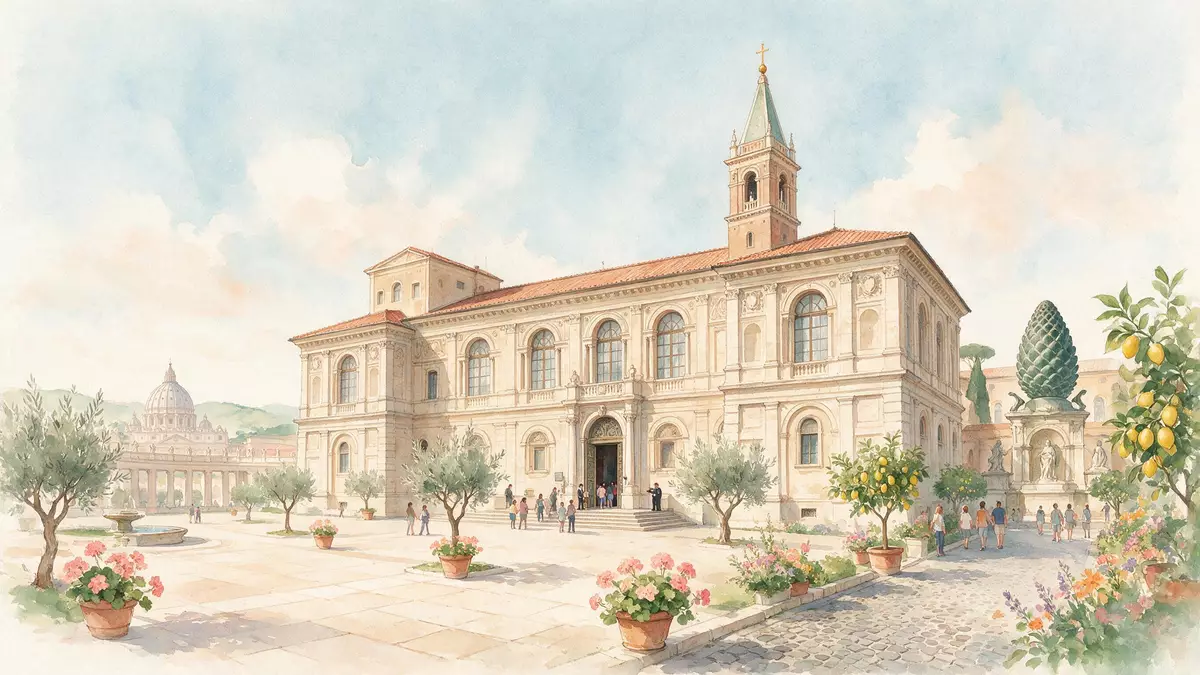
Musei Vaticani occupies a sequence of palaces, courtyards and galleries in Vatikanstadt, where ancient sculpture, Renaissance painting and modern art share one museum route. The complex began in 1506, when Pope Julius II acquired the Laocoön and His Sons, and its most celebrated rooms remain part of a much larger artistic landscape.
Musei Vaticani began with the Laocoön
The museum’s origin is tied to a marble group showing Laocoön and his sons attacked by serpents. Pope Julius II acquired the sculpture in 1506 and placed it in the Belvedere Courtyard. That act created an early public collection within the Vatican complex, linking papal patronage with the display of antiquities.
The museum’s historical beginnings belong to a wider sequence of palaces and collections. The route reaches from Egyptian objects and Greek and Roman sculpture to medieval works, Italian painting, maps, tapestries and contemporary art. Each collection occupies a distinct setting, so the museums read as an architectural district as much as a group of galleries.
From papal palace to public museum
The Vatican Museums developed within buildings associated with the papal court. Their rooms preserve changing layers of use, decoration and collecting, with galleries extending through the Vatican Palace and adjoining structures. The result is not a single neutral container, but a series of historic interiors in which walls, ceilings and objects belong to different periods.
The museums’ named sections include the Gregorian Egyptian Museum, Gregorian Etruscan Museum, Pio Clementino Museum, Chiaramonti Museum, Gallery of the Tapestries and Gallery of the Geographical Maps. The museum collection areas also include the Raphael Rooms, Borgia Apartment and Collection of Modern and Contemporary Art.
Michelangelo, Raphael and the painted rooms
The Sistine Chapel forms the best-known painted destination within the museum route. Michelangelo painted its ceiling between 1508 and 1512, including scenes from Genesis, while the altar wall carries his Last Judgement. The chapel also contains earlier Renaissance work by painters including Perugino and Botticelli.
Nearby, Raphael’s Rooms contain frescoes produced during the papacy of Julius II. Raphael’s School of Athens occupies the Stanza della Segnatura, where Plato and Aristotle appear among philosophers of antiquity. The chapel and rooms belong to the same palace environment, yet their paintings present different approaches to theology, philosophy, colour and the human figure. The Renaissance rooms and chapels form part of the museums’ public galleries.
Visiting Musei Vaticani: what travellers from Western Europe should know
- The museums stand on Viale Vaticano in Vatikanstadt, beside the northern side of the Vatican complex. Rome Metro Line A reaches Ottaviano or Cipro stations.
- The route passes through historic galleries, courtyards and staircases. Comfortable footwear matters because the visit involves substantial walking through connected museum spaces.
- The Sistine Chapel forms part of the museum route, while St Peter’s Basilica lies nearby beyond the Vatican complex. The two destinations are separate places.
- The official language is Italian and the currency is the euro.
Searching for Musei Vaticani on social platforms
These links open searches for Musei Vaticani on each platform.Frequently asked questions about Musei Vaticani
Where are Musei Vaticani?
Musei Vaticani is on Viale Vaticano in Vatikanstadt, an enclave surrounded by Rome. The museum entrance lies on the Vatican’s northern side, near Rome’s Prati district.
What can visitors expect inside?
The route combines archaeological museums, sculpture galleries, painted rooms, courtyards, tapestries, maps and modern art. The Sistine Chapel and Raphael’s Rooms form two central highlights within the wider complex.
What makes Musei Vaticani distinctive?
Its collections occupy historic papal buildings rather than a single purpose-built gallery. The museums connect the Laocoön acquired in 1506 with Michelangelo’s Sistine Chapel ceiling, Raphael’s frescoes and later collections.


