
Ngorongoro Crater and the rim that frames it
Published on 09/10/2026 at 06:09 | Editorial responsibility: Rafael Müller, Editor-in-Chief AD HOC NEWS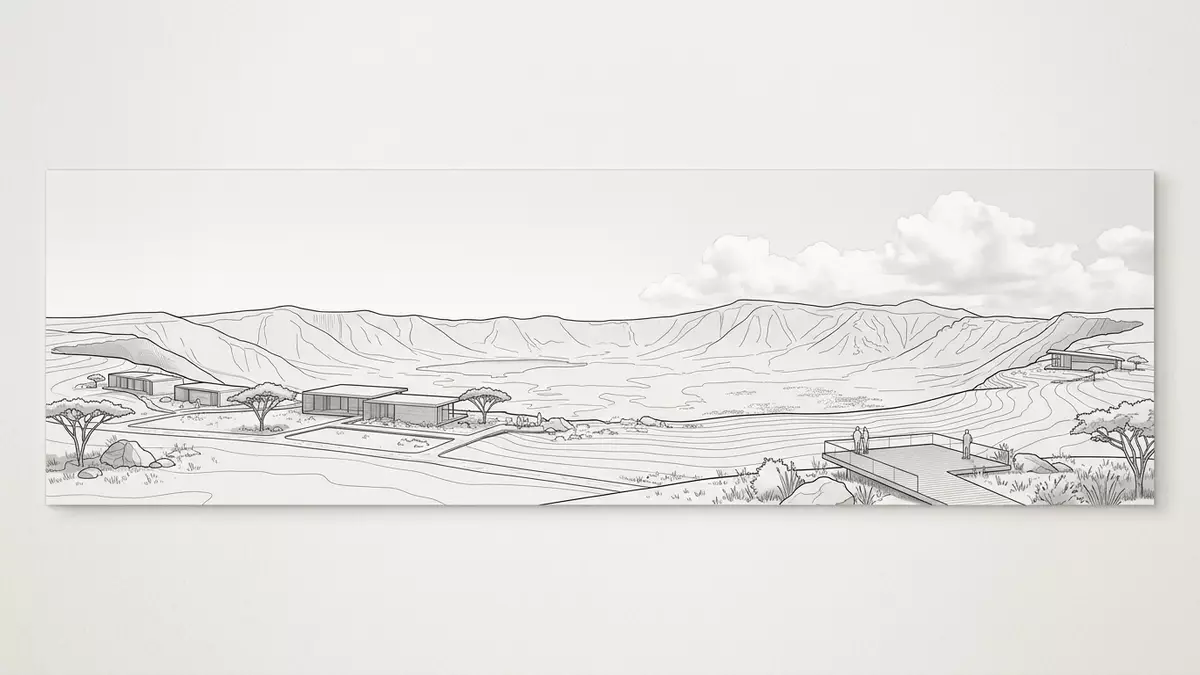
Ngorongoro Crater is a vast volcanic bowl in northern Tanzania, set inside the Ngorongoro Conservation Area and linked with the name of the UNESCO World Heritage site. Its broad floor, steep walls and enclosing rim give the place its immediate shape.
The crater floor and its enclosing rim
The crater is the core feature of the landscape, a deep caldera with a wide interior and a raised edge. The floor lies below the rim, while the enclosing wall holds the whole form together in a single, legible circle of land.
That shape is the reason the place reads so clearly at a glance. The crater floor is open and expansive, while the rim marks a firm boundary against the surrounding highlands.
A volcanic landscape in northern Tanzania
The crater belongs to the volcanic highlands of northern Tanzania and forms part of the Ngorongoro Conservation Area. Its geology links it with a larger rift landscape that includes basaltic volcanic centres and the Great Rift Valley.
Ngorongoro Crater sits in the Arusha region near the eastern side of the Rift Valley, where older volcanic landforms have left a high, broken plateau. The place is part of a wider geological story that can be read in the slope of the rim and the depth of the basin.
World Heritage status and human landscape
The Ngorongoro Conservation Area was added to the UNESCO World Heritage List in 1979, and the crater sits within that protected landscape. It was established in 1959 as a multiple-use area, where wildlife and Maasai pastoral life share the same broader setting.
That combined status gives the place an identity beyond geology alone. The crater remains the visual centre, but it belongs to a conservation area shaped by both land and long human use.
Visiting Ngorongoro Crater: what travellers from Western Europe should know
- The crater lies west of Arusha in northern Tanzania, inside the Ngorongoro Conservation Area. Access is by road from the regional hub and through the conservation area’s approaches.
- The rim and inner slopes rise and fall sharply, and the crater floor sits well below the surrounding high ground. The terrain is a high-altitude volcanic basin rather than a flat plain.
- The official language is Swahili and English is widely used in tourism and conservation settings. The currency is the Tanzanian shilling.
- Conditions on the mountain change with the seasons; the local cable-car operators and alpine clubs provide information.
Searching for Ngorongoro Crater on social platforms
These links open searches for Ngorongoro Crater on each platform.
Frequently asked questions about Ngorongoro Crater
Where is Ngorongoro Crater?
Ngorongoro Crater lies in northern Tanzania, within the Ngorongoro Conservation Area west of Arusha. It forms part of the Crater Highlands in the East African Rift system.
What should travellers expect?
Travellers meet a high volcanic basin with a deep floor, enclosing walls and a prominent rim. The landscape is broad, open and strongly shaped by its caldera form.
What makes it distinctive?
The crater is a large intact caldera and the most striking element of the conservation area. Its combination of geology, protected status and Maasai presence gives it a layered identity.


