
Nyhavn’s colourful canal and harbour heritage in Kopenhagen
Published on 09/10/2026 at 08:34 | Editorial responsibility: Rafael Müller, Editor-in-Chief AD HOC NEWS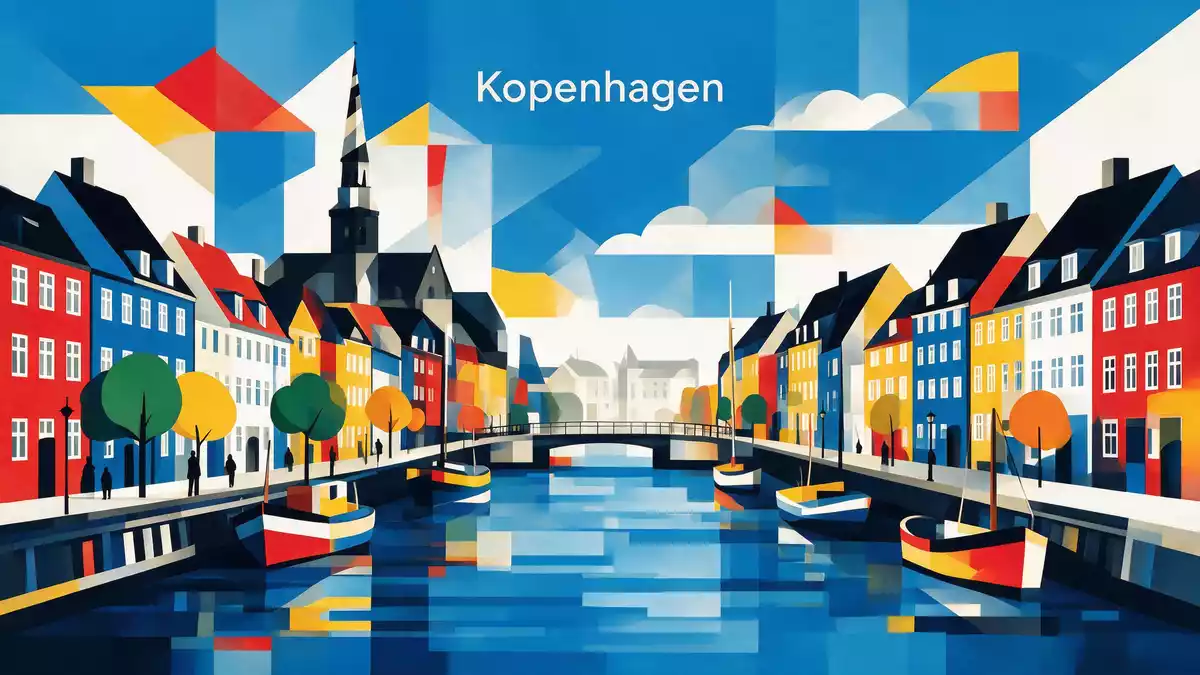
Nyhavn in Kopenhagen is a historic harbour canal framed by colourful townhouses and a line of moored ships, where a working port from the seventeenth century has become a lively waterfront promenade. The canal was created under King Christian V in the 1670s and still links the inner city around Kongens Nytorv with the wider harbour basin, so its maritime role remains visible even as the quaysides have changed use.
A seventeenth?century harbour cut into the city
Nyhavn takes the form of a straight canal reaching inland from the main harbour towards the edge of the old city centre at Kongens Nytorv, with quays on both sides that were laid out for ships to unload directly to the town. The waterway was dug between 1670 and 1673 under King Christian V, with Danish soldiers and Swedish prisoners of war carrying out the heavy excavation work that created this “New Harbour” connection from the Øresund into Copenhagen’s streets.The canal was dug between 1670 and 1673 The harbour was conceived as a gateway from the sea, so ships could sail straight up Nyhavn and tie up beside warehouses and merchants’ houses rather than anchoring further offshore.Nyhavn, meaning “New Harbor”, was constructed from 1670
The link between Nyhavn and Kongens Nytorv is still easy to trace on foot, because the western end of the canal opens directly towards the royal square, which took shape in the late seventeenth century as a formal urban space with multi?storey façades. Standing at the edge of the water, it is possible to look back towards Kongens Nytorv and see how the canal effectively cuts into the historic core, underlining the way this harbour was integrated into the city’s street pattern.Kongens Nytorv was laid out under Christian V The basic alignment of Nyhavn has remained stable since the seventeenth century, even as cargo handling and shipping have moved to different parts of Copenhagen.
Colourful townhouses and ships along the quays
What many visitors recognise immediately are the rows of narrow townhouses along the north and south quays, painted in strong colours that mirror the canal in their window lines and roof profiles. The houses largely date from the late seventeenth and eighteenth centuries, with the oldest, number 9 on the north side, recorded from 1681 and still standing in brick and timber.The oldest house dates from 1681 Many of these buildings began life as merchants’ homes with storage behind or above, so their proportions and repeated gables speak to a time when the harbour edge was both living space and workplace.
Hans Christian Andersen, Denmark’s best?known fairy?tale writer, is closely associated with Nyhavn, and several façades carry plaques noting his addresses along the canal. Andersen lived at number 20 in the 1830s, where he wrote his first fairy tales, then at number 67, and later at number 18, so his presence threads literary history through a street that was still a rough sailors’ quarter in his day.Hans Christian Andersen lived at three Nyhavn addresses Out on the water, historic wooden ships are berthed along the canal, preserving the silhouette of masts and rigging that recalls Nyhavn’s centuries as a commercial harbour, even though heavy cargo has long since shifted elsewhere.
From working harbour to waterside promenade
For roughly three centuries after its completion in the 1670s, Nyhavn functioned as a working port, with merchant vessels arriving from the Øresund, unloading fish, coal and timber, and crews spending shore time in the dense cluster of taverns and lodging houses that grew around the quays. The area developed a reputation as a sailors’ district, with pubs, tattoo parlours and other nightlife lining the waterfront, and the canal remained busy with shipping until the twentieth century, when modern harbour facilities further out drew away the larger vessels.Nyhavn served as an inner commercial harbour for Christian V
As cargo traffic declined in the mid?twentieth century, Nyhavn’s quays shifted from industrial use towards leisure and tourism, with pedestrian quaysides, outdoor seating and canal tours gradually becoming part of the scene. The canal itself was closed to commercial shipping in the 1960s, and later decades brought restoration of façades and a focus on conserving the historic ships moored along the water.Land transport took over freight and Nyhavn was revitalised Today the transformation is visible in the way the historic architecture and harbour layout frame a promenade of restaurants and bars, while the canal continues to act as one of the main departure points for sightseeing boats exploring Copenhagen’s waterways.
Visiting Nyhavn: what travellers from Western Europe should know
- Nyhavn lies just east of central Kopenhagen, extending from the main harbour inland towards Kongens Nytorv, and is easily reached on foot from the city’s central streets and nearby metro stations.
- The quaysides are level but paved, with canal?side steps down towards the water and stone embankments; pavements can be busy around the cafés, and care is needed near the unfenced edge of the canal.
- The official language is Danish and the currency is the Danish krone.
- Entry requirements depend on your nationality; UK travellers can check the FCDO travel advice at gov.uk/foreign-travel-advice, Irish travellers the Department of Foreign Affairs at ireland.ie.
Searching for Nyhavn on social platforms
These links open searches for Nyhavn on each platform.Frequently asked questions about Nyhavn
Where is Nyhavn in Kopenhagen?
Nyhavn is a harbour canal in central Kopenhagen, running from the city’s main harbour basin inland towards the historic square of Kongens Nytorv.
What should visitors expect at Nyhavn?
Visitors encounter colourful seventeenth? and eighteenth?century townhouses along both quays, historic wooden ships moored in the canal and a busy waterfront lined with restaurants and canal?tour departures.
What makes Nyhavn distinctive among Copenhagen’s sights?
Nyhavn combines a seventeenth?century harbour layout, long maritime history and literary associations with Hans Christian Andersen in one compact canal, so its architecture and ships tell several strands of Copenhagen’s story at once.


