Pao de Acucar: Rio de Janeiro’s granite sentinel
Published on 08/28/2026 at 20:03 | Editorial responsibility: Rafael Müller, Editor-in-Chief AD HOC NEWS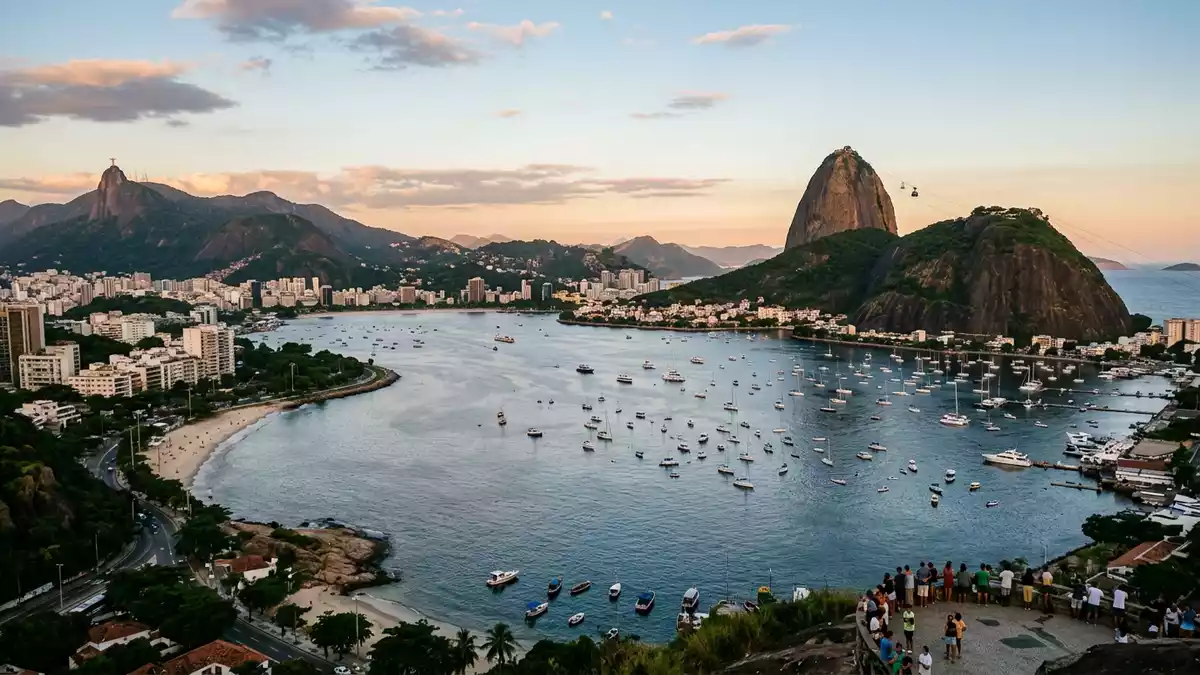
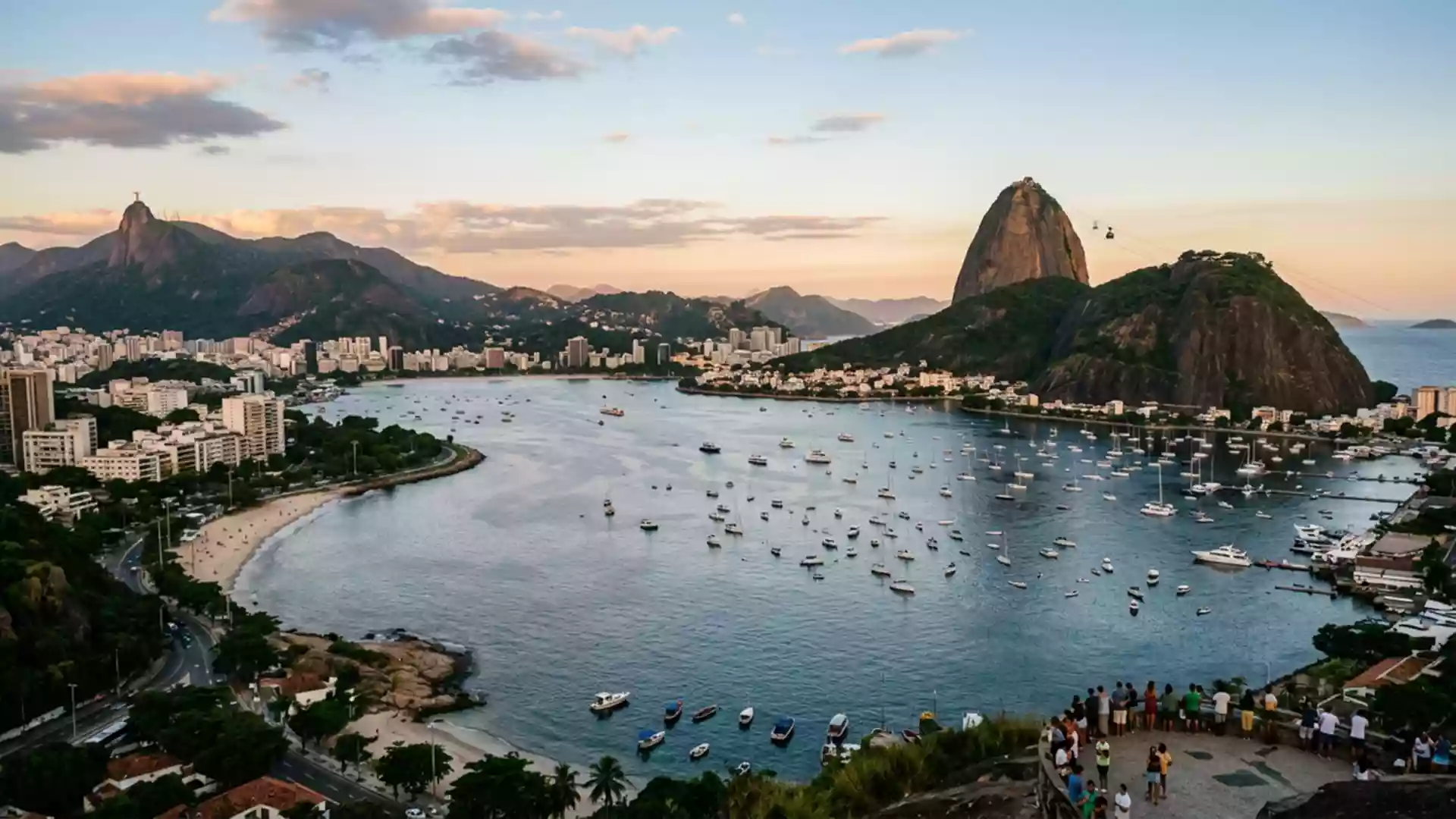
Pao de Acucar, better known in English as Sugarloaf Mountain, is a granite peak that rises directly above the entrance to Guanabara Bay in Rio de Janeiro, Brazil. Surrounded by sea, beaches and dense urban districts, it forms a distinctive rocky sentinel at the mouth of the bay and anchors many of the city’s most recognisable panoramas.
A granite monolith at the mouth of Guanabara Bay
Sugarloaf Mountain stands on a narrow peninsula that projects into the Atlantic where Guanabara Bay opens out into the ocean. The peak climbs to an elevation of about 396 m (1,299 ft) above the harbour, giving it a commanding profile over the water and the low-lying neighbourhoods below.Rising 396 m above the bay The mountain itself is a dome of hard rock, described in geological sources as a mixture of granite and quartzite, which resists erosion and forms steep, smooth faces that fall straight to the shoreline.Granite and quartzite cliff
The Portuguese name Pao de Acucar, literally “sugarloaf”, refers to a traditional cone-shaped block of refined sugar that was common in past centuries. The mountain’s tapering, rounded profile resembles such a sugarloaf and gave it its name.Name derived from sugarloaf shape From the water or nearby beaches, the rock rises in a single sweep, with little vegetation on its upper slopes and only small trees and shrubs clinging to ledges. At its base, the low Urca neighbourhood and Praia Vermelha (Red Beach) sit between the mountain and the sea, forming a compact urban fringe around the foot of the cliffs.Urca and Praia Vermelha setting
The Sugarloaf Cable Car: a pioneering aerial route
Access to the summit of Pao de Acucar is defined by the Sugarloaf Cable Car, locally known as the “bondinho”. The cableway was conceived by the Brazilian engineer Augusto Ferreira Ramos in 1908, who pursued support in Rio de Janeiro for an aerial link between the harbour-side beach and the mountain.Project by Augusto Ferreira Ramos Construction led to an opening in 1912, when the first section from Praia Vermelha to the lower summit of Morro da Urca entered service; the second section joining Morro da Urca to Sugarloaf Mountain followed soon afterwards.Cable car inaugurated in 1912
The cable car route runs in two stages, both suspended high above the ground. The first spans the distance from the cable car station at Praia Vermelha to Morro da Urca, a smaller neighbouring hill with an elevation of about 220 m (720 ft).First ascent to Morro da Urca From there, a second cable car continues to the top of Pao de Acucar, adding roughly another 176 m (577 ft) of climb and bringing passengers close to the full height of the peak above sea level.Two-stage cable car route The original wooden cabins, which resembled tram cars, have long since been replaced by modern glass-sided cabins, yet the basic alignment from beach to hill to summit has remained a defining feature of Rio de Janeiro’s skyline for more than a century.Historic cableway among the earliest in the world
Views over Rio de Janeiro, its beaches and the Atlantic
From the terraces on Morro da Urca and the summit of Pao de Acucar, the outlook reaches across a wide sweep of city and sea. To one side, the curve of Copacabana Beach runs along the oceanfront, backed by high-rise apartment blocks and hotels; in another direction, the inner Guanabara Bay opens towards the city centre and the distant bridge to Niteroi.Panoramic views of beaches and bay Inland, beyond the bay, further hills and peaks form a serrated skyline, including the separate mass of Corcovado Mountain, where the Christ the Redeemer statue stands on its own summit.
On clear days the Atlantic horizon is visible beyond the entrance of the bay, and the pattern of islands, headlands and coastal districts can be traced from the elevated platforms. The height of Sugarloaf Mountain and its location at the edge of the water make these vantage points distinctive: the visitor can look down almost vertically onto anchored boats in the harbour, the compact grid of Urca’s streets and the red sand of Praia Vermelha, while at the same time seeing wide views towards the beaches and ocean. Simple pathways and viewing areas on the summit provide space to walk, sit or photograph the surroundings, and the granite crest itself remains largely free of structures apart from cable car facilities and small service buildings.Summit platforms overlooking city and sea
Visiting Pao de Acucar: what travellers from Western Europe should know
- Pao de Acucar rises beside Guanabara Bay in the Urca neighbourhood of Rio de Janeiro. The cable car base station stands near Praia Vermelha, a compact beach at the foot of the mountain.Base station at Praia Vermelha
- The terrain combines steep rock faces with built viewing platforms. Within the visitor areas, walking surfaces are generally level or gently sloped, but approaches between stations involve outdoor stairways and short uphill paths.
- The official language is Portuguese and the currency is the Brazilian real. Entry requirements depend on your nationality; UK travellers can check the FCDO travel advice at gov.uk/foreign-travel-advice, Irish travellers the Department of Foreign Affairs at ireland.ie.
Searching for Pao de Acucar on social platforms
These links open searches for Pao de Acucar on each platform.
Frequently asked questions about Pao de Acucar
Where is Pao de Acucar located in Rio de Janeiro?
Pao de Acucar stands on a peninsula at the entrance to Guanabara Bay, beside the Urca neighbourhood and Praia Vermelha in the city of Rio de Janeiro.
What can visitors expect during a visit to Pao de Acucar?
Visitors travel by cable car in two stages from Praia Vermelha via Morro da Urca to the summit, where viewing platforms overlook the city, bay, nearby beaches and the Atlantic coast.
What makes Pao de Acucar distinctive among Rio de Janeiro’s landmarks?
The mountain combines a sheer granite dome rising nearly 400 m (1,299 ft) above the harbour with a historic early twentieth-century cable car, creating a prominent focus for many of Rio de Janeiro’s classic city and coastal views.