Parque Nacional Cahuita and the living reef edge of Costa Rica
Published on 08/06/2026 at 16:54 | Editorial responsibility: Rafael Müller, Editor-in-Chief AD HOC NEWS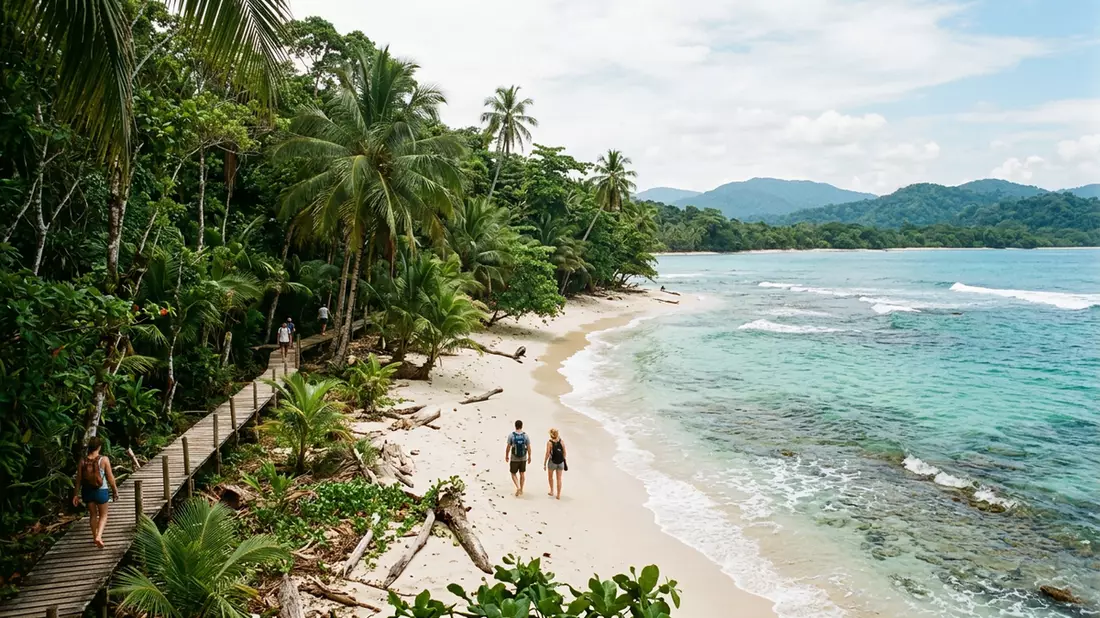
Forest, reef and shoreline in Parque Nacional Cahuita
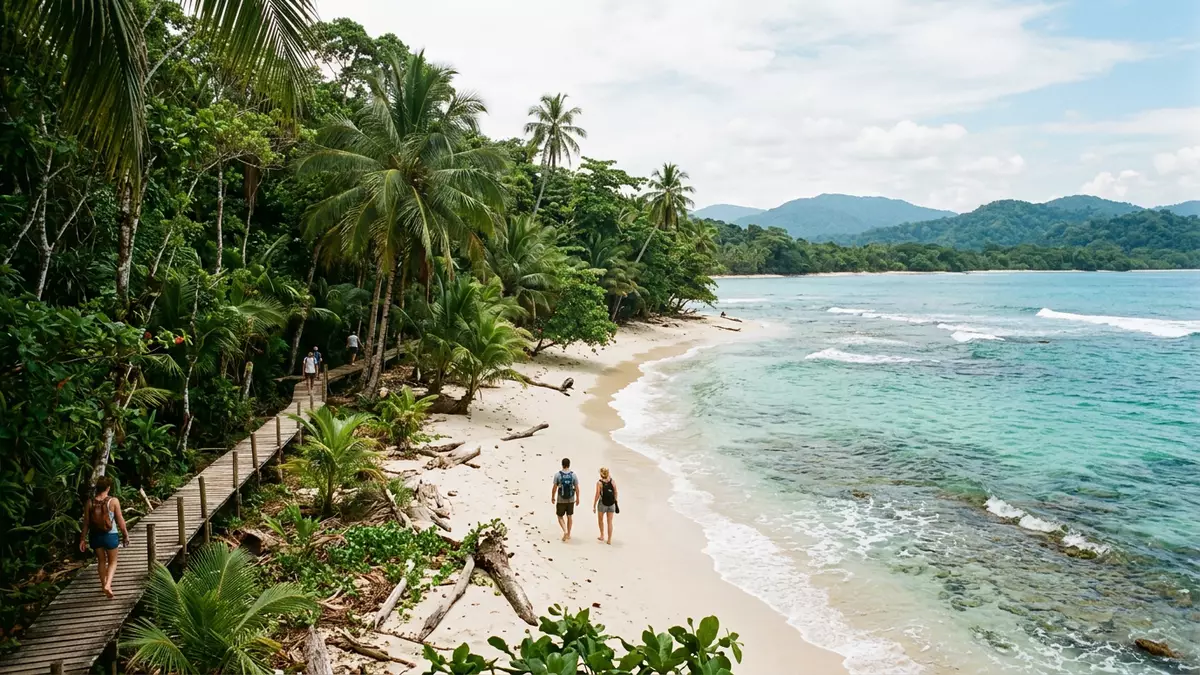
Parque Nacional Cahuita lies on the Caribbean coast of Costa Rica, centred on a curved headland and the small town of Cahuita. It is known for the way coastal forest, pale sand and a shallow coral reef sit almost on top of one another, separated only by a narrow strip of beach and lagoon. The park protects a segment of shoreline where the land leans out into the sea, forming a bay with calm water that has long been used as an introduction to Caribbean reef life.
The forest behind the beach in Parque Nacional Cahuita is humid and dense, with palms, sea-almond trees and broad-leaved coastal vegetation providing continuous shade along long stretches of path. In many places the trees grow right down to the sand, their roots gripping dark, damp soil that can turn muddy after rain. The combination of tree cover and nearby seawater means the air stays warm and heavy, and visitors feel the shift from town streets to protected forest almost immediately. Monkeys, raccoons and tropical birds are regularly seen moving between the canopy and the edge of the beach, giving the protected status of the park a tangible presence.
Walking the coastal trails and quiet beaches
Parque Nacional Cahuita is structured around a coastal walking route that follows the curve of the headland, with additional side paths leading towards inland lagoons and back to Cahuita. The main trail runs behind the beach for much of its length, sometimes on compacted earth, sometimes on boardwalk-style sections where the ground becomes softer or passes through mangrove-like areas. This layout lets visitors stay in the shade while still hearing the surf and catching frequent glimpses of the Caribbean through gaps in the vegetation. The feeling is of moving through a long, narrow corridor of forest that never entirely lets go of the sea.
Access to the beaches inside Parque Nacional Cahuita is typically by short spurs off the main trail, where sand opens up between trees and offers views across the bay towards the reef line. In some coves the sand is fine and pale, while other sections have more driftwood, broken coral fragments and patches of darker material where rivers have brought sediment from inland. Even on still days waves break gently over the outer reef, and their white lines can be seen from the shore, marking the boundary between the shallow inner waters and the more exposed sea beyond. The beaches are popular with visitors who want both wildlife and swimming, and the protected status of the park means development has stayed limited, with the natural shape of the shoreline still dominant.
Reef, wildlife and underwater life
The coral reef off Parque Nacional Cahuita is a key reason the area was protected, forming one of Costa Rica’s more accessible examples of Caribbean coral and associated marine habitats. The reef runs roughly parallel to sections of the shore, creating a belt of shallow water between beach and coral where seagrasses, patch reefs and sandy patches alternate. This configuration allows guided snorkelling to focus on fish, soft corals and hard coral structures without the need for long boat journeys. Parrotfish, angelfish and smaller reef dwellers are commonly associated with these waters, and their colours stand out clearly against the pale sand and coral skeletons below.
On land, Parque Nacional Cahuita supports a mixture of coastal and lowland forest species. Capuchin and howler monkeys are known from the area, often using the taller trees near the trail as routes between feeding grounds. Coatis and raccoons may be seen closer to the ground, especially near spots where visitors rest, and a variety of lizards use exposed roots and sunlit clearings along the path. Bird life includes toucans, herons around wetter sections, and smaller songbirds that move quickly between layers of foliage. The combination of reef, beach and forest in a compact zone gives the park a layered character, where sounds from the canopy, calls of seabirds and the rhythm of waves blend into a single soundscape.
Visiting Parque Nacional Cahuita: what travellers from Western Europe should know
- Parque Nacional Cahuita lies on the Caribbean side of Costa Rica, with access from the town of Cahuita, and is reached overland from larger hubs and regional airports.
- Admission arrangements and opening hours are set by the site's operator and change with the season; the official website is the only binding source. Timed tickets or daily limits may apply, so it is worth checking the official booking page before travelling.
- The coastal environment of Parque Nacional Cahuita feels warm and humid throughout much of the year, and many visitors prefer the calmer light of early morning or late afternoon for walking and wildlife watching.
- The main experience of Parque Nacional Cahuita is on foot along forest trails and beach sections, with uneven ground, exposed roots and occasional boardwalks; sturdy footwear and a readiness for a reasonably long walk help.
- In and around Cahuita, Spanish is the main language, with some English used in tourism-facing services; cash and cards are both used, and respectful behaviour towards wildlife and local customs is expected, with restrictions may apply on site.
- Entry requirements depend on your nationality. UK travellers should check the FCDO travel advice at gov.uk/foreign-travel-advice; Irish travellers the Department of Foreign Affairs at ireland.ie; EU and EEA citizens their own national foreign ministry.
Searching for Parque Nacional Cahuita on social platforms
Travellers often look up recent images and videos of Parque Nacional Cahuita to get a sense of trail conditions, reef visibility and beach atmosphere before they go.
Frequently asked questions about Parque Nacional Cahuita
Where is Parque Nacional Cahuita located?
Parque Nacional Cahuita is on the Caribbean coast of Costa Rica, centred on the town of Cahuita and a headland that reaches into the sea.
What can visitors expect on a typical visit?
Most visitors walk forest trails behind the beach, pause at coves and viewpoints, watch wildlife and, where conditions allow, join guided snorkelling in the shallow reef lagoon.
What makes Parque Nacional Cahuita distinctive among Costa Rican parks?
Parque Nacional Cahuita is distinctive for the close combination of coastal forest, narrow beaches and an offshore coral reef, all within a compact, easily walked coastal strip.
More on Parque Nacional Cahuita at AD HOC NEWS