
Parque Nacional Torres del Paine’s granite skyline
Published on 08/30/2026 at 14:37 | Editorial responsibility: Rafael Müller, Editor-in-Chief AD HOC NEWS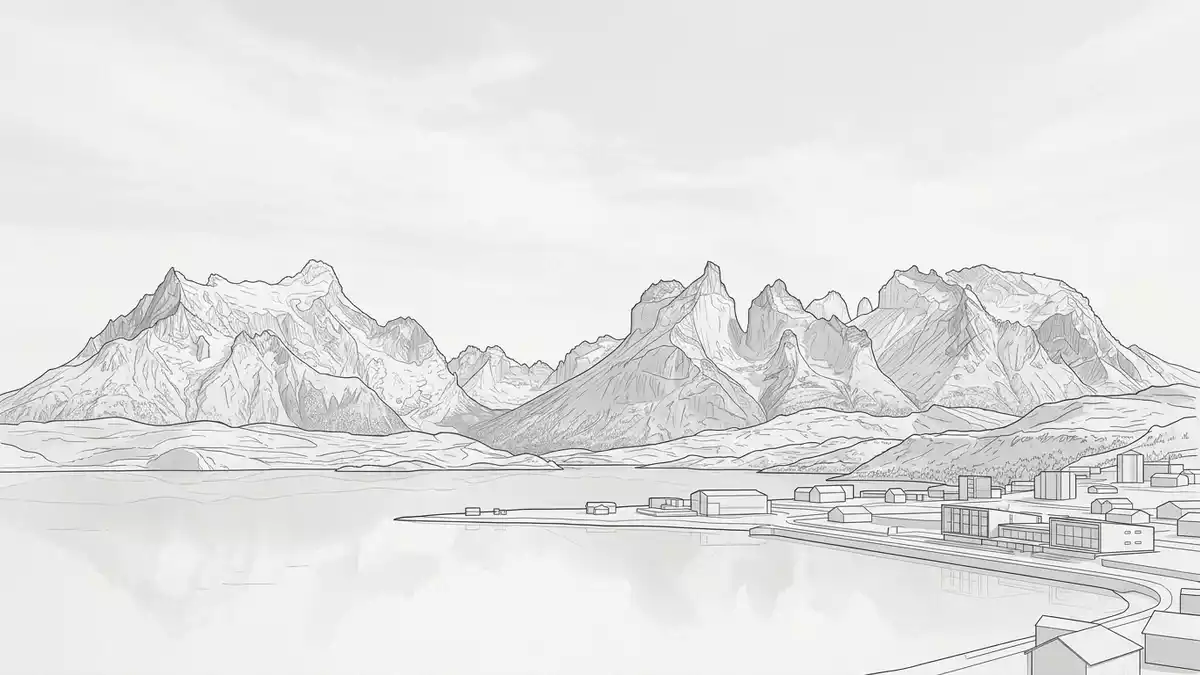
Parque Nacional Torres del Paine near Puerto Natales is defined by a granite skyline, glacial lakes and open steppe. The park lies in southern Chile, between the Andes Mountains and the Patagonian steppe, and its Torres are the feature that gives the place its namegranite skyline.
Granite towers above the steppe
The Torres del Paine are three steep granite peaks in the Cordillera Paine, a mountain group within the park. They rise with hard edges above a landscape of valleys, glaciers and lakesthree steep granite peaks.
The park’s name points directly to that visible form. From a distance, the towers read as vertical stone walls, while lower slopes carry lighter and darker rock bands across the massiflower slopes carry.
Glaciers, lakes and long views
Beyond the towers, Parque Nacional Torres del Paine brings together glaciers, rivers, lakes and lagoons. UNESCO describes the wider reserve as a place of ridges, crags, waterfalls and broad open terrainglaciers, rivers, lakes.
That variety is part of the park’s character in every direction. The open steppe gives way to massed rock, while water gathers in long glacial basins and channels across the landscapeopen steppe.
A protected landscape with a long record
The park was created on 13 May 1959 and declared a UNESCO Biosphere Reserve in 1978. Those dates place it firmly among the best-known protected landscapes in Chile’s far south13 May 1959.
Its official setting is the Magallanes and Chilean Antarctica Region, in Última Esperanza Province and Torres del Paine commune. The park’s formal status and its mountain core make it a clear example of Patagonian conservation shaped by land, rock and iceBiosphere Reserve.
Visiting Parque Nacional Torres del Paine: what travellers from Western Europe should know
- The park lies north of Puerto Natales in southern Chile. Access is by road from the town, with routes continuing into the park from the surrounding Patagonia plain.
- The terrain mixes mountain paths, rock, glacier country and open steppe. Distances on foot can be long, and the ground changes from valley floor to steep slopes and exposed ridges.
- The official language is Spanish and the currency is the Chilean peso.
- The park’s wildlife includes guanaco, puma, huemul and many bird species. The landscape therefore combines mountain scenery with a live Patagonian habitat.
- The park’s rivers, lakes and glaciers form part of the main experience. Water, rock and wide open space dominate the setting.
Searching for Parque Nacional Torres del Paine on social platforms
These links open searches for Parque Nacional Torres del Paine on each platform.
Frequently asked questions about Parque Nacional Torres del Paine
Where is Parque Nacional Torres del Paine?
It lies in southern Chile, in the Magallanes and Chilean Antarctica Region, north of Puerto Natales. The park sits between the Andes Mountains and the Patagonian steppe.
What should a visit there expect?
Expect granite towers, glacial water, open plains and mountain terrain. The park combines large-scale scenery with long routes and exposed ground.
What makes Parque Nacional Torres del Paine distinctive?
The Torres del Paine granite peaks define the park’s profile. The mix of mountains, glaciers, lakes and steppe gives the landscape its clear Patagonian identity.


