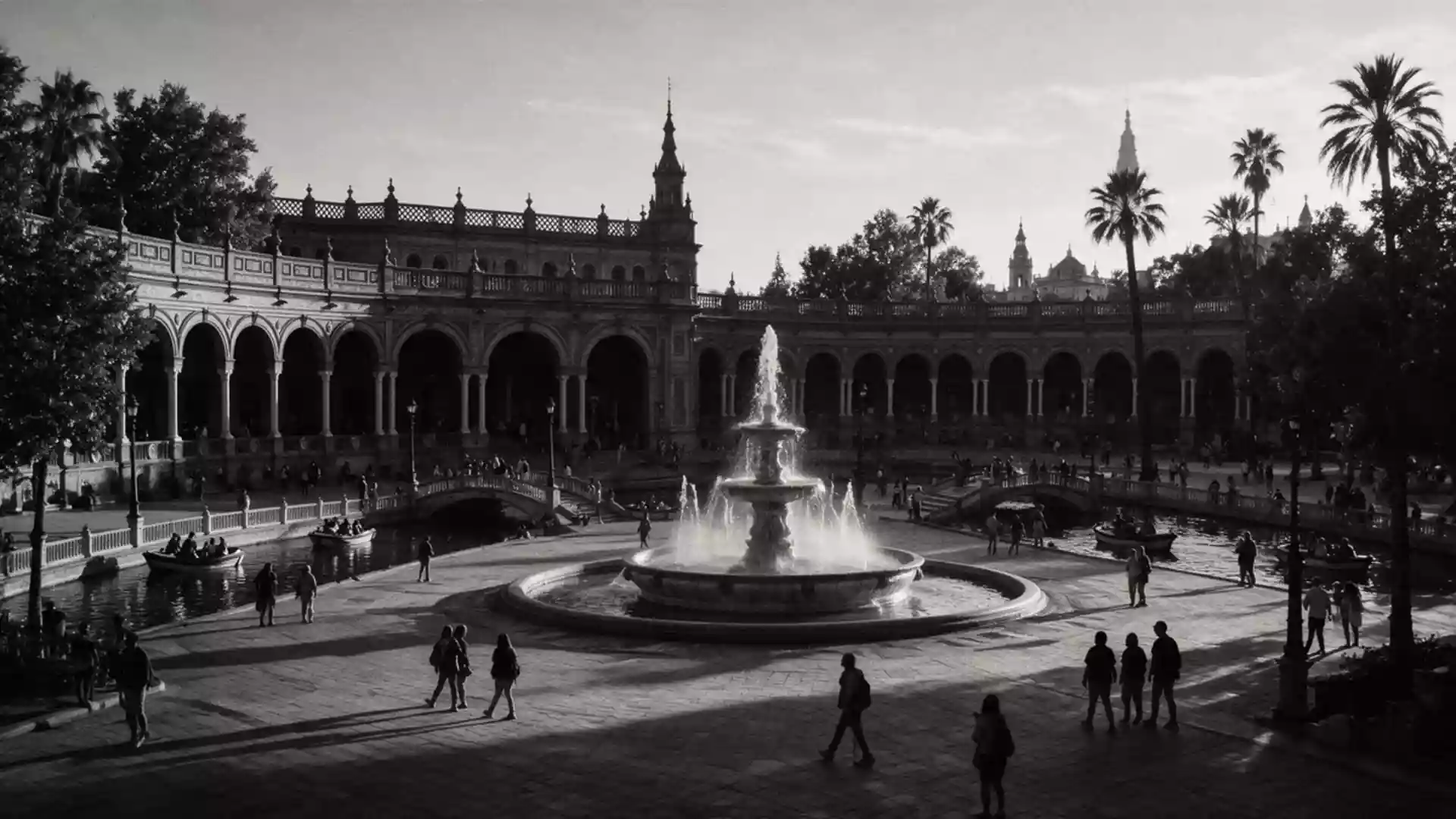
Plaza de España gains event rules on 6 October 2026
Published on 10/24/2026 at 09:32 | Editorial responsibility: Rafael Müller, Editor-in-Chief AD HOC NEWSRules and heritage context
- Seville’s Urban Planning Council approved the project on 6 October 2026.
- The framework limits each event and organiser to 45 calendar days per year.
- The monument was built for the Ibero-American exhibition of 1929.
- Plaza de España stands beside María Luisa Park in Seville.
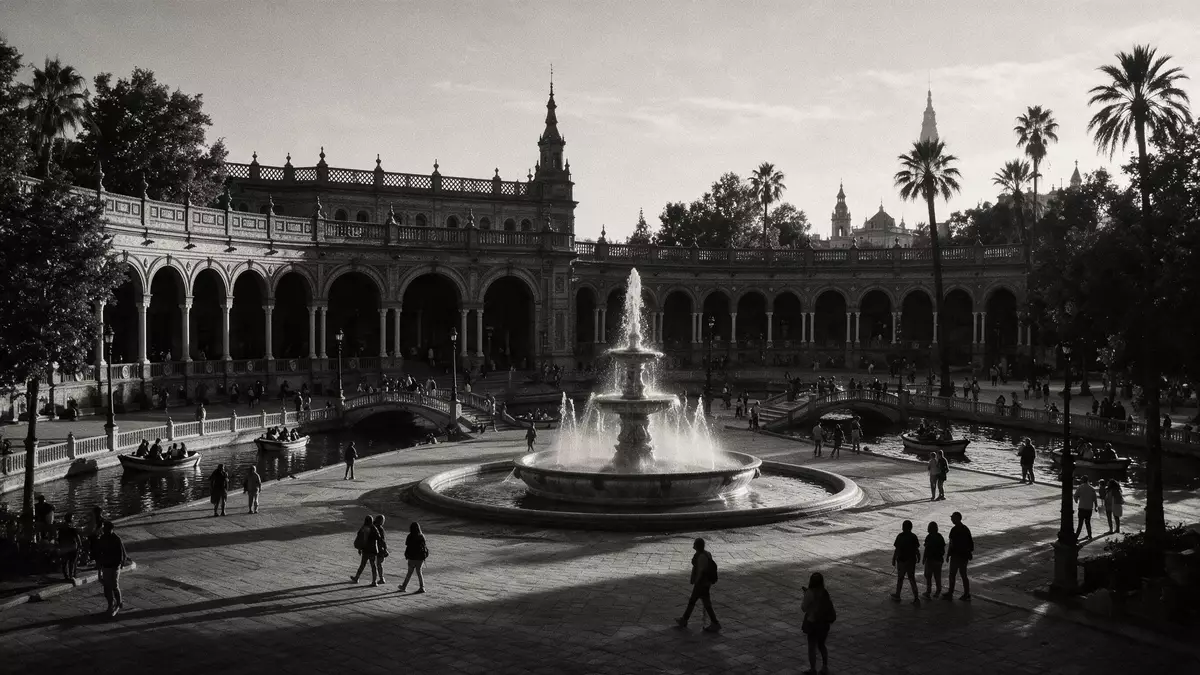
Plaza de España in Seville gained new event rules on 6 October 2026, when the city’s Urban Planning Council approved a project regulating temporary activities at the monument. The proposal concerns concerts, festivals and other public events at the landmark beside María Luisa Park.
The project does not itself announce a closure. It begins a municipal process that will shape how future temporary occupations are planned and authorised.
Plaza de España event rules set limits for organisers
The project was approved by the Governing Council of Seville’s Urban Planning and Environment Department on 6 October 2026. The city says it is the first specific framework for temporary use of the monument and the adjoining avenues of Isabel la Católica and Rodríguez de Casso.
The rules cover public events, cultural and educational activities, festivals, concerts and performances linked to music and the performing arts. They are intended to balance temporary use with protection of the public domain, the monument’s heritage status, safety, accessibility and everyday coexistence.
As a general rule, one event and organiser could occupy the site for no more than 45 calendar days in a year, including construction and dismantling. Certain complex arrangements could reach 60 days, while the project also sets procedures for competing applications and annual scheduling.
The framework requires organisers to submit an event description, installation plans, a timetable and a preventive conservation plan. Depending on the activity, applications may also need security, mobility, evacuation, waste and accessibility plans. Ground anchors would generally be prohibited, and the text creates a coordination body bringing together urban planning, culture, heritage and tourism officials.
The project is not yet the final law. The city authority states that it must continue through the municipal process before final approval, and the ordinance will take effect only after definitive approval and publication in the provincial official bulletin. Seville’s project announcement sets out the initial decision and its intended controls.
Plaza de España’s 1929 setting gives the rules their context
The city’s proposal treats the monument’s architecture, paving, ceramics, gardens and trees as protected elements. That matters for visitors because the framework is designed not simply to schedule events, but to govern the installations and activity surrounding the central space.
Plaza de España was built for Seville’s Ibero-American exhibition of 1929. Its semi-circular buildings, bridges and central canal form the setting that event structures would have to share with ordinary visitors. The landmark lies beside María Luisa Park, south of the historic centre.
The approved project therefore links the site’s cultural role with practical limits on temporary use. Its organisers would need to plan construction, the event itself and dismantling as one conservation process, rather than treating the public space as an empty venue between activities. The 1929 exhibition background places the monument’s event function in its original historical setting.
The proposal also gives priority in annual planning to recurring or especially significant events. Applications would be assessed alongside considerations such as cultural interest, artistic quality, sustainability, technical capacity and heritage experience. A separate report by elDiario.es on the limits also records the proposed annual occupation ceiling and the required process before the rules can take effect.
Visiting Plaza de España: what travellers from Western Europe should know
- The relevant municipal decision was made on 6 October 2026 at Plaza de España in Seville.
- The proposal does not announce a closure for ordinary visitors, but future temporary events would be subject to the new planning and conservation framework.
- The site is beside María Luisa Park, with the adjoining access avenues of Isabel la Católica and Rodríguez de Casso included in the proposed regulation.
- The monument includes a semi-circular building complex, four bridges and a central canal, so visitors encounter open spaces, tiled surfaces and water features rather than a single enclosed building.
- Spanish is the official language used for municipal information in Seville, and Spain’s national currency is the euro.
Searching for Plaza de España on social platforms
These links open searches for Plaza de España on each platform.
Frequently asked questions about Plaza de España
What has changed at Plaza de España?
On 6 October 2026, Seville approved a project to regulate temporary events and occupations at the monument. It remains in the municipal approval process.
What is the proposed event limit at Plaza de España?
The project sets a general maximum of 45 calendar days per event and organiser in a year, including construction and dismantling.
Where is Plaza de España and how do you get there?
Plaza de España is in Seville beside María Luisa Park, with access linked to Isabel la Católica Avenue and Rodríguez de Casso Avenue.