
Plitvicka jezera: cascaded lakes and forests of central Croatia
Published on 09/15/2026 at 14:22 | Editorial responsibility: Rafael Müller, Editor-in-Chief AD HOC NEWS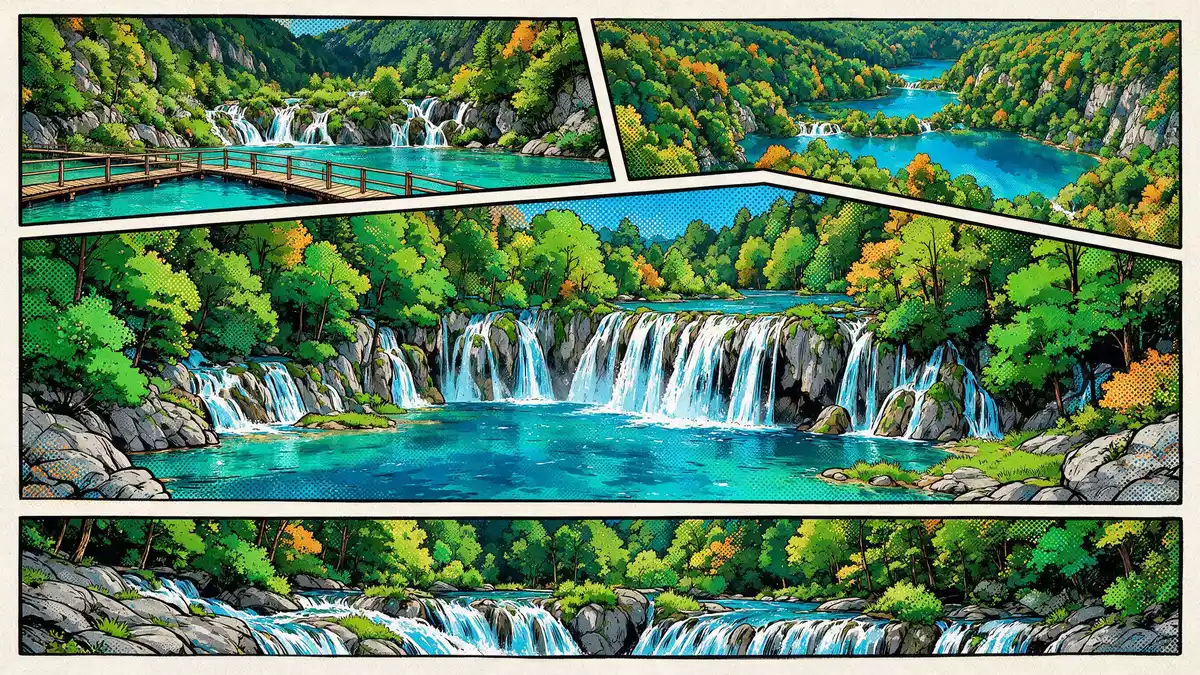
Plitvicka jezera, known in English as Plitvice Lakes, forms a chain of lakes and waterfalls in a forested karst landscape in central Croatia. The lakes lie within Plitvice Lakes National Park, which was declared a national park in 1949 and later inscribed on the UNESCO World Heritage List in 1979.Plitvice Lakes National Park
Terraced lakes linked by waterfalls
The core of Plitvicka jezera is a system of lakes arranged in natural terraces, linked by countless waterfalls and cascades. The lakes occupy a valley cut into the Dinaric karst, where water has carved channels through limestone and deposited tufa, a porous rock that builds up into barriers and ledges. Over time, these tufa barriers have dammed streams into separate basins, creating a sequence of clear lakes at different levels.the process of tufa formation The park authority describes sixteen visible lakes at the surface, each fed and drained by flowing water that drops over walls and steps of rock.sixteen visible lakes
The water carries dissolved minerals from the surrounding mountains, and the interaction of water, vegetation and limestone builds and reshapes the tufa barriers across long periods. This continuous geological and biological process is a central reason for the park’s recognition as a World Heritage site, giving Plitvicka jezera an evolving network of pools, steps and curtains of falling water rather than a single static lake.UNESCO World Heritage List
A national park in the Dinaric karst
Plitvicka jezera lies in the mountainous karst region of central Croatia, between the Mala Kapela and Li?ka Plješivica ranges. Administratively, the protected area of Plitvice Lakes National Park spans parts of Lika-Senj County and Karlovac County.general information on the park The wider municipality of Plitvi?ka Jezera encompasses the settlement area and surroundings, with the main town of Korenica serving as the administrative seat.Plitvi?ka Jezera municipality
The national park covers just under 300 km² (around 115 sq mi), making it one of Croatia’s larger protected landscapes.one of the largest national parks in Croatia Within this area, dense forest surrounds the lake system, and the terrain is carved by rivers, ravines and tufa barriers. Trails and boardwalks follow the shorelines and cross the water on timber structures, bringing visitors close to the cascades and allowing views across the different levels without disturbing the underlying rock formations.
Veliki Slap and the upper and lower lakes
Within Plitvicka jezera, the lakes are commonly grouped into upper and lower sections, reflecting their position in the valley and the height of their basins.upper and lower lakes The lower lakes occupy a narrow limestone canyon where the water gathers before dropping towards the Korana river, while the upper lakes spread through a more open, gently sloping valley. Wooden walkways trace curves along the edges of the pools, sometimes passing just above the water surface, and in places crossing directly in front of small waterfalls.
One of the most photographed single features in the lower lakes is Veliki Slap, a high waterfall where water plunges over a rock wall into the lower basin. Above and around it, smaller streams and falls descend through vegetation, feeding the main cascade. Elsewhere in the park, a series of falls connects the upper lakes to Lake Kozjak, the largest individual lake in the system, which sits roughly in the centre of the chain.Lake Kozjak within the system
Visiting Plitvicka jezera: what travellers from Western Europe should know
- Plitvicka jezera is in central Croatia, in the Plitvice region, reached by road along the main D1 route between Zagreb and the Adriatic coast. Long-distance buses and private cars are the most common means of access.
- The terrain around the lakes includes boardwalks, forest paths and slopes within a karst valley. Sections of the lake shore are reached by walking on timber walkways close to the water, and some routes involve stairways and uneven ground.
- The official language is Croatian and the national currency is the euro.
- Entry requirements depend on your nationality; UK travellers can check the FCDO travel advice at gov.uk/foreign-travel-advice, Irish travellers the Department of Foreign Affairs at ireland.ie.
Searching for Plitvicka jezera on social platforms
These links open searches for Plitvicka jezera on each platform.
Frequently asked questions about Plitvicka jezera
Where are Plitvicka jezera and Plitvice Lakes National Park located?
Plitvicka jezera are in central Croatia, in the Plitvice region, within Lika-Senj and Karlovac counties in the mountainous Dinaric karst.
What should visitors expect on a visit to Plitvicka jezera?
Visitors encounter forested valleys, a chain of clear lakes at different levels, numerous waterfalls and boardwalks that bring them close to the water and the tufa formations.
What makes Plitvicka jezera distinctive among European landscapes?
The lakes and waterfalls of Plitvicka jezera are shaped by ongoing tufa formation in a karst setting and are protected as a national park and UNESCO World Heritage site.


