Pompei’s layered streets and Roman city plan
Published on 09/01/2026 at 19:06 | Editorial responsibility: Rafael Müller, Editor-in-Chief AD HOC NEWS
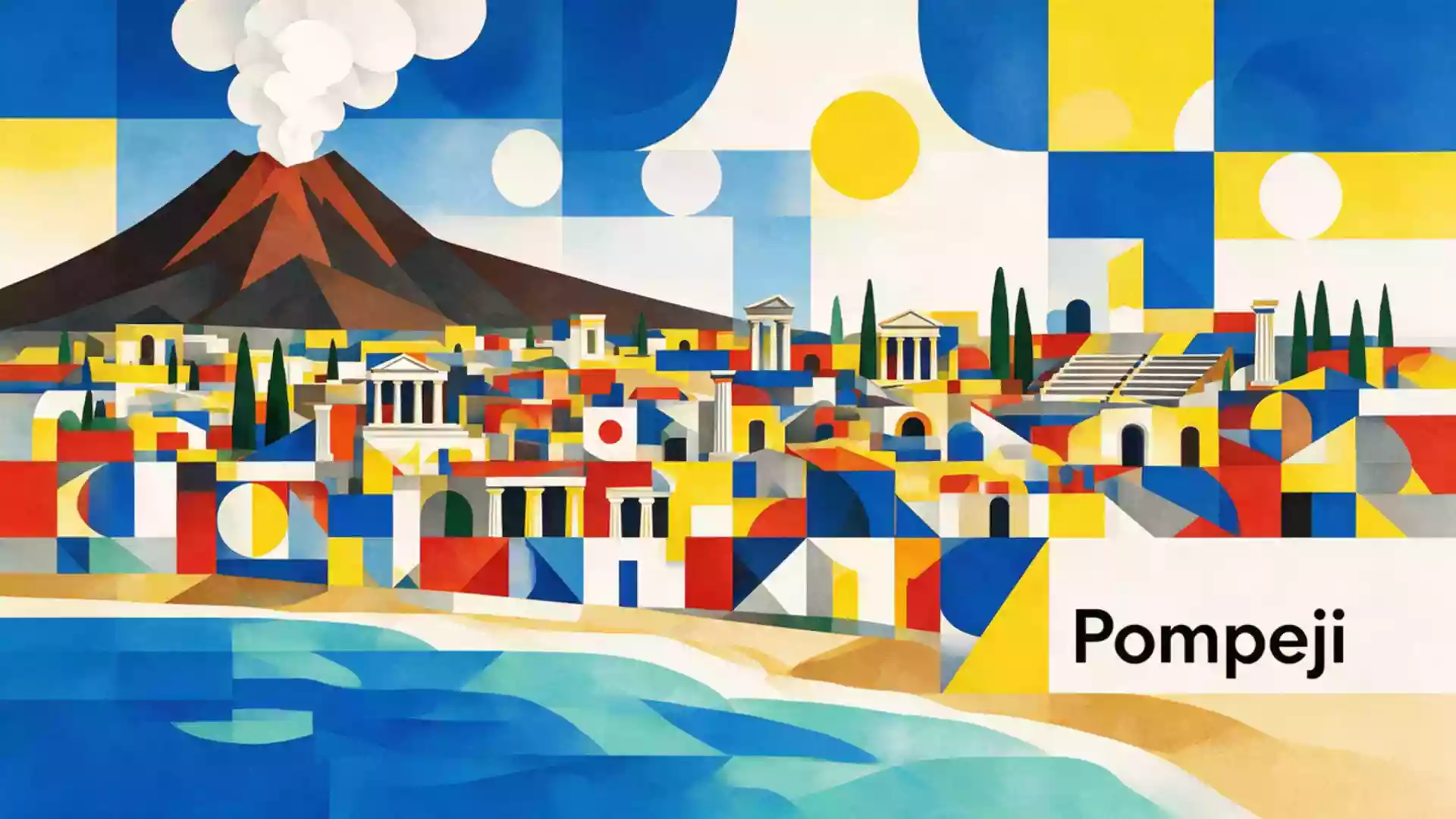
Pompei is the modern Italian town beside the archaeological site of ancient Pompeii, in Campania near Naples. Its streets preserve a Roman city plan, with public buildings, houses and temples laid out across excavated ground.
Pompei and the Roman city beneath
The site belongs to the UNESCO World Heritage property Archaeological Areas of Pompei, Herculaneum and Torre Annunziata. Vesuvius buried the city in AD 79, and the ruins preserve a Roman urban centre in extraordinary detail.
Pompeii was on a plateau of Vesuvian lava above the River Sarno valley, and it developed through Oscan, Greek, Samnite and Roman phases. Lucius Cornelius Sulla and, later, Charles III of Bourbon belong to its history of conquest and excavation, alongside Giuseppe Fiorelli, who helped shape modern recording of the site.
Temples, baths and houses in the streets
The forum remains the core of the settlement, with major public buildings close at hand. Among them are the Basilica, the Capitolium and several temples, while the streets also lead to baths, theatres and the amphitheatre.
Domestic space is equally visible. Many houses open from the street into an atrium, and larger homes add colonnaded courts, reception rooms and painted walls that survive as part of the fabric.
Inscriptions, gardens and suburban villas
Walls across the city carry electoral notices and other graffiti, turning stone surfaces into a record of daily public life. Outside the walls, the villas at Torre Annunziata extend the picture with wall painting, residential rooms and agricultural spaces.
The UNESCO property links Pompei with Herculaneum and Torre Annunziata, and the set of sites shows both urban density and suburban range. The result is a city and its hinterland, read through streets, rooms, inscriptions and painted surfaces.
Visiting Pompei: what travellers from Western Europe should know
- Pompei lies in Campania, south-east of Naples. Rail connections and the modern town place the archaeological site within an established urban corridor.
- The ground is uneven and the streets are ancient paving, so the site reads as an open-air ruin rather than a compact museum. Many areas contain thresholds, curbs and stretches of worn stone.
- The official language is Italian and the currency is the euro.
- Entry requirements depend on your nationality; UK travellers can check the FCDO travel advice at gov.uk/foreign-travel-advice, Irish travellers the Department of Foreign Affairs at ireland.ie.
Searching for Pompei on social platforms
These links open searches for Pompei on each platform.
Frequently asked questions about Pompei
Where is Pompei?
Pompei is in Campania, in southern Italy, near Naples. It is the modern name attached to the ancient city of Pompeii and the surrounding archaeological landscape.
What does a visit involve?
The site is spread across streets, houses, baths, temples and civic buildings. The terrain is open and uneven, with ancient paving underfoot.
What makes Pompei distinctive?
The city survived as a buried Roman settlement, and its excavated fabric preserves public space, domestic interiors and inscriptions together. The combination of urban plan and preserved detail is its defining feature.