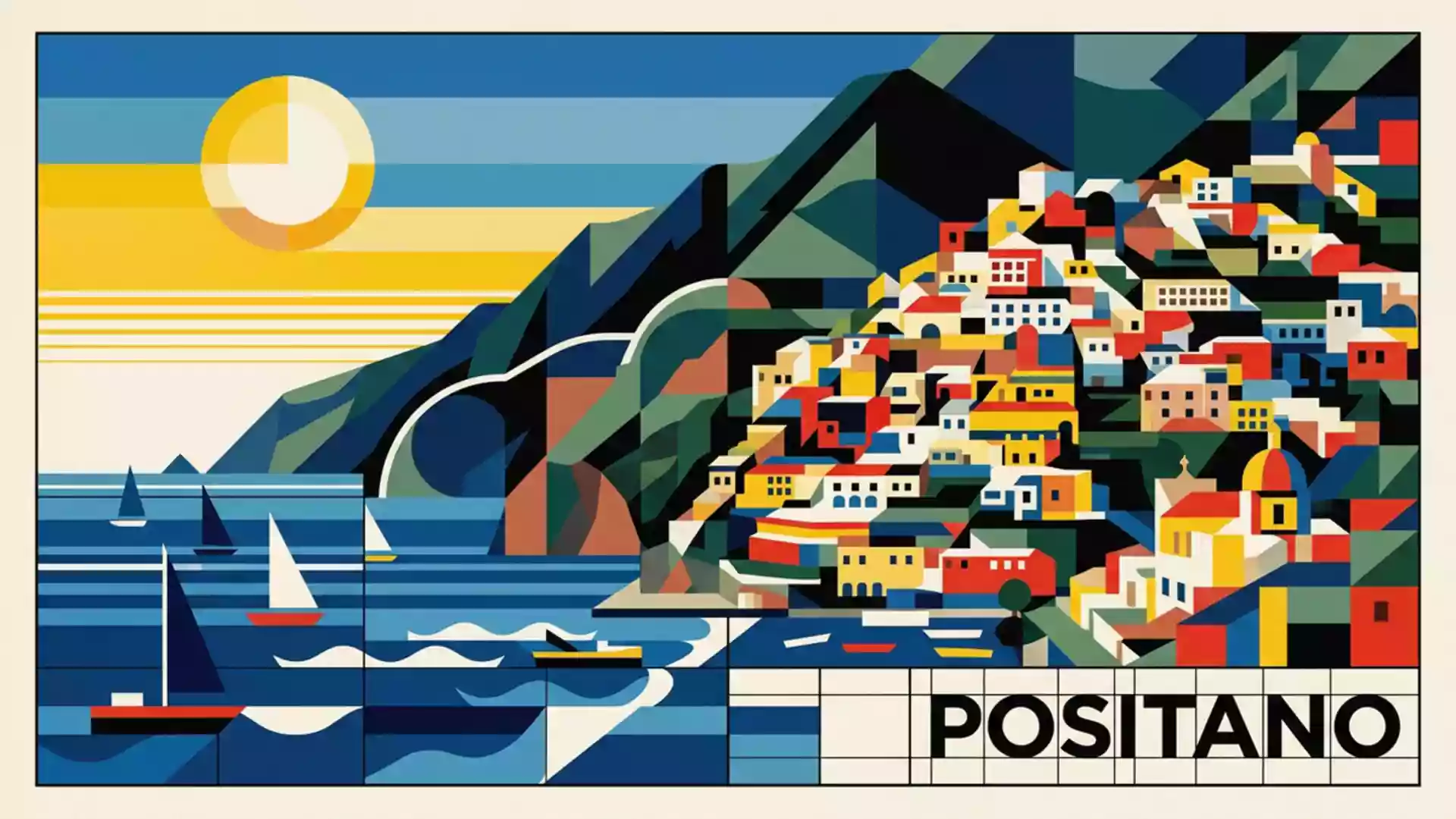
Positano: the vertical village on the Amalfi Coast
Published on 08/30/2026 at 15:04 | Editorial responsibility: Rafael Müller, Editor-in-Chief AD HOC NEWS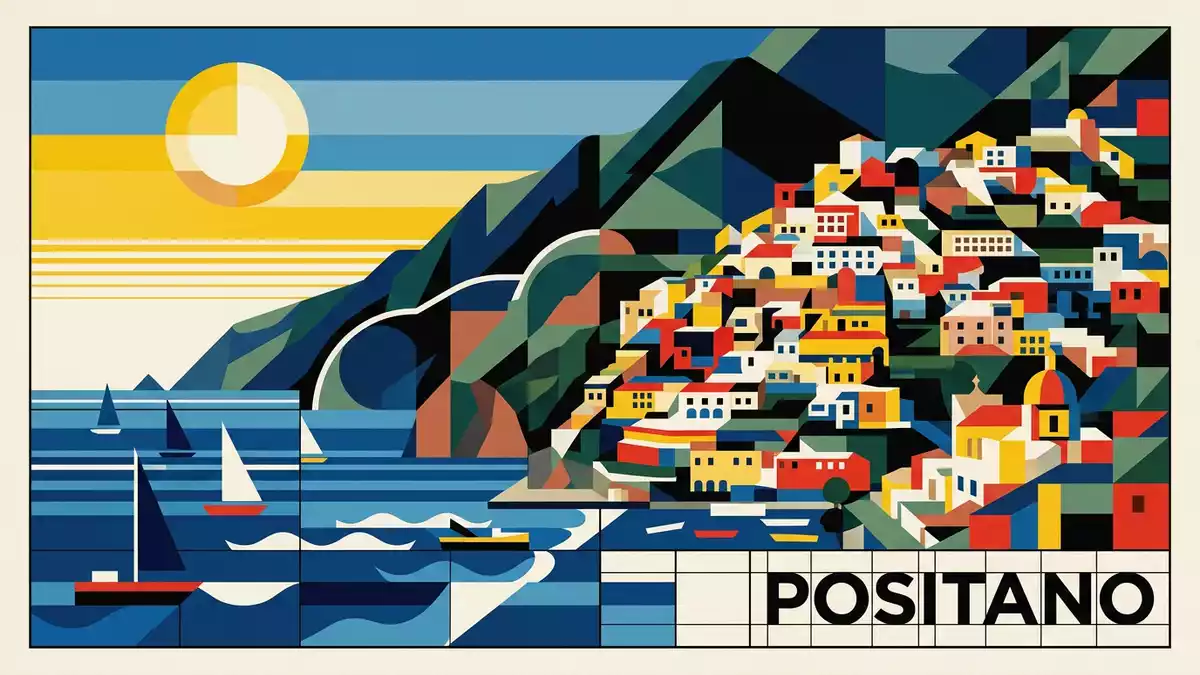
Positano is a cliffside town on Italy’s Amalfi Coast, built in steep tiers on the slopes of the Lattari Mountains above the Tyrrhenian Sea. Its houses, lanes and stairways form a vertical village where stone, plaster and sea views shape everyday life, and its roots reach back to the Roman era and the medieval Republic of Amalfi.
Terraced townscape between mountain and sea
The defining feature of Positano is its dramatic setting: the town descends from the rugged limestone of the Lattari Mountains in a cascade of buildings towards a small shingle beach on the Tyrrhenian Sea. The settlement occupies terraces carved into the slope, with dwellings and workshops stacked above one another on narrow platforms rather than laid out on a flat grid.terraces carved into the Lattari Mountains
Streets in Positano are often stairways, linking clusters of houses rather than broad carriage roads, and the valley is enclosed by high ridges that rise quickly from sea level to greater elevations inland.the steep, cliffside setting along the Amalfi Coast Buildings tend to have rendered facades in soft colours, simple balconies and roof terraces facing the water, taking advantage of the town’s south-facing exposure to sunlight and views across the bay.
Roman villas and a medieval maritime town
Evidence of Roman settlement at Positano includes the remains of patrician villas close to the shoreline, where wealthy families built holiday residences to escape the heat of cities such as Rome and Pompeii.patrician villas along this stretch of coastline One ruined villa lies beneath and beside the later church of Santa Maria Assunta, and its discovery in the late nineteenth century and subsequent excavation has helped to confirm Positano’s role as a resort during the Roman period.a villa discovered at the end of the nineteenth century
After the fall of the Western Roman Empire, Positano became part of the Republic of Amalfi, one of Italy’s historic maritime powers, and from the fifteenth to the seventeenth century it functioned as a market port trading with other towns around the Mediterranean.part of the Amalfi Maritime Republic Frequent raids along the coast by Saracen and Turkish pirates in the sixteenth century led the community to strengthen its defences, adding coastal watchtowers and fortified walls that can still be traced in the landscape around the town.a system of towers along the coast
Santa Maria Assunta and baroque terraces
At the centre of Positano’s seafront quarter stands the church of Santa Maria Assunta, whose origins are linked to a Benedictine monastery dedicated to Saint Mary that existed by the late eleventh century. A document dated 14 June 1159 records the dedication of this church to the Blessed Virgin Mary, placing it firmly in the twelfth century ecclesiastical landscape of the Amalfi area.the dedication recorded on 14 June 1159
Many houses in Positano date from the sixteenth to eighteenth centuries and reflect baroque tastes, with stucco details, external staircases and terraces oriented towards the sea.baroque houses with terraces facing towards the sea Earthquakes in the sixteenth and seventeenth centuries damaged earlier structures, leading to rebuilding in these styles and contributing to the layered townscape visitors see, where medieval routes and defensive points are combined with later domestic architecture on the same steep slopes.
From fishing village to terraced resort
For centuries Positano functioned as a fishing centre, with boats drawn up on the beach and goods moving between small coastal settlements by sea rather than by land.born as a fishermen centre In the nineteenth century economic decline and limited agricultural land on the steep slopes meant that many residents emigrated, particularly to the United States, reducing the town’s population and leaving a quieter community focused on local maritime work.more than half of the population emigrated
During the twentieth century Positano began to attract visitors drawn by its setting above the sea, its stairway lanes and its views along the Amalfi Coast, and hospitality became an important activity alongside fishing. The town’s compact harbour, beach and climbing streets mean that approaching and moving around Positano still involves transitions between sea level and higher terraces, which remain central to its character as a vertical village facing the Tyrrhenian Sea.built into Monti Lattari in graduated tiers
Visiting Positano: what travellers from Western Europe should know
- Positano lies on the Amalfi Coast in southern Italy, in the province of Salerno in the Campania region, facing the Tyrrhenian Sea and reached by coastal roads and local buses from nearby towns.
- The town rises sharply from the shore, and movement between the waterfront and higher quarters involves climbing long flights of steps and walking steep lanes on the terraced slopes.
- The surrounding terrain is mountainous, with limestone ridges and Mediterranean vegetation, and footpaths in the area link Positano with neighbouring coastal and hillside settlements.
- Italian is the official language and the currency is the euro.
Searching for Positano on social platforms
These links open searches for Positano on each platform.Frequently asked questions about Positano
Where is Positano?
Positano is a coastal town in Campania, southern Italy, on the Amalfi Coast in the province of Salerno, facing the Tyrrhenian Sea.
What should travellers expect when visiting Positano?
Travellers encounter a steep terraced settlement where movement often involves climbing stairways between sea level and higher streets, with views of cliffs, houses and the shoreline.
What makes Positano distinctive among Amalfi Coast towns?
Its vertical layout on limestone slopes, the cluster of historic houses around Santa Maria Assunta and the surviving defensive towers along the coast give Positano a characteristic profile.