Potala Palace in Lhasa: a mountain of stone and faith
Published on 09/03/2026 at 14:53 | Editorial responsibility: Rafael Müller, Editor-in-Chief AD HOC NEWS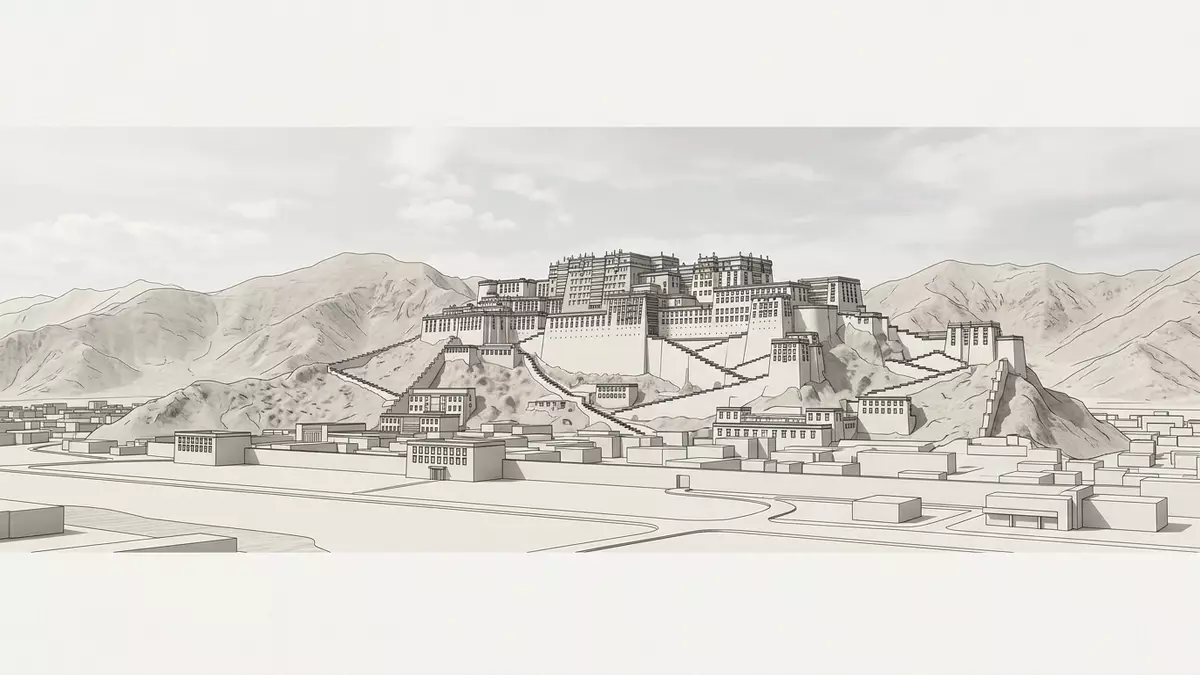
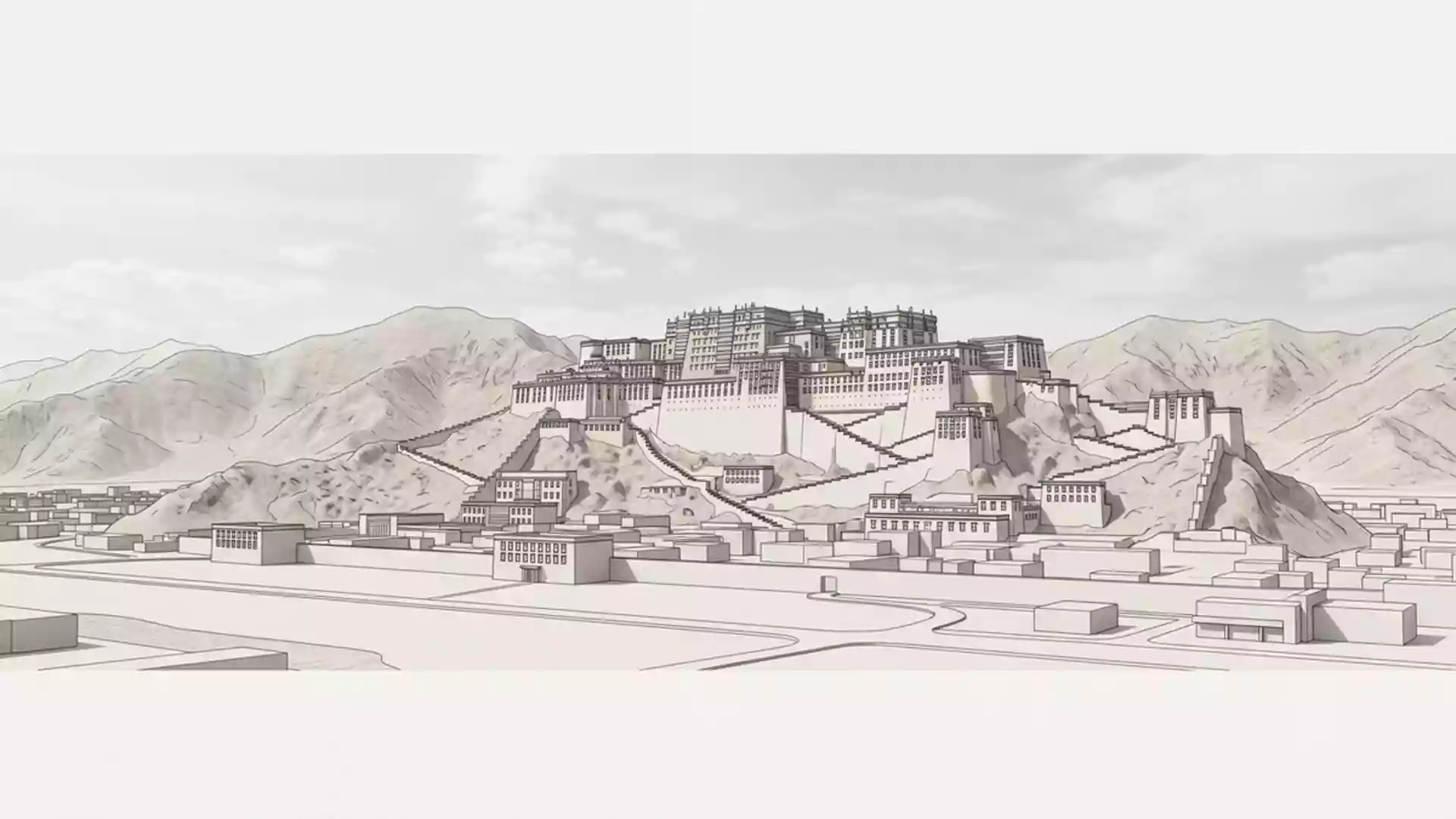
Potala rises over Lhasa as an immense palace complex built into the slope of Red Mountain, its white and red walls stepping up like an artificial mountain of stone.
Potala on Red Mountain above the Lhasa valley
Potala stands on Red Mountain in the centre of the Lhasa valley in the Tibet Autonomous Region of China, with the city spreading around its base.Red Mountain in the centre of Lhasa The palace complex lies at about 3,700 m (12,100 ft) above sea level on the Tibetan plateau, so the first impression is of stone and whitewashed masonry rising high above streets and lower buildings.3,700 metres above sea level
The name Potala links the site to Mount Potala, the mythical abode of Avalokite?vara in Buddhist tradition, and the hill itself had an earlier palace before the present structure took shape in the seventeenth century under the Fifth Dalai Lama.named after Mount Potala From the Lhasa valley, the building dominates views in every direction, its long frontage and rising terraces forming a landmark visible from many streets and squares in the city.
A palace built over centuries for rulers and monks
The history of Potala reaches back to the seventh century, when King Songtsen Gampo commissioned a palace on this hill as part of his rule over Tibet.King Songtsen Gampo commissioned a palace That early structure did not survive intact, but the site retained its importance, and in 1645 the Fifth Dalai Lama, Lozang Gyatso, began construction of the present Potala to serve both religious and governmental roles.construction begun in 1645
The White Palace, or Potrang Karpo, was completed in the 1640s and housed the main government quarters and the winter residence of the Dalai Lama, while the Red Palace, or Potrang Marpo, followed in the 1690s with chapels, assembly halls and stupas of Dalai Lamas.White Palace and Red Palace For centuries Potala served as the winter palace of successive Dalai Lamas, acting as a centre of Tibetan administration and a focus of Tibetan Buddhism in Lhasa and beyond.winter palace of the Dalai Lama since the 7th century
Architecture: fortress, palace and monastery in one
Potala rises to thirteen storeys above its rock base, layered with terraces, sloping walls and bands of windows that give the impression of a palace grown out of the mountain.thirteen-storey seat of government The complex combines features of an ancient fortress, a royal residence and a monastic centre, with inward-facing courtyards, long stairways, and thick masonry that once contributed to its function as a secure stronghold for rulers.
From the outside the White Palace forms the lower and central sections with light-coloured walls, while the Red Palace crowns the upper levels with darker masonry and prominent golden roofs above chapels containing tombs of Dalai Lamas.White Palace and Red Palace arrangement Inside, the layout reflects its layered functions: reception halls and former audience chambers, libraries of Buddhist texts, and temple spaces decorated with murals, sculptures and reliquaries related to Tibetan Buddhist practice.
Visiting Potala: what travellers from Western Europe should know
- Potala stands on Red Mountain above central Lhasa in the Tibet Autonomous Region; the city is reached by flights to Lhasa Gonggar Airport and by the Qinghai–Tibet Railway to Lhasa station.
- The climb from the base area up to the main palace levels involves long stairways and stepped paths at high altitude, so movement between terraces takes place on stone steps and sloping routes.
- Lhasa lies on the Tibetan plateau at about 3,700 m (12,100 ft), and the palace itself rises higher on the hill, so visitors spend time at considerable elevation.
- Nearby sites that share Potala’s historical setting include the Jokhang Temple and the Norbulingka complex, both part of the wider historic ensemble associated with the former Tibetan government.
- The official language is Chinese and the currency is the Chinese yuan.
Searching for Potala on social platforms
These links open searches for Potala on each platform.
Frequently asked questions about Potala
Where is Potala located?
Potala is located on Red Mountain in the Lhasa valley in the Tibet Autonomous Region of China, overlooking the city of Lhasa.
What should visitors expect on a visit to Potala?
Visitors encounter a large palace complex built into a hill, with long stairways, stepped terraces, temple rooms and former government halls at high altitude.
What makes Potala distinctive compared with other palaces?
Potala combines fortress-like walls, royal residences and major monastic spaces in a single thirteen-storey complex rising above the Tibetan plateau.