
Ras Mohammed National Park where desert headlands meet coral walls
Published on 08/19/2026 at 16:13 | Editorial responsibility: Rafael Müller, Editor-in-Chief AD HOC NEWS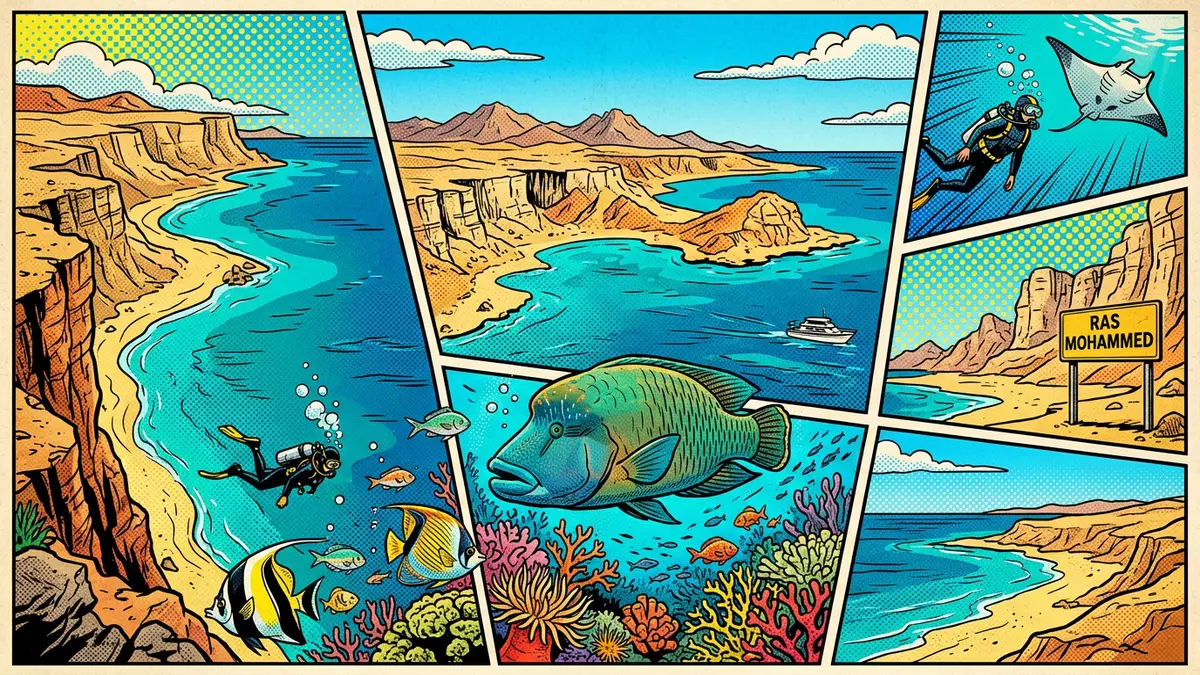
Ras Mohammed National Park is a protected headland and marine reserve at the southern tip of Egypt’s Sinai Peninsula, where the Gulf of Suez and the Gulf of Aqaba meet near Scharm asch-Schaich.The national park was established in 1983, creating a single protected landscape in which bare desert rock drops straight into clear Red Sea water.
Desert promontory at the meeting of two gulfs
Ras Mohammed forms a rocky headland on the South Sinai coast, projecting between the shallow Gulf of Suez to the west and the deep Gulf of Aqaba to the east.The park sits at the southern tip of the Sinai Peninsula, so standing on its cliffs gives wide views over open water in more than one direction.
The protected area covers about 480 km² (185 sq mi) of combined land and sea, with most of that surface made up of Red Sea waters and coral platforms rather than dry ground.Egypt’s State Information Service describes the park as a marine reserve, reflecting the fact that reefs and coastal ecosystems dominate its extent.
Red Sea coral gardens and underwater walls
Ras Mohammed National Park is known among divers for steep coral formations that drop from shallow shelves into deeper blue water, with dense living coral cover close to the surface.Descriptions of the park emphasise its Red Sea reef ecosystems, and many boat trips from Scharm asch-Schaich focus on snorkelling and scuba diving at named reef sites.
Fish life includes reef species such as wrasses, angelfish and butterflyfish, together with larger pelagic visitors in deeper water, while sea turtles and occasional rays move between shallows and drop-offs.Conservation reports on Ras Mohammed highlight a mix of coral reefs, mangroves and seagrass beds, giving the park a variety of marine habitats in a compact area.
Protected status and a short history of conservation
Ras Mohammed National Park was declared in 1983 as Egypt’s first national park, at a time when formal protection of marine environments in the country was still in its early stages.Prime Ministerial decrees in the 1980s created the park as a marine reserve, giving it legal protection as a named conservation area.
Responsibility for the park rests with the Egyptian Environmental Affairs Agency, and regulations prohibit activities such as fishing and unsupervised anchoring within most of its waters.The site appears on international conservation lists as Ras Mohammed National Park, reflecting its role as a key biodiversity area in the northern Red Sea.
Visiting Ras Mohammed National Park: what travellers from Western Europe should know
- Ras Mohammed National Park lies south-west of Scharm asch-Schaich on the Sinai Peninsula, and road access follows the main coastal route from the resort area.
- The terrain combines flat desert tracks with rocky coastal sections, and access to some viewpoints and beaches involves walking over uneven ground.
- The park includes low cliffs close to the shoreline, so paths near the edge may involve small drops and exposed sections above the water.
- The official language is Arabic and the currency is the Egyptian pound. Entry requirements depend on your nationality; UK travellers can check the FCDO travel advice at gov.uk/foreign-travel-advice, Irish travellers the Department of Foreign Affairs at ireland.ie.
Searching for Ras Mohammed National Park on social platforms
These links open searches for Ras Mohammed National Park on each platform.
Frequently asked questions about Ras Mohammed National Park
Where is Ras Mohammed National Park?
Ras Mohammed National Park is at the southern tip of Egypt’s Sinai Peninsula, south-west of Scharm asch-Schaich, between the Gulf of Suez and the Gulf of Aqaba.
What can visitors expect during a visit?
Visitors encounter arid desert landscapes, rocky headlands above clear Red Sea water and access points for snorkelling and diving over coral reefs close to the shore.
What makes Ras Mohammed National Park distinctive?
The combination of desert headland, steep coral formations and protected marine status in a relatively compact area gives Ras Mohammed a distinctive Red Sea character.


