
Recife Antigo, the island quarter where Recife began
Published on 09/21/2026 at 06:04 | Editorial responsibility: Rafael Müller, Editor-in-Chief AD HOC NEWS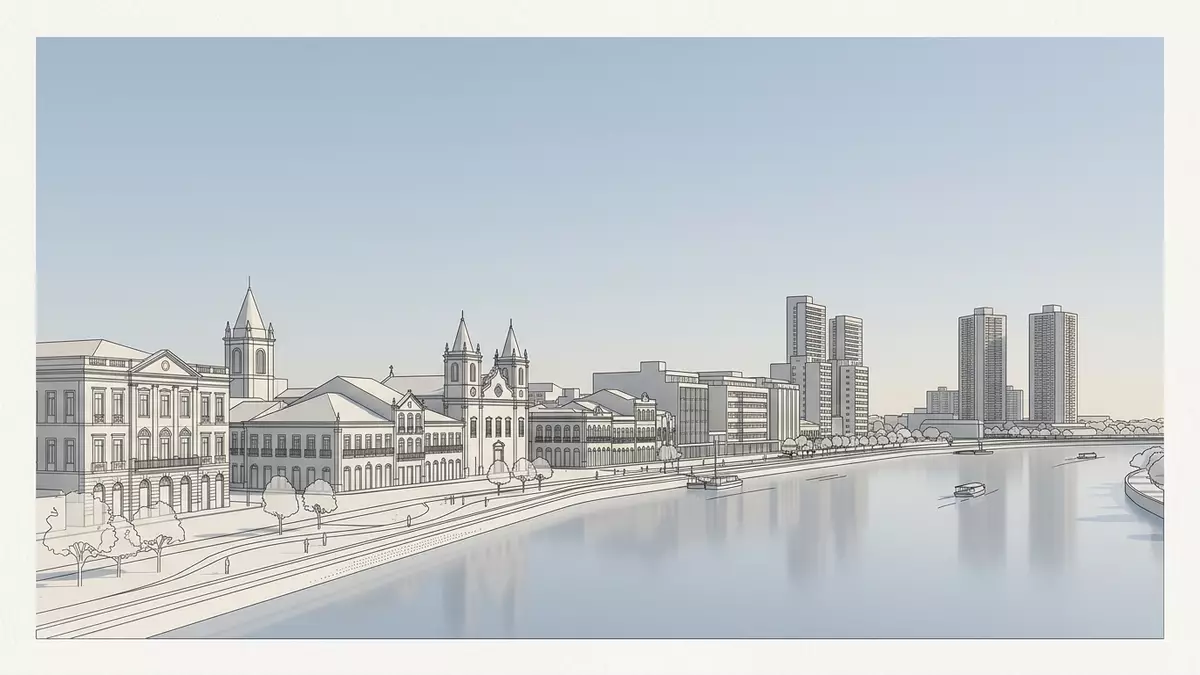
Recife Antigo in Recife, Brazil, is the historic island quarter where the city first took shape along river channels, docks and cobbled streets on the Island of Recife in the sixteenth century.historic island quarter Officially known as Bairro do Recife, this waterside district forms the eastern part of Recife’s historic centre at the point where the Capibaribe and Beberibe rivers meet the Atlantic harbour.Bairro do Recife
Island geography and the port-city setting
Recife Antigo occupies the Island of Recife, a strip of low ground bordered by the Capibaribe and Beberibe rivers on one side and the harbour basin on the other.island bordered by rivers The neighbourhood reads as an island quarter framed by water and quays, with bridges linking its streets to the rest of central Recife.
This maritime setting reflects Recife’s origins as a port city serving the sugar-producing hinterland of Pernambuco from the sixteenth century, when the first streets and warehouses clustered close to the docks.initial Portuguese settlement in the sixteenth century The district’s waterside squares and cobbled pavements keep that port-city character visible, even as former harbour buildings now accommodate cultural and civic uses.
Marco Zero and the historic streets
At the heart of Recife Antigo stands Praça Rio Branco, widely known as Marco Zero, the official reference point from which road distances in Pernambuco are measured.Praça Rio Branco, known as Marco Zero A bronze monument to the Barão do Rio Branco, sculpted by Félix Charpentier and inaugurated in 1917, rises from the centre of the square beside the marker installed in 1938.bronze monument inaugurated in 1917
From Marco Zero, cobbled streets run inland past façades that reflect several architectural periods, from colonial townhouses to early twentieth-century buildings influenced by French urban design.French-influenced urban design Along routes such as Rua do Bom Jesus and Rua da Moeda, restored casarios accommodate museums, cultural centres and other public spaces within structures that retain original details on their external walls.Rua do Bom Jesus and Rua da Moeda
Warehouses, culture and the waterfront
Near the quays, large former warehouses and customs buildings stand along Avenida Alfredo Lisboa, their long façades facing the harbour basin.Avenida Alfredo Lisboa warehouses Many of these armazéns retain masonry walls, tall openings and period cornices, while housing craft markets, exhibition halls and other cultural venues.
The waterfront also includes sites such as the Paço do Frevo, Torre Malakoff, the Cais do Sertão museum and the Centre of Handicrafts of Pernambuco, each occupying a building tied to Recife’s harbour history.Paço do Frevo and Cais do Sertão Across the basin, the Parque das Esculturas Francisco Brennand extends into the water on a long pier, visible from the squares of Recife Antigo as part of the wider harbour landscape.Parque das Esculturas
Visiting Recife Antigo: what travellers from Western Europe should know
- Recife Antigo forms the eastern part of Recife’s historic centre on the Island of Recife, bordered by the Capibaribe and Beberibe rivers and the harbour, and is reached across bridges from neighbouring districts such as São José, Boa Vista and Santo Amaro.
- Inside the quarter, many streets are paved with cobbles and some waterfront areas are wide, open squares, so walking involves uneven surfaces and stretches without shade.
- Recife Antigo lies in Brazil; the official language is Portuguese and the currency is the Brazilian real.
- Entry requirements depend on your nationality; UK travellers can check the FCDO travel advice at gov.uk/foreign-travel-advice, Irish travellers the Department of Foreign Affairs at ireland.ie.
Searching for Recife Antigo on social platforms
These links open searches for Recife Antigo on each platform.Frequently asked questions about Recife Antigo
Where is Recife Antigo located within Recife?
Recife Antigo is the official Bairro do Recife on the Island of Recife, forming the eastern part of Recife’s historic centre between the Capibaribe and Beberibe rivers and the harbour.
What should visitors expect on a first walk through Recife Antigo?
Visitors find a waterside district with cobbled streets, riverfront squares such as Marco Zero, restored warehouses, historic churches and cultural venues housed in port-era buildings.
What makes Recife Antigo distinctive among Brazilian historic quarters?
The combination of its island geography, sixteenth-century port origins, the road-distance marker at Marco Zero and the reuse of harbour structures for culture and craft gives Recife Antigo a distinctly maritime historic character.


