
Rose Hall Great House and its stone-and-stucco Georgian form
Published on 09/24/2026 at 05:03 | Editorial responsibility: Rafael Müller, Editor-in-Chief AD HOC NEWS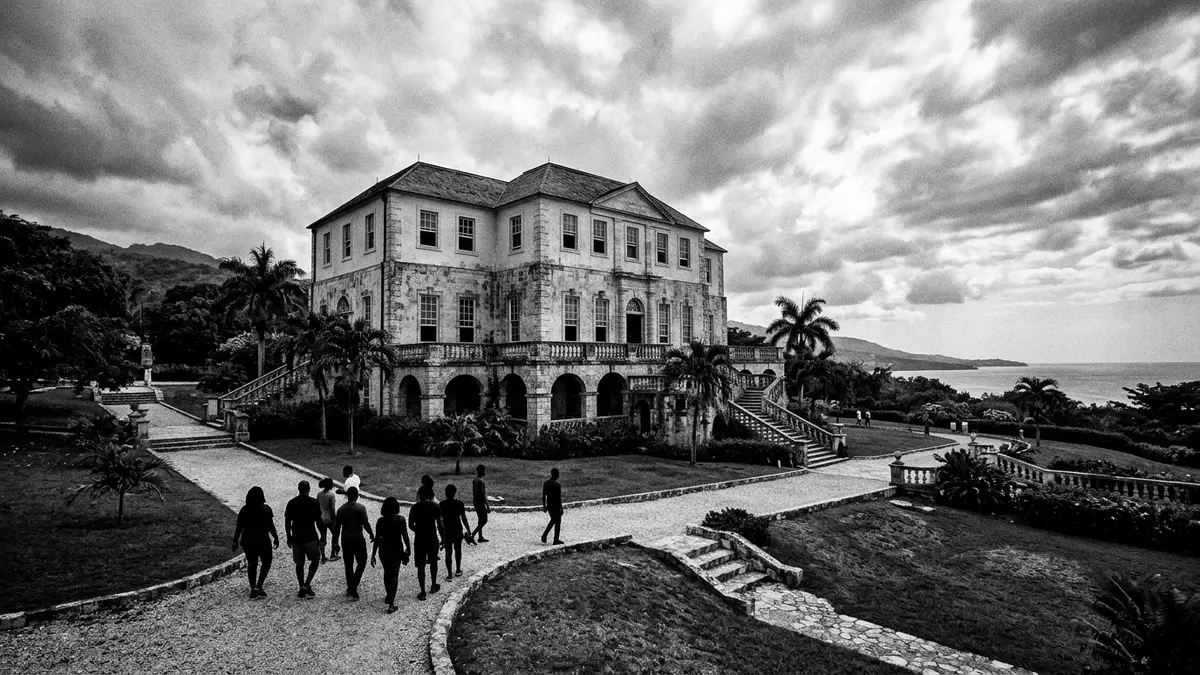
Rose Hall Great House rises above Jamaica’s north coast near Montego Bay as a Georgian plantation mansion of cut stone, stucco and timber. Built around 1770, the three-storey house combines formal architectural detail with the difficult history of sugar production and enslaved labour.
Rose Hall Great House: a Georgian house above the Caribbean
The house stands in Saint James Parish, east of Montego Bay, on rising ground above the coastal road and the Caribbean Sea. Its position places the building within the former Rose Hall Sugar Estate, a large property associated with cane fields, pasture and plantation administration.
The lower levels use dressed stone, while the upper level is rendered in stucco. A hipped roof, quoins, keystones and sash windows define the exterior. The arrangement belongs to the Georgian architectural tradition that developed in Britain during the eighteenth century and took a distinct form in Jamaica.
Stone, mahogany and the rooms of a great house
The interior contains mahogany floors, panelling, wooden ceilings, interior doorways and restored furnishings. A cut-stone staircase rises from the second level towards the seaward veranda, linking the formal rooms with the broad exterior gallery.
The architectural language is measured rather than theatrical. Symmetry, classical details and pale rendered surfaces sit beside heavy timber, masonry and tropical planting. The contrast between the stone base and stucco upper storey remains visible throughout the house. Rose Hall’s architectural details include the staircase, hipped roof, sash windows and stonework.
Plantation history and the White Witch legend
Rose Hall began as part of Jamaica’s eighteenth-century sugar economy. George Ash is associated with the estate’s establishment, while the house became closely linked with John Palmer, a planter whose name remains part of its recorded history.
The plantation depended on the forced labour of enslaved Africans. That history gives the elegant rooms a second meaning beyond furnishings and architecture. The house also carries the legend of Annie Palmer, known as the White Witch of Rose Hall. Stories portray her as a violent plantation mistress, but the legend belongs to folklore rather than the same category as the house’s architectural record.
Rose Hall suffered long damage and neglect before restoration gave the building its present museum character. The property is described as a restored eighteenth-century house, with rooms presenting plantation life, colonial society and the continuing story attached to Annie Palmer. The restored eighteenth-century house remains the centre of the property.
Visiting Rose Hall Great House: what travellers from Western Europe should know
- Rose Hall Great House stands in Saint James Parish, east of Montego Bay, above Jamaica’s northern coastal road. Montego Bay is the nearest major urban reference point.
- The approach includes the house’s stone staircase and elevated setting. The building itself has multiple levels, a seaward veranda and rooms reached through the interior circulation.
- The official language is English and the currency is the Jamaican dollar.
- Rose Hall Great House belongs to a wider plantation landscape, with the Caribbean Sea visible from the elevated grounds.
Searching for Rose Hall Great House on social platforms
These links open searches for Rose Hall Great House on each platform.
Frequently asked questions about Rose Hall Great House
Where is Rose Hall Great House?
Rose Hall Great House is in Saint James Parish on Jamaica’s north coast, east of Montego Bay. It stands above the coastal road and the Caribbean Sea.
What can visitors expect inside?
The house contains restored rooms with mahogany floors, panelling, wooden ceilings and period furnishings. The interior also includes a cut-stone staircase leading towards a seaward veranda.
What makes Rose Hall Great House distinctive?
Its identity rests on the meeting of Georgian architecture, plantation history and the Annie Palmer legend. Cut stone, stucco, timber and the elevated coastal setting define the physical character of the place.


