
Royal Botanic Gardens in Melbourne’s riverside landscape
Published on 08/26/2026 at 08:50 | Editorial responsibility: Rafael Müller, Editor-in-Chief AD HOC NEWS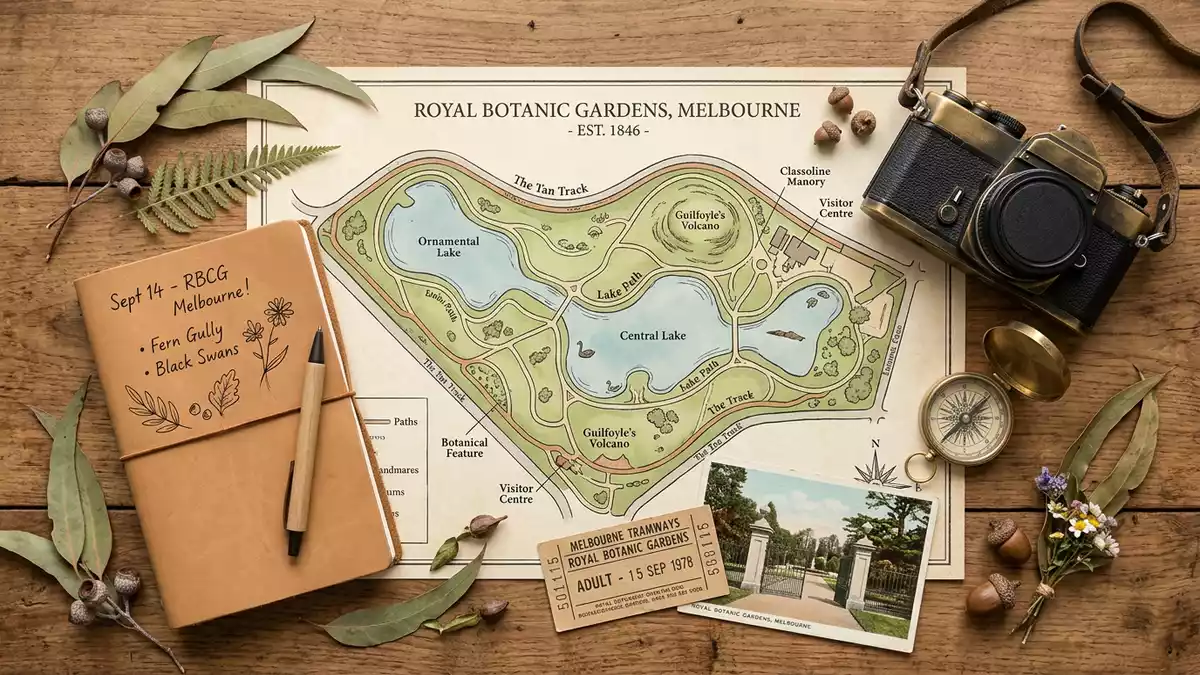
Royal Botanic Gardens in Melbourne is a sprawling nineteenth century landscape garden on the south bank of the Yarra River, shaped around lawns, lakes and diverse plant collections. Established in 1846 and later granted the “Royal” title in the mid twentieth century, it has grown into a major botanical institution with a carefully composed riverside setting.
A nineteenth century garden on the Yarra
The Melbourne section of Royal Botanic Gardens was founded in 1846, when land on the south side of the Yarra River was reserved for a botanic garden close to Government House and the Melbourne Observatory.commenced in 1846 The site choice placed the gardens within walking distance of the growing town centre while giving them slopes and river frontage to work with. Early development focused on fencing a small portion of the reserve and beginning systematic planting, laying the groundwork for a larger pleasure garden.
Through the later nineteenth century, the gardens expanded from an initial fenced area of about 2 ha to a reserve of roughly 36 ha (89 acres), gaining more ground from the surrounding Domain as their role in Victoria’s botanical life grew.Botanic Gardens reserve is now 36ha The institution later became known as Royal Botanic Gardens Victoria, encompassing both the Melbourne Gardens and the separate Cranbourne site devoted to Australian landscapes.Royal Botanic Gardens Victoria
Designers, directors and a picturesque vision
The history of Royal Botanic Gardens in Melbourne is tied closely to the directors who shaped its planting and layout. Ferdinand von Mueller, appointed Director in 1857 after serving as government botanist, introduced a strong scientific dimension with the National Herbarium of Victoria, collecting and acclimatising plants from around Australia and overseas.Ferdinand von Mueller became Director in 1857 His tenure emphasised botany and experimentation, and herbarium buildings near the gardens underlined the connection between living collections and scientific study.National Herbarium of Victoria
In 1873 William Guilfoyle took over as Director and reshaped the gardens into a more picturesque landscape, replacing straight paths with sweeping curves, softening avenues and distributing specimens and themed beds across open lawns.landscape redesigned in a more picturesque style Under Guilfoyle, subtropical plants gained a visible presence, and the water bodies became broad ornamental features amid banks, shrubberies and tree groups. His design, implemented between the 1870s and early twentieth century, still guides the overall arrangement, giving the garden its characteristic combination of open vistas and enclosed corners.comprehensively relandscaped from 1873-1909
Lakes, lawns and living collections
The Melbourne Gardens occupy more than 38 ha (94 acres), making them a sizeable green expanse within the inner city.covers more than 38 hectares The terrain undulates gently down towards the Yarra, and visitors encounter sequences of lawns punctuated by specimen trees, shrubberies and garden beds. Broad ornamental lakes lie at the heart of the design, including Ornamental Lake, Central Lake and Nymphaea Lily Lake, which act as still-water focal points framed by paths and planting.three main ornamental water bodies
The living collections range from tall trees and conifers to palms, succulents, perennials and aquatic plants along the lake margins. Formal structures, such as glasshouses and herbarium buildings, sit within or beside the landscaped grounds, marking the link between horticulture and scientific research.National Herbarium of Victoria Pathways weave around the lakes and lawns, creating circuits that reveal changes in planting style, from dense botanical displays to more open park-like areas with long views across water and grass.
Visiting Royal Botanic Gardens: what travellers from Western Europe should know
- Royal Botanic Gardens lies on the south side of the Yarra River near central Melbourne, bordered by Birdwood Avenue and close to Government House and the Melbourne Observatory. Public transport routes and local roads reach the surrounding South Yarra and Domain precincts.
- The grounds are extensive, with gently sloping terrain, long paths around lakes and large lawns that can involve substantial walking for a full circuit.
- The climate in Melbourne brings warm summers and mild, sometimes cool, winters, and the gardens contain both shaded sections under mature trees and more exposed stretches beside the lakes.
- The official language is English and the currency is the Australian dollar.
- Entry requirements depend on your nationality; UK travellers can check the FCDO travel advice at gov.uk/foreign-travel-advice, Irish travellers the Department of Foreign Affairs at ireland.ie.
Searching for Royal Botanic Gardens on social platforms
These links open searches for Royal Botanic Gardens on each platform.
Frequently asked questions about Royal Botanic Gardens
Where are Royal Botanic Gardens in Melbourne located?
Royal Botanic Gardens occupies riverside land on the south side of the Yarra River, near Government House and the Melbourne Observatory in the inner city.
What can visitors expect during a visit?
Visitors encounter extensive lawns, ornamental lakes, themed plantings and formal structures such as glasshouses and herbarium facilities linked by curving paths.
What makes Royal Botanic Gardens distinctive among Melbourne’s green spaces?
The gardens combine nineteenth century picturesque design by William Guilfoyle with large living collections and the presence of the National Herbarium of Victoria.


