
Sossusvlei’s red dunes and white pan in Namib-Naukluft
Published on 08/31/2026 at 21:09 | Editorial responsibility: Rafael Müller, Editor-in-Chief AD HOC NEWS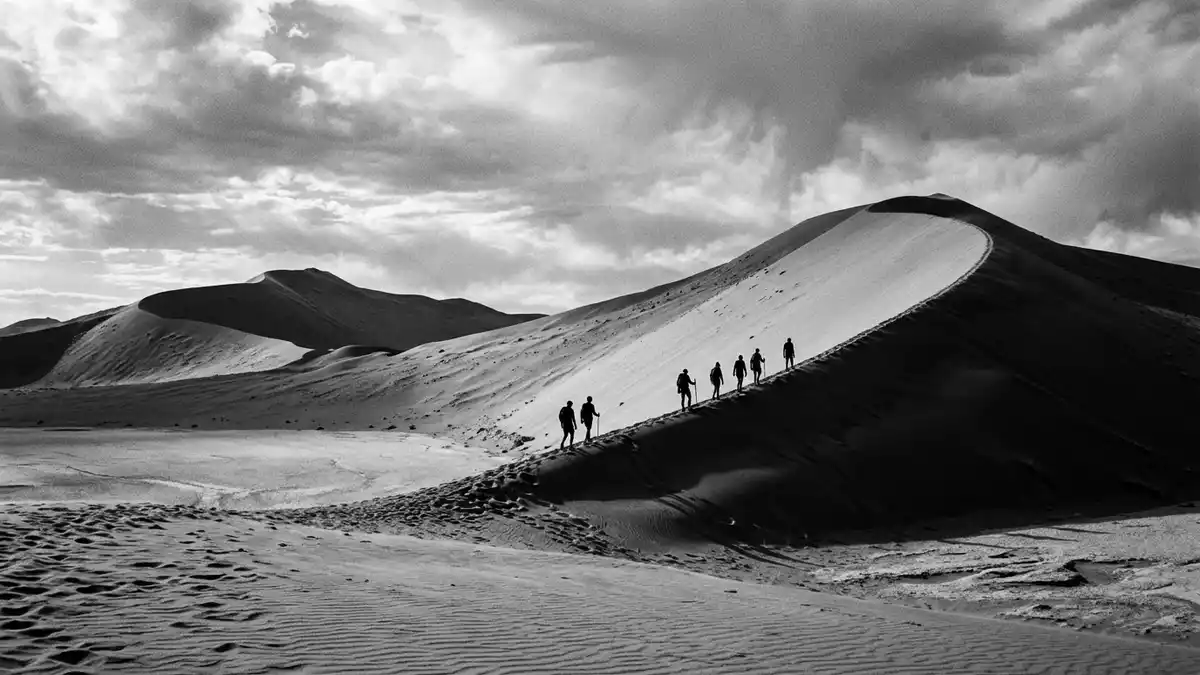
Sossusvlei is a salt and clay pan encircled by towering red sand dunes in the Namib-Naukluft National Park of Namibia, where a dry river meets the desert and stops.salt and clay pan The lead impression is a strong contrast between the pale, cracked pan underfoot and the massive dunes that rise above it in deep shades of orange and red.
Dunes that rise over the desert pan
Sossusvlei lies in the southern Namib Desert, within the Namib Sand Sea, a dune field covering tens of thousands of square kilometres in western Namibia.southern region of the Namib Desert Here the Tsauchab River, usually a dry riverbed, ends in an enclosed basin, forming a pan that is generally white in colour and flat across its surface.endorheic drainage basin for the Tsauchab River
The dunes surrounding Sossusvlei rise to heights of well over 300 m (around 1,000 ft), making them among the tallest sand formations associated with a visitor area in Namibia.dunes reach heights of over 300 meters Their colour comes from oxidised iron in the sand grains, giving a rust-like tone that shifts with the angle of the sun from soft apricot to deep red.dunes coloured bright red and orange by oxidised iron
Salt pans and dead trees: Sossusvlei and Deadvlei
Strictly speaking, the name Sossusvlei refers to the pan at the end of the Tsauchab River’s course, where water gathers during rare floods before evaporating and leaving pale salts behind.place where the dunes come together preventing the Tsauchab River to flow any further The wider area, however, includes several neighbouring pans and dunes that travellers often treat as a single destination, linked by the same red sand and open desert views.entire area comprising Dune 45, Big Daddy Dune, Deadvlei and Hiddenvlei
Near Sossusvlei lies Deadvlei, a clay pan with a firm, pale floor and the dark silhouettes of long-dead camelthorn trees standing against the surrounding dunes.white clay pan located near the salt pan of Sossusvlei Together Sossusvlei, Deadvlei and the other vleis in this part of the Namib Sand Sea form a landscape where water’s occasional presence is recorded in the clay and vegetation, yet the prevailing impression is one of aridity and exposed sand.surrounded by sand dunes and dry pans that sometimes fill with water
Namib-Naukluft National Park and the wider desert setting
Sossusvlei sits within Namib-Naukluft National Park, described as the largest conservation area in Africa, extending over tens of thousands of square kilometres across desert, gravel plains and mountain ranges.largest conservation area in Africa The park includes the central Namib dunes, the pans around Sossusvlei and Sesriem Canyon, with the dunes forming part of a protected dune sea that has been recognised as a World Heritage landscape.located in the Namib Sand Sea within Namib-Naukluft National Park
The Namib Desert has a hyper-arid climate, with very low annual rainfall and marked differences between day and night temperatures across the year.hyper-arid climate with minimal rainfall Wind-driven sand, rare floods along the Tsauchab River and strong sunlight shape the physical character of Sossusvlei, leaving a landscape where dunes, pans and dry riverbeds are the defining elements rather than vegetation or permanent surface water.
Visiting Sossusvlei: what travellers from Western Europe should know
- Sossusvlei lies in the Namib-Naukluft National Park in south-western Namibia, reached through the small settlement of Sesriem on the park’s access road.main entrance to the Namib-Naukluft National Park is at Sesriem
- The pans and dunes are approached along a desert track from Sesriem, with the final stretch crossing deep sand that calls for vehicles suited to loose surfaces or organised transport within the park.white salt and clay pan surrounded by high red dunes
- The terrain around the pan consists of soft sand and exposed clay, and climbing the dunes involves sustained walking on loose surfaces and slopes with no shade.
- Namibia’s official language is English and the currency is the Namibian dollar.
- Entry requirements depend on your nationality; UK travellers can check the FCDO travel advice at gov.uk/foreign-travel-advice, Irish travellers the Department of Foreign Affairs at ireland.ie.
Searching for Sossusvlei on social platforms
These links open searches for Sossusvlei on each platform.
Frequently asked questions about Sossusvlei
Where is Sossusvlei?
Sossusvlei is in the Namib Sand Sea within Namib-Naukluft National Park in south-western Namibia, in the southern part of the Namib Desert.
What does a visit to Sossusvlei involve?
A visit centres on the salt and clay pans and the surrounding red dunes, with time spent walking on soft sand, exposed clay and slopes under strong desert sun.
What makes Sossusvlei distinctive?
The combination of a pale, flat pan, towering red dunes and nearby pans such as Deadvlei with dead trees standing on clay gives Sossusvlei a striking desert character.


