
Statue of Liberty: a copper giant in New York Harbor
Published on 09/21/2026 at 06:01 | Editorial responsibility: Rafael Müller, Editor-in-Chief AD HOC NEWS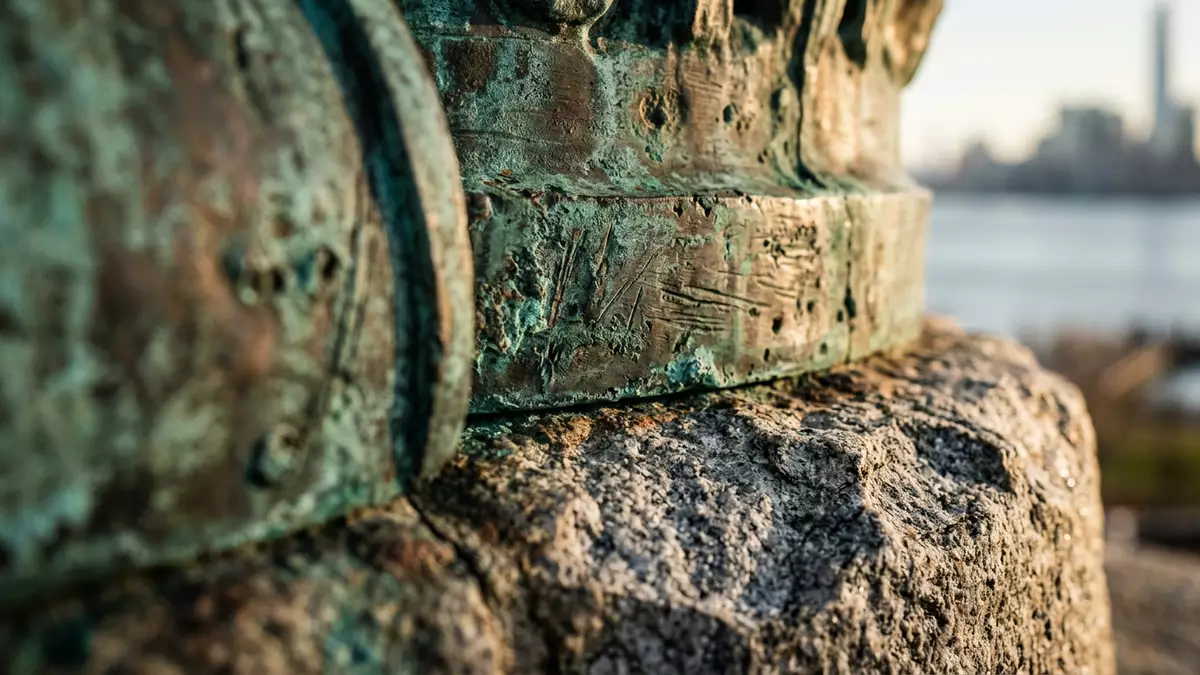
The Statue of Liberty stands as a colossal copper figure on Liberty Island in New York Harbor, facing the channels that lead towards New York City. Gifted by France and dedicated on 28 October 1886, the monument combines neoclassical sculpture with an internal iron framework to create a towering personification of liberty that has become one of the most recognisable silhouettes in world architecture.
A neoclassical figure of “Liberty Enlightening the World”
The Statue of Liberty depicts a robed woman holding a torch aloft in her right hand and a tablet in her left, its inscription marking the date of the United States Declaration of Independence in Roman numerals.the tablet inscription Her crown carries seven pointed rays that symbolise both light and the seven seas and continents, reinforcing the statue’s original title, “Liberty Enlightening the World”, which appears in French as “La Liberté éclairant le monde”.Liberty Enlightening the World This personification of liberty follows neoclassical conventions, echoing earlier depictions of the Roman goddess Libertas in its drapery and attributes.
French sculptor Frédéric Auguste Bartholdi designed the statue, while the internal framework was engineered by Gustave Eiffel, later renowned for the tower in Paris that bears his name.Frédéric Auguste Bartholdi and Gustave Eiffel The figure was built in France between 1875 and 1884, then disassembled into hundreds of copper pieces for shipment across the Atlantic before reassembly on its pedestal in New York Harbor.construction in France and dedication date
Copper skin, iron spine and monumental scale
Structurally, the Statue of Liberty combines an iron framework and concrete foundation with a relatively thin copper outer skin. The copper sheets are only about 3/32 of an inch thick, roughly the thickness of two coins placed together, yet they form the visible surface of the figure, drapery and attributes.thickness of copper sheeting Inside, large iron columns and a lattice framework hold the skin in place, creating what National Park Service material describes as the statue’s “spine”.internal iron framework
The figure itself rises to around 46 m (151 ft) from heel to head, and when combined with its pedestal and foundation the monument reaches a total height of about 93 m (305 ft).statue and pedestal height At the time of its dedication in 1886 it ranked among the tallest iron structures in the United States, and its proportions remain striking: the arm bearing the torch measures around 14 m (46 ft), while the nose alone runs to nearly 1.5 m (5 ft).torch arm and facial dimensions From the pedestal up to the crown, visitors follow a staircase of several hundred steps inside the structure, moving between the framework and the copper skin.
Liberty Island, Ellis Island and a global heritage designation
The statue stands on Liberty Island in Upper New York Bay, south-west of Manhattan and near the approaches to the Hudson and East Rivers.Liberty Island in New York Harbor The island itself forms part of the Statue of Liberty National Monument, a protected area that also includes neighbouring Ellis Island, historically associated with immigration to the United States.Statue of Liberty National Monument From the water, the relationship between the statue, its pedestal and the low-lying island platform is clear, with the copper figure rising above the granite base and the harbour.
In 1984 the Statue of Liberty gained recognition as a UNESCO World Heritage Site, underscoring its significance as a symbol of liberty and the historical ties between France and the United States.UNESCO World Heritage inscription The monument is also designated as a National Monument in the United States, with the National Park Service managing the site and its surrounding waters as a protected cultural landscape.National Monument designation Liberty Island’s open harbour setting, with views towards Manhattan and New Jersey, frames the statue against the urban skyline and the tidal waterways of New York City.
Visiting Statue of Liberty: what travellers from Western Europe should know
- Liberty Island lies in Upper New York Bay, reached by boat services that depart from waterfront points near the southern tip of Manhattan and from the New Jersey shore.
- The approach involves embarkation at a ferry terminal, passage across busy harbour waters and disembarkation on the island, followed by walking on paved surfaces and climbing stairs within the monument complex.
- Liberty Island’s terrain is generally level around the perimeter, with the statue itself rising on a pedestal reached by a series of steps and interior stairways.
- The Statue of Liberty National Monument is in the United States; the official language is English and the currency is the US dollar.
- Entry requirements depend on your nationality; UK travellers can check the FCDO travel advice at gov.uk/foreign-travel-advice, Irish travellers the Department of Foreign Affairs at ireland.ie.
Searching for Statue of Liberty on social platforms
These links open searches for Statue of Liberty on each platform.
Frequently asked questions about Statue of Liberty
Where is the Statue of Liberty located?
The Statue of Liberty stands on Liberty Island in Upper New York Bay, close to the approaches to New York City and near Ellis Island.
What can visitors expect when they visit the Statue of Liberty?
Visitors take a boat to Liberty Island, walk around the monument complex on paved paths and, with the appropriate access, climb interior stairways within the pedestal and statue.
What makes the Statue of Liberty distinctive among world monuments?
Its combination of neoclassical sculpture, copper skin, iron framework and harbour setting, together with its 1886 dedication as a Franco-American gift, gives the Statue of Liberty its distinctive character.


