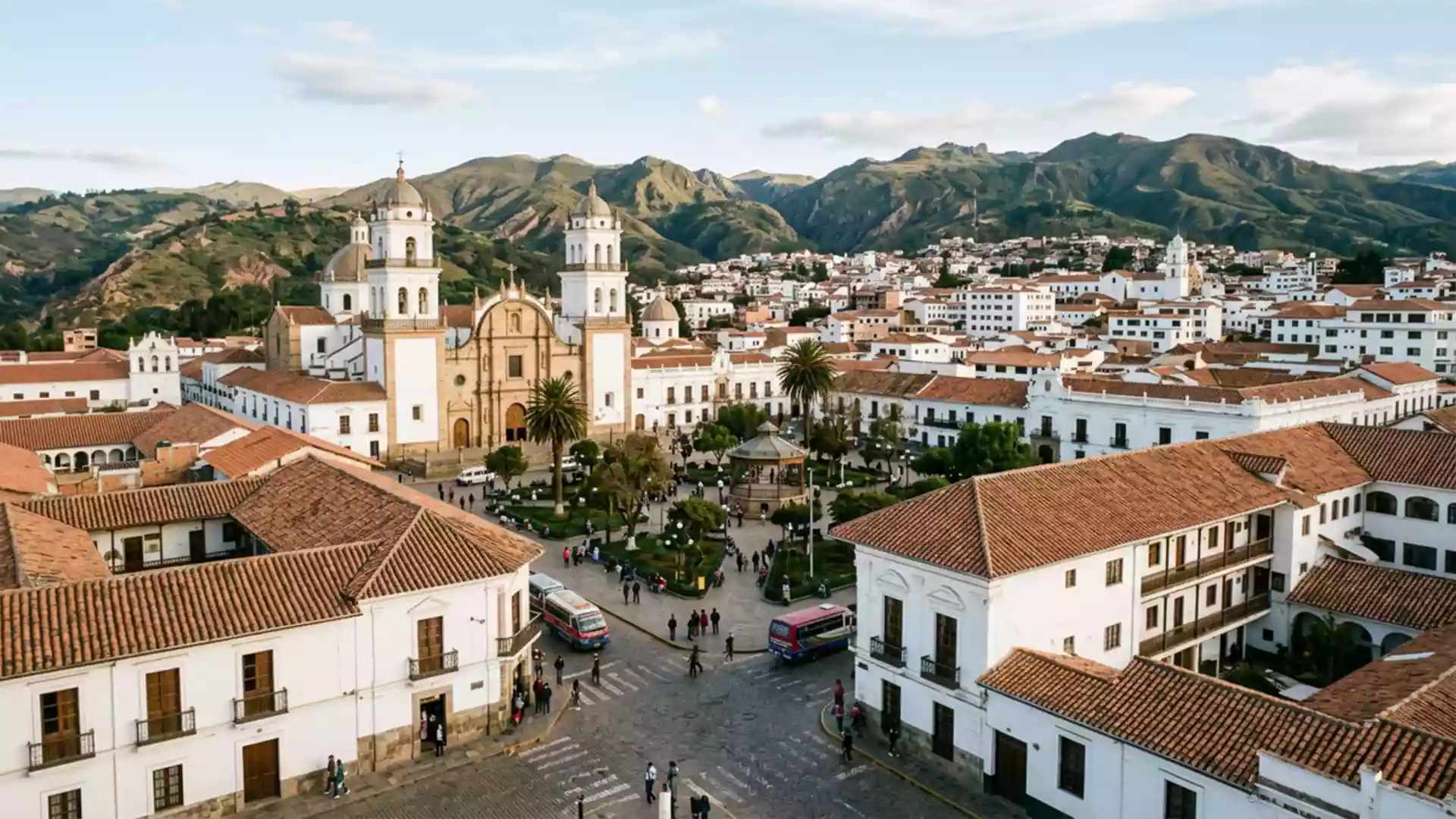
Sucre council confirms access rules at Historic City of Sucre on 17 October
Published on 10/31/2026 at 16:13 | Editorial responsibility: Rafael Müller, Editor-in-Chief AD HOC NEWSAccess rules and heritage setting
- Sucre council confirmed the new pedestrianisation law for 17 October 2026.
- Plaza 25 de Mayo will be pedestrianised on three Sundays each month under the approved rules.
- UNESCO inscribed the Historic City of Sucre on the World Heritage List in 1991.
- Casa de la Libertad dates from 1621 within the protected 113.76-hectare property.
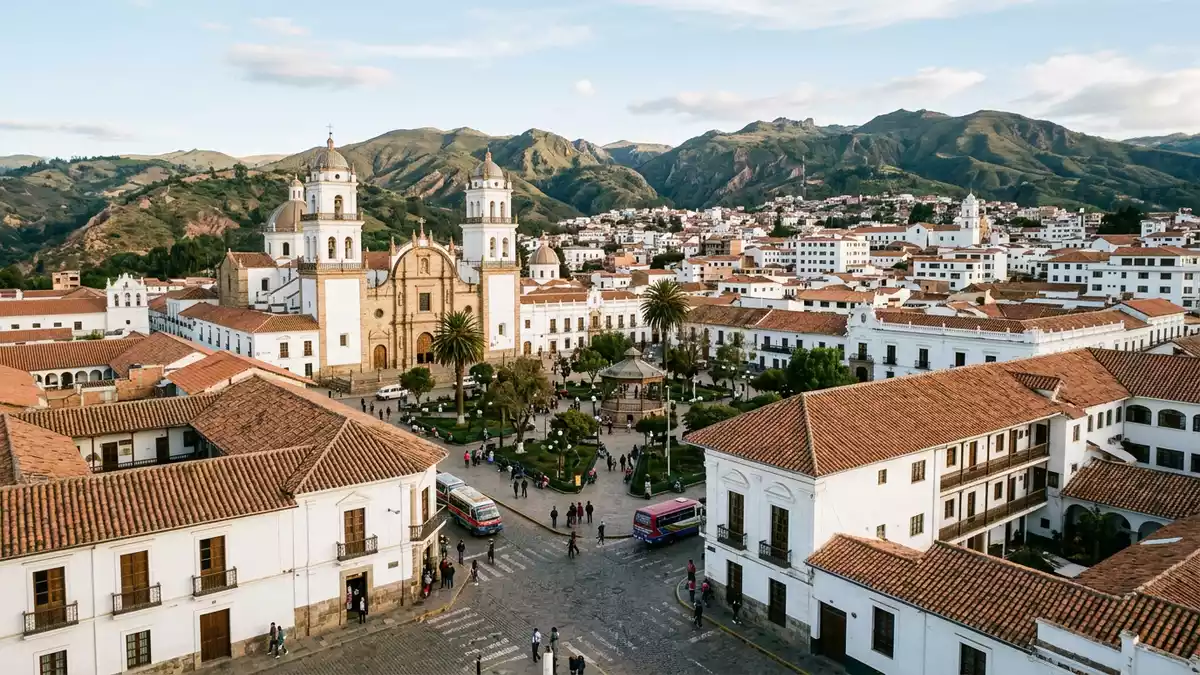
Sucre council has confirmed new pedestrianisation rules for the Historic City of Sucre (Centro Histórico de Sucre), with the decision reported on 17 October 2026. The measure changes how vehicles can approach Plaza 25 de Mayo and reshapes the regular cultural Sundays in Sucre, Bolivia.
New pedestrianisation law changes Sunday access
The new law was approved by the municipal council before the 17 October report, according to the council approval report. It provides for vehicle restrictions around Plaza 25 de Mayo on three Sundays each month, while the fourth Sunday brings a broader pedestrian area extending one block around the square.
Under the arrangement, vehicles can travel only as far as the edges of the plaza on the three more limited Sundays. On the fourth Sunday, the restriction covers the surrounding block as well. The council president said the law would be signed and become fully effective in the following days, making the 17 October announcement relevant to visits during the current travel window.
The rule follows debate over how often the centre should close to traffic. A separate municipal statement reported on 8 October described the measure as a way to support conservation, cultural activity and tourism in the protected area. The decision is therefore not simply a traffic change: it links the square used for the city’s cultural Sundays with the management of a UNESCO-listed urban ensemble.
Sucre heritage shapes the access debate
UNESCO describes the Historic City of Sucre as the first capital of Bolivia, founded by the Spanish in 1538. The city developed on a checkerboard street plan and preserves religious buildings from the sixteenth century, including San Lázaro, San Francisco and Santo Domingo.
The World Heritage property covers 113.76 hectares and contains buildings from the sixteenth to the nineteenth centuries. UNESCO says the architecture combines local traditions with styles introduced from Europe, while the wider protected area includes a 358.24-hectare buffer zone. The pedestrianisation rules place the busiest civic square inside that carefully managed setting.
Casa de la Libertad, constructed in 1621 as part of a Jesuit convent, is among the named monuments in the centre. The Metropolitan Cathedral also forms part of the historical cityscape; its construction began in 1559 and was completed 250 years later. These dates help explain why vehicle access around the main square is a heritage-management issue rather than only a transport question.
Visiting Historic City of Sucre: what travellers from Western Europe should know
- The new access rules were confirmed on 17 October 2026 and concern Sunday pedestrianisation around Plaza 25 de Mayo.
- Three Sundays each month restrict vehicles to the edges of the plaza; on the fourth Sunday, the pedestrian area extends one block around it.
- Sucre is in central-south Bolivia, in the foothills of the Sica Sica and Churuquella mountains. Plaza 25 de Mayo is the central reference point for the protected city area.
- The property includes a checkerboard street plan, historic churches and narrow urban streets dating from the sixteenth to nineteenth centuries.
- Spanish is the official language used for municipal information in Sucre, and Bolivia’s national currency is the boliviano.
- Entry requirements depend on your nationality; UK travellers can check the FCDO travel advice at gov.uk/foreign-travel-advice, Irish travellers the Department of Foreign Affairs at ireland.ie.
Searching for Historic City of Sucre on social platforms
These links open searches for Historic City of Sucre on each platform.
Frequently asked questions about Historic City of Sucre
What changed at Historic City of Sucre?
Sucre council approved new pedestrianisation rules affecting Plaza 25 de Mayo. Three Sundays each month have narrower vehicle restrictions, while the fourth Sunday covers the surrounding block.
Where is Historic City of Sucre and how do you get there?
The World Heritage property is in Sucre, in central-south Bolivia. Plaza 25 de Mayo provides the main civic reference point within the protected area.
What is Historic City of Sucre?
It is Sucre’s protected historic urban area, founded in 1538 and inscribed on the UNESCO World Heritage List in 1991.