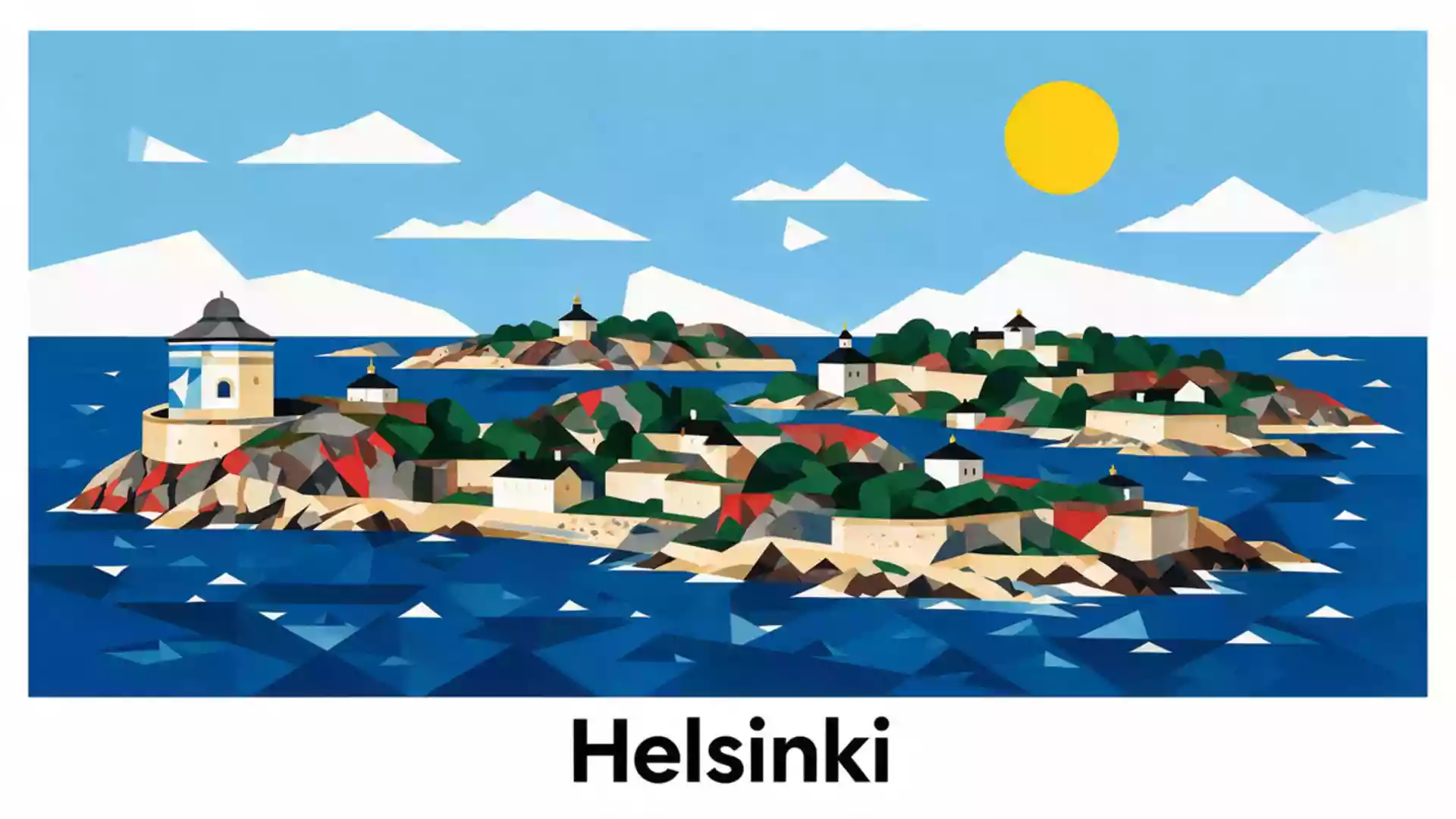
Suomenlinna: a stone sea fortress woven into Helsinki’s islands
Published on 08/30/2026 at 14:22 | Editorial responsibility: Rafael Müller, Editor-in-Chief AD HOC NEWS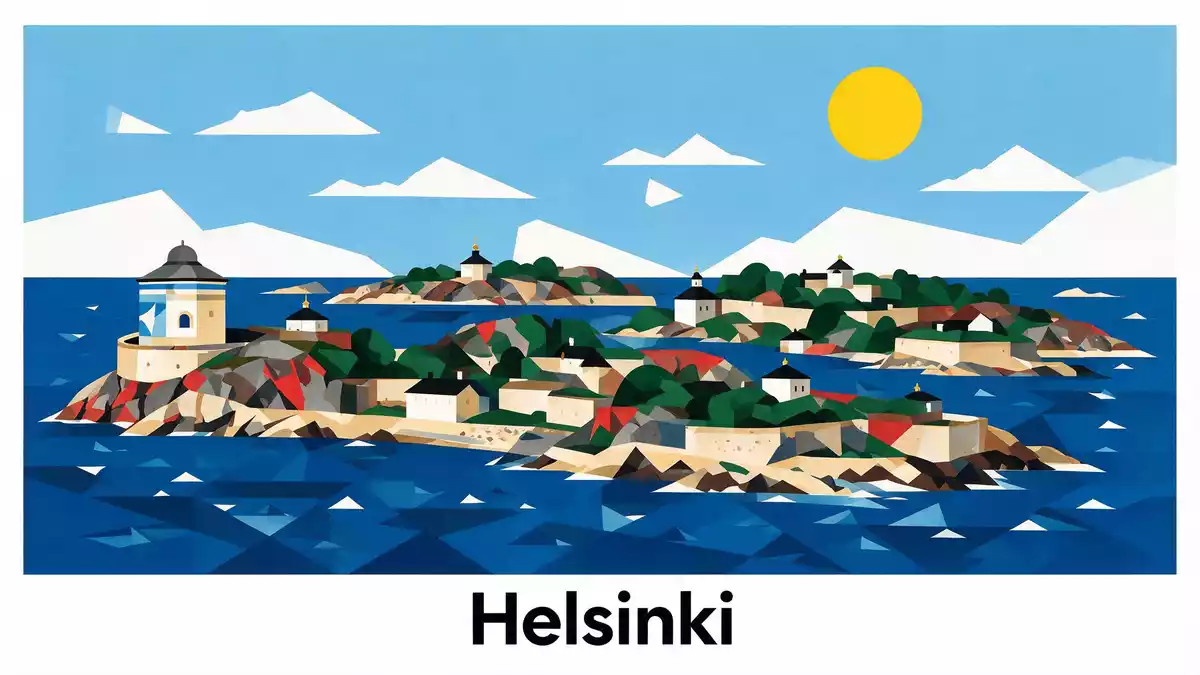
Suomenlinna is a maritime fortress spread across low islands off Helsinki, where eighteenth-century stone ramparts run beside wooden houses and narrow lanes still lived in today. Built from 1748 during the Swedish era and inscribed as a UNESCO World Heritage Site in 1991, it combines heavy bastion walls, dry docks and coastal batteries with a residential district linked to the Finnish capital by boat.
Stone, islands and bastion walls at the edge of Helsinki
Suomenlinna occupies a cluster of islands at the entrance to Helsinki’s harbour, forming a continuous defensive landscape of earthworks, masonry walls and channels cut through the rock.entrance to Helsinki’s harbour The fortress is composed of several islands, of which six are fortified, joined by bridges and causeways that make the whole area feel like one elongated piece of land in the sea.six are fortified
Within roughly 80 hectares of land, more than 200 buildings stand among the ramparts, ranging from barracks and powder magazines to later housing and service structures.about 200 buildings Long stretches of fortress wall, extending for several kilometres, encircle parts of the islands; along them, remaining cannons still face the channels and open water where enemy ships were once expected to appear.remaining cannons
From Sveaborg to Suomenlinna: three centuries of Baltic power
Work on the fortress began in 1748, when Finland formed part of the Kingdom of Sweden and the Baltic coast required a strong maritime defence.Work on the fortress began in 1748 The engineer and officer Augustin Ehrensvärd led the project, creating a bastion system in greystone with an irregular ground plan adapted to the islands and channels.Augustin Ehrensvärd In 1750, the new stronghold received the Swedish name Sveaborg, rendered as Viapori in Finnish, marking it clearly as “Sweden’s fortress” in the eastern Baltic.named Sveaborg in 1750
Over the nineteenth century, Suomenlinna passed from Swedish to Russian control and eventually to independent Finland, carrying layers of military architecture from different rulers in its walls and docks.Kingdom of Sweden, the Russian Empire and the Republic of Finland The fortifications were modernised and raised during the Russian period and damaged by bombardment in the Crimean War of 1855, leaving visible traces in some ramparts and casemates.Crimean War bombardment in 1855 In 1918, after Finland’s independence, the fortress received its present Finnish name, Suomenlinna, and gradually took on a dual identity as both historic monument and inhabited district.renamed Suomenlinna in 1918
A World Heritage fortress that is also a neighbourhood
Suomenlinna was inscribed on the UNESCO World Heritage List in 1991 as an outstanding example of European military architecture of the seventeenth and eighteenth centuries, notably the bastion system stretched across islands.inscribed on the UNESCO World Heritage List in 1991 The site meets criterion (iv) as a type of building and landscape that shows general fortification principles and distinct local features in the way stone, earth and water are combined.criterion (iv)
Beyond its status as heritage, Suomenlinna forms a maritime district of Helsinki where around 800 residents live among former barracks and officers’ houses, giving the islands an everyday rhythm alongside the fortifications.around 800 residents Lawns, courtyards and cobbled paths sit within sight of ramparts and dry docks where warships were once built; museums, cafes and services occupy some of the historic structures, while other spaces remain clearly military in character.
Visiting Suomenlinna: what travellers from Western Europe should know
- Suomenlinna lies on islands off the shore of Helsinki, reached by regular ferries and other boats from the city’s Market Square and nearby quays.
- The terrain combines paved paths, cobbled sections, grassy banks and earth ramparts, with numerous stairways leading up to fortification tops and down to shore batteries.
- Suomenlinna is part of Finland; the official language is Finnish and the currency is the euro.
- Entry requirements depend on your nationality; UK travellers can check the FCDO travel advice at gov.uk/foreign-travel-advice, Irish travellers the Department of Foreign Affairs at ireland.ie.
Searching for Suomenlinna on social platforms
These links open searches for Suomenlinna on each platform.
Frequently asked questions about Suomenlinna
Where is Suomenlinna and what kind of place is it?
Suomenlinna is a historic sea fortress and residential district on several islands off Helsinki, forming part of the city while sitting out in the Baltic waters.
What can visitors expect when walking around Suomenlinna?
Visitors encounter long stone ramparts, earthworks, dry docks and cannons, but also houses, courtyards and everyday services woven into the former military landscape.
What makes Suomenlinna distinctive among European fortresses?
Suomenlinna combines an eighteenth-century bastion system spread across islands with its role as a lived-in neighbourhood, recognised on the UNESCO World Heritage List since 1991.