
Þingvellir National Park hosts archaeology walk on 27 September
Published on 09/27/2026 at 11:30 | Editorial responsibility: Rafael Müller, Editor-in-Chief AD HOC NEWS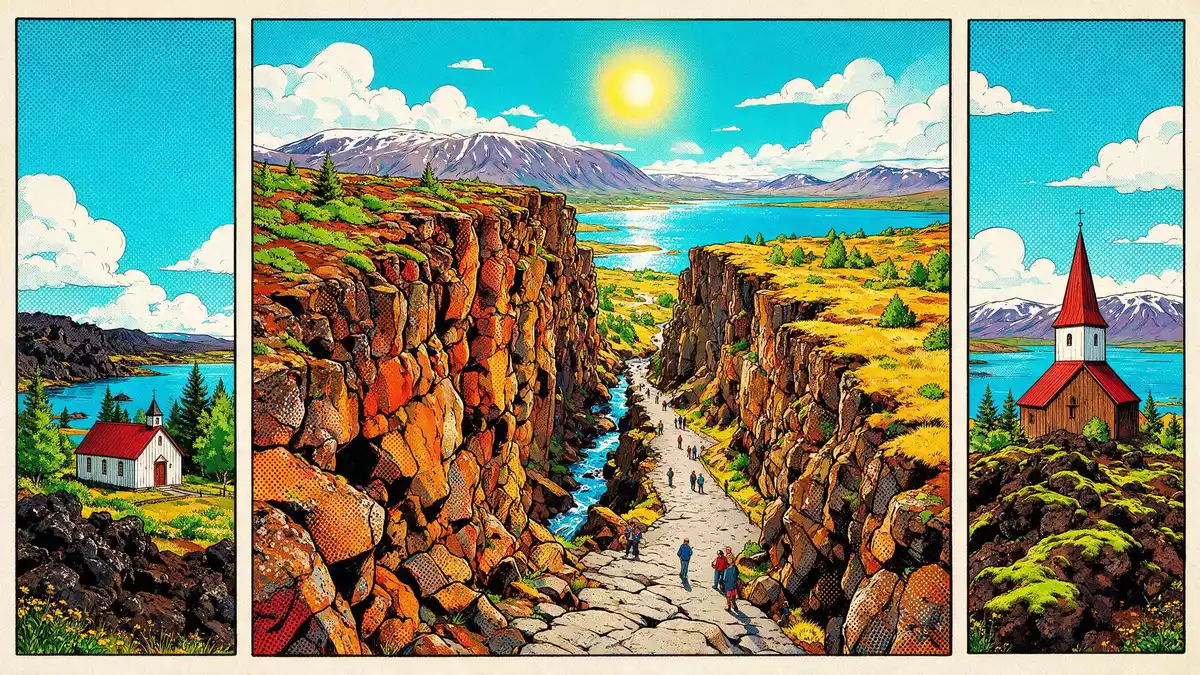
Þingvellir National Park hosts the archaeology walk What story do the archaeological remains of Þingvellir tell? on 27 September 2026 in Iceland. The programme examines archaeological evidence connected with the historic assembly grounds and is led by archaeologist Margrét Hrönn Hallmundsdóttir.
The walk is a current visitor event at one of Iceland’s most important cultural landscapes, with the route linking the Haki visitor centre to the historic centre of the park.
Archaeology walk at Þingvellir begins on 27 September
The event starts at 1pm at the visitor centre at Haki, according to the park’s autumn programme. From there, the walk goes down to the assembly site, continues to Þingvellir Church and reaches the principal booth area associated with the historic gathering.
Hallmundsdóttir will guide the walk through remains that illuminate assembly meetings, settlement and everyday life in earlier periods. The park’s event listing confirms the date, the venue and the archaeological subject, while the seasonal programme identifies the route and starting time.
The programme gives travellers a specific way to encounter the site’s archaeology rather than viewing the landscape only from its main paths. Details of the 27 September event listing are published by the park authority.
Þingvellir’s assembly remains shape the walk
The landscape preserves the setting of Iceland’s Althing, an open-air assembly established at the site in 930. The assembly continued to meet there until 1798, making the archaeological remains relevant to the walk’s focus on law, settlement and public life.
The World Heritage property includes fragments of around 50 booths built from turf and stone, remains thought to date to the tenth century, and evidence of farming from the eighteenth and nineteenth centuries. Þingvellir Church and the adjacent farm are also part of the protected cultural landscape.
The park lies in a rift valley east of Reykjavík, with high cliffs, fissures, lava fields and Lake Þingvallavatn at the southern end. This setting places the archaeological route between the historic assembly ground and the geological features that frame it. UNESCO describes the World Heritage property and its history.
Visiting Þingvellir National Park: what travellers from Western Europe should know
- The archaeology walk takes place on 27 September 2026, beginning at 1pm at the visitor centre at Haki.
- The route leads towards the assembly site, Þingvellir Church and the main booth area; the event therefore concerns the historic core of the park.
- The park is in southern Iceland, east of Reykjavík. The visitor centre at Haki is beside a viewing platform and the path descending into Almannagjá gorge.
- The terrain includes a rift valley, high cliffs, fissures and paths across a historic assembly landscape. Visitors should expect walking on uneven outdoor ground.
- Icelandic is the official language and the national currency is the Icelandic króna.
- Entry requirements depend on your nationality; UK travellers can check the FCDO travel advice at gov.uk/foreign-travel-advice, Irish travellers the Department of Foreign Affairs at ireland.ie.
Searching for Þingvellir National Park on social platforms
These links open searches for Þingvellir National Park on each platform.
Frequently asked questions about Þingvellir National Park
When does the archaeology walk take place at Þingvellir National Park?
What story do the archaeological remains of Þingvellir tell? takes place on 27 September 2026 and begins at 1pm from the visitor centre at Haki.
What is Þingvellir National Park?
It is the Icelandic site where the Althing met from 930 until 1798, with archaeological remains, a rift valley and Lake Þingvallavatn within the protected landscape.
Where is Þingvellir National Park and how do you get there?
The park is east of Reykjavík in Iceland. The event starts at the visitor centre at Haki, beside the viewpoint above Almannagjá gorge.


