
Timbuktu and the earthen mosques of the Sahara
Published on 09/24/2026 at 01:53 | Editorial responsibility: Rafael Müller, Editor-in-Chief AD HOC NEWS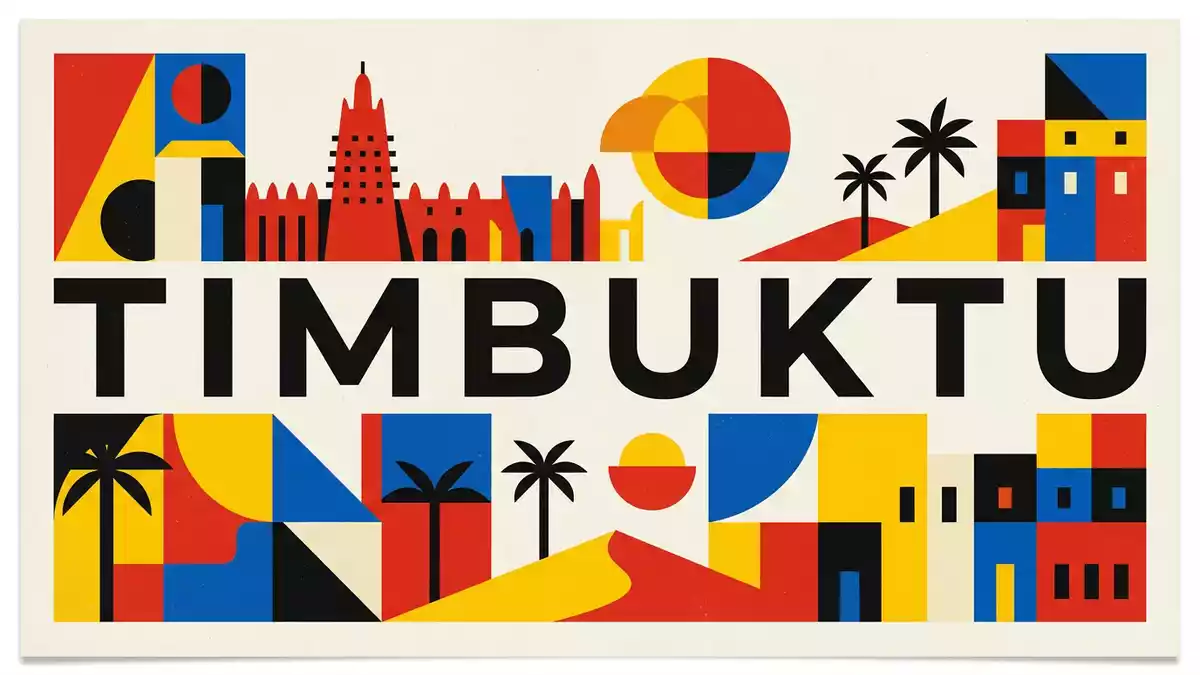
Timbuktu is a city of earthen walls, wooden beams and long intellectual history at the southern edge of the Sahara in Mali. Its mosques and manuscript traditions connect a desert settlement with the caravan routes, Islamic scholarship and empires of West Africa.
Earthen architecture shaped by the Sahara
The historic centre is marked by buildings made from banco, an earthen material used across the Sahel. Timber beams project from several façades, while towers, crenellations and tapered forms give the mosques a strong visual presence.
Djingareyber, Sankore and Sidi Yahia are Timbuktu’s three great mosques. Their forms belong to the Sudano-Sahelian architectural tradition, in which earth, wood and regular communal maintenance are part of the built environment. Timbuktu’s three great mosques recall the city’s period as an intellectual and spiritual centre.
From caravan crossroads to centre of learning
Timbuktu was founded in the fifth century. Its economic and cultural importance grew through trans-Saharan commerce, linking the southern Sahara with routes carrying salt, gold and other goods.
During the fifteenth and sixteenth centuries, the city became a major centre of Islamic learning. Madrasas and mosque-based teaching supported the study of religion, language, law, mathematics, history and astronomy. Timbuktu’s caravan routes connected commerce with the movement of scholars and books across West Africa.
Manuscripts, mausoleums and a living heritage
Libraries in Timbuktu preserve Islamic manuscripts written in Arabic and local scholarly traditions. The collections include works on theology, law, poetry, medicine, science and history, showing the range of learning associated with the city.
Mausoleums and cemeteries form another part of the historic urban landscape. Timbuktu entered the UNESCO World Heritage List in 1988, with its mosques and historic quarters recognised as evidence of the city’s cultural role. Timbuktu’s World Heritage status places its earthen architecture within the wider history of African intellectual and spiritual life.
Visiting Timbuktu: what travellers from Western Europe should know
- Timbuktu lies in central Mali at the southern edge of the Sahara. The city is reached through Mali’s regional transport network, with access shaped by its remote desert setting.
- The historic quarters contain earthen lanes, sandy ground and buildings made from banco. Walking requires attention to uneven surfaces and exposed desert conditions.
- The city’s principal historic landmarks include Djingareyber, Sankore and Sidi Yahia, along with mausoleums, cemeteries and manuscript libraries.
- The official language is French and the currency is the West African CFA franc.
- Entry requirements depend on your nationality; UK travellers can check the FCDO travel advice at gov.uk/foreign-travel-advice, Irish travellers the Department of Foreign Affairs at ireland.ie.
Searching for Timbuktu on social platforms
These links open searches for Timbuktu on each platform.
Frequently asked questions about Timbuktu
Where is Timbuktu?
Timbuktu is in central Mali, at the southern edge of the Sahara. Its location connects the city with the desert environment and historic trans-Saharan routes.
What can visitors expect to see?
Historic earthen mosques, sandy lanes, mausoleums, cemeteries and manuscript libraries form the main cultural landscape. Djingareyber, Sankore and Sidi Yahia are the principal mosque landmarks.
What makes Timbuktu distinctive?
The city combines Sudano-Sahelian earthen architecture with a long history of Islamic scholarship. Its manuscripts and mosques preserve that connection between trade, learning and desert life.


