
Timbuktu’s mosques and desert streets
Published on 09/21/2026 at 09:36 | Editorial responsibility: Rafael Müller, Editor-in-Chief AD HOC NEWS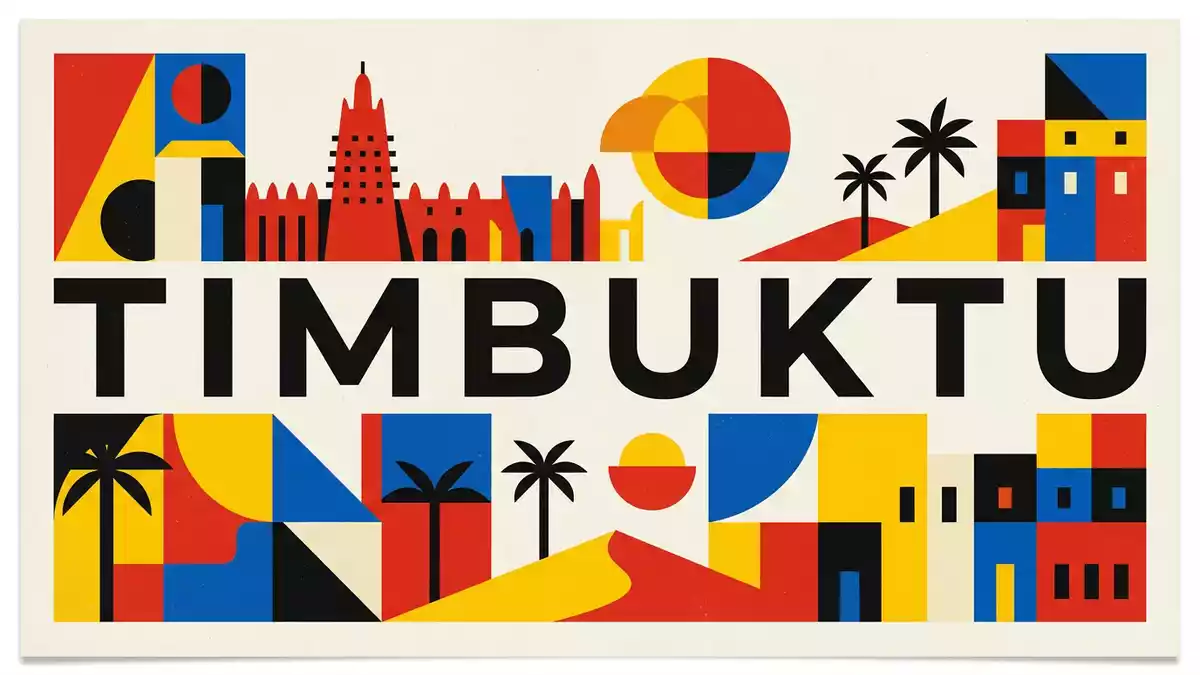
Timbuktu in Mali is a desert city shaped by earth, scholarship and trade. Its historic centre, with its mosques and cemeteries, was inscribed on the World Heritage list in 1988.
Earthen monuments in a desert city
The city’s best-known buildings are the Djingareyber, Sankore and Sidi Yahia mosques, which belong to the historic centre protected by the World Heritage inscription. They are linked to the city’s long reputation as a centre of Islam and learning in the western Sahel.
Their walls are built in banco, the mud-plaster tradition used across the region, and their surfaces are renewed by hand. That material gives the buildings a direct relationship with the climate and with the people who maintain them.
Sankore and the city of manuscripts
Sankore stands out because it is both a mosque and a name associated with teaching. In the fifteenth and sixteenth centuries, Timbuktu was an intellectual and spiritual capital, and Sankore formed part of that world of study and copying.
Manuscripts remain part of the city’s identity, along with the memory of scholars who worked in Arabic and local languages. The heritage designation highlights the mosques as evidence of a cultural and scholarly flowering under the Songhai Empire.
Desert setting and historic fabric
Timbuktu lies near the southern edge of the Sahara, and the city’s low-rise architecture sits within that dry landscape. The setting helps explain the dominance of earthen construction, flat roofs and enclosed compounds across the old town.
The historic centre is not a single monument but a cluster of mosques, cemeteries and urban streets. Its character comes from their proximity to one another and from the continuity of local building forms across the quarter.
Visiting Timbuktu: what travellers from Western Europe should know
- The city is in northern Mali, near the Niger bend and the edge of the Sahara. It is reached by road and by air through Mali’s domestic transport network.
- The historic centre is made up of low earthen buildings and narrow streets. The ground surface and the heat of the region shape movement through the quarter.
- The city’s main historic names are Djingareyber, Sankore and Sidi Yahia. These mosques define the heritage landscape rather than a single isolated landmark.
- The official language is French and the currency is the West African CFA franc.
- Entry requirements depend on your nationality; UK travellers can check the FCDO travel advice at gov.uk/foreign-travel-advice, Irish travellers the Department of Foreign Affairs at ireland.ie.
Searching for Timbuktu on social platforms
These links open searches for Timbuktu on each platform.
Frequently asked questions about Timbuktu
Where is Timbuktu?
Timbuktu is a city in Mali, near the southern edge of the Sahara. It lies in the western Sahel, east of the desert routes that once linked North and West Africa.
What does a visit involve?
The historic quarter centres on earthen mosques, cemeteries and old streets. The place is defined by low mud-brick architecture rather than by a single monumental building.
What makes Timbuktu distinctive?
Timbuktu combines desert urbanism with a strong scholarly tradition. Its mosques and manuscripts link the city to the Songhai period and to centuries of Islamic learning.


