
Times Square at the crossroads of Broadway and bright lights
Published on 09/22/2026 at 00:39 | Editorial responsibility: Rafael Müller, Editor-in-Chief AD HOC NEWS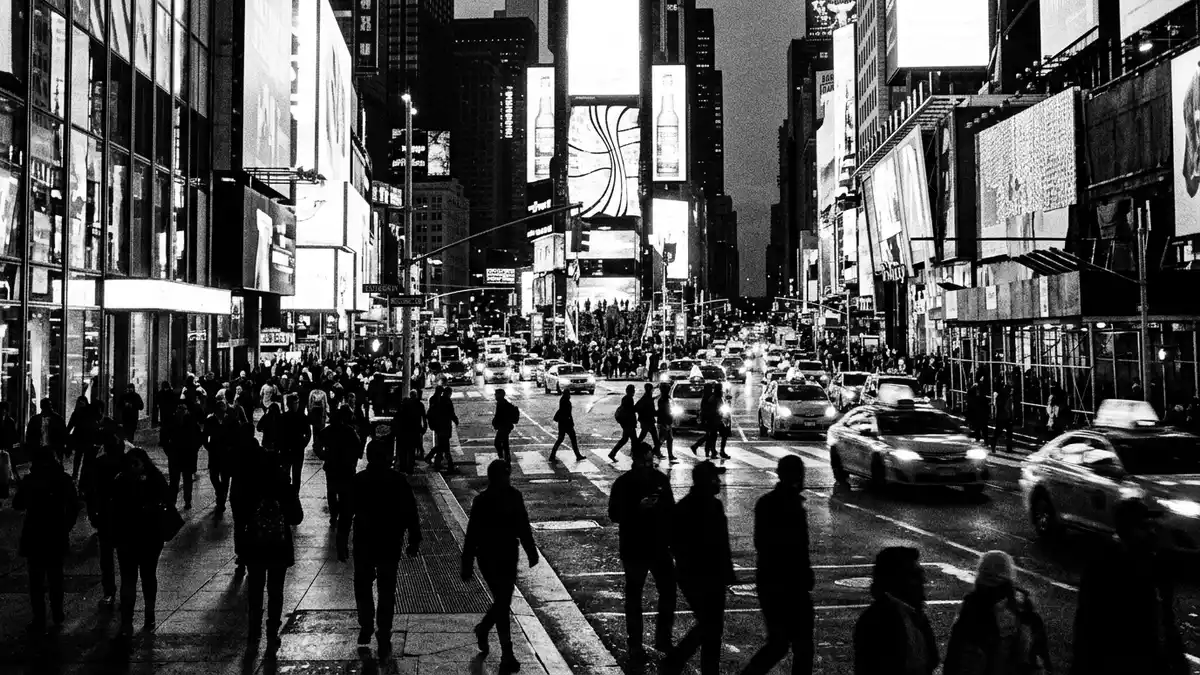
Times Square in New York City is a broad, multi-level junction where Broadway and Seventh Avenue meet around 42nd Street, framed by tall buildings and fields of electric advertising. In the early twentieth century it took its present name from The New York Times and grew into a transport and theatre hub at the western edge of Midtown Manhattan.
From Longacre Square to Times Square
In the nineteenth century the area around Broadway and what became Seventh Avenue was known as Longacre Square, a district named after a carriage quarter in London and associated with horse-related businesses and mixed housing. The change from Longacre Square to Times Square came in 1904, when publisher Adolph Ochs moved The New York Times headquarters into a new tower on the junction and the city formally adopted the newspaper’s name for the square.renamed in 1904 for The New York Times Beneath the surface, a major station of the emerging New York City Subway was created, turning the crossing into an important interchange between lines entering and leaving Midtown Manhattan.Times Square station became a key hub
The twentieth century brought dense development along 42nd Street, with theatres and music halls clustering around the square and hotels rising close to the junction. Strictly speaking, Times Square refers to the point where Broadway, Seventh Avenue and 42nd Street meet, but for many visitors the name covers the surrounding blocks of Midtown’s theatre district, with their mixture of commercial towers and entertainment venues.Broadway, Seventh Avenue and 42nd Street meet Over the decades the area experienced cycles of prosperity and decline, yet the name Times Square remained attached to the intersection and its bright, crowded streets.
The theatre district and electric façades
The streets around Times Square are closely tied to Broadway theatre, with performance venues occupying buildings on and near 42nd Street and giving the district an enduring association with plays and musical productions.Times Square sits in the Theatre District As the twentieth century progressed, cinema houses and live performance spaces shared façades with restaurants and shops, creating a streetscape in which marquees, canopies and entrance halls line both sides of the avenues. Theatres with their lit signs are part of the visual character of the square, especially after dark when their letters and logos contribute to the wider glow of advertising.
Electric signage has long been a defining feature of Times Square. Illuminated advertisements appeared in the early years after the renaming, followed by increasingly large and complex displays using neon and other technologies to cover building fronts with lighted panels.electrified advertising dates from 1904 Standing at street level, visitors are surrounded by towering screens and billboards on the façades that form a canyon above Broadway and Seventh Avenue, with light reflected on glass and stone surfaces. The combination of theatres, office towers and retail units gives the district a layered urban texture, in which older masonry buildings share blocks with more recent high-rise structures.
New Year’s Eve traditions and everyday movement
Times Square is strongly associated with the New Year’s Eve celebration that centres on a tall building long known as One Times Square, the former home of The New York Times. Since 1907 a large illuminated ball has been lowered on a pole at midnight to mark the turn of the year, a ritual followed on site and broadcast widely beyond New York.ball drop tradition began in 1907 The building itself stands close to the meeting point of the avenues, rising above the streets and forming one of the most recognisable vertical elements in the square.
Outside festival nights, Times Square functions as a busy part of Manhattan’s transport network. Multiple subway lines converge beneath the square, and staircases, escalators and corridors link platforms with street-level corners and pedestrian islands.several subway lines converge in the area At the surface, broad pavements and traffic lanes cross at diagonals, and sections of the former roadway have been reallocated to pedestrian space, creating areas with seating and viewpoints along Broadway. The constant movement of people, vehicles and illuminated messages is part of the everyday character of Times Square, and the square’s role as both gathering place and thoroughfare shapes the way the surrounding towers and theatres are experienced.
Visiting Times Square: what travellers from Western Europe should know
- Times Square lies in Midtown Manhattan at the junction of Broadway, Seventh Avenue and 42nd Street, reached easily by multiple New York City Subway lines.
- The streets around the square have wide pavements, kerbs and crossings, and some sections of roadway have been turned into pedestrian zones with seating and stepped areas.
- Times Square sits within the dense grid of Manhattan, with nearby streets leading towards the wider Theatre District and down towards Bryant Park and other Midtown landmarks.
- The official language is English and the currency is the United States dollar.
Searching for Times Square on social platforms
These links open searches for Times Square on each platform.Frequently asked questions about Times Square
Where is Times Square located within New York City?
Times Square lies in Midtown Manhattan at the intersection where Broadway, Seventh Avenue and 42nd Street meet, surrounded by city blocks of the Theatre District.
What can visitors expect when they arrive at Times Square?
Visitors encounter tall buildings lined with theatres, shops and offices, extensive illuminated advertising on façades, busy pavements and multiple subway entrances around the central junction.
What makes Times Square distinctive among New York City’s districts?
Times Square combines its historical link to The New York Times, its dense cluster of Broadway theatres and its large concentration of electric billboards around a major transport interchange.


