
Valle Sagrado de los Incas follows the Urubamba River
Published on 09/22/2026 at 18:01 | Editorial responsibility: Rafael Müller, Editor-in-Chief AD HOC NEWS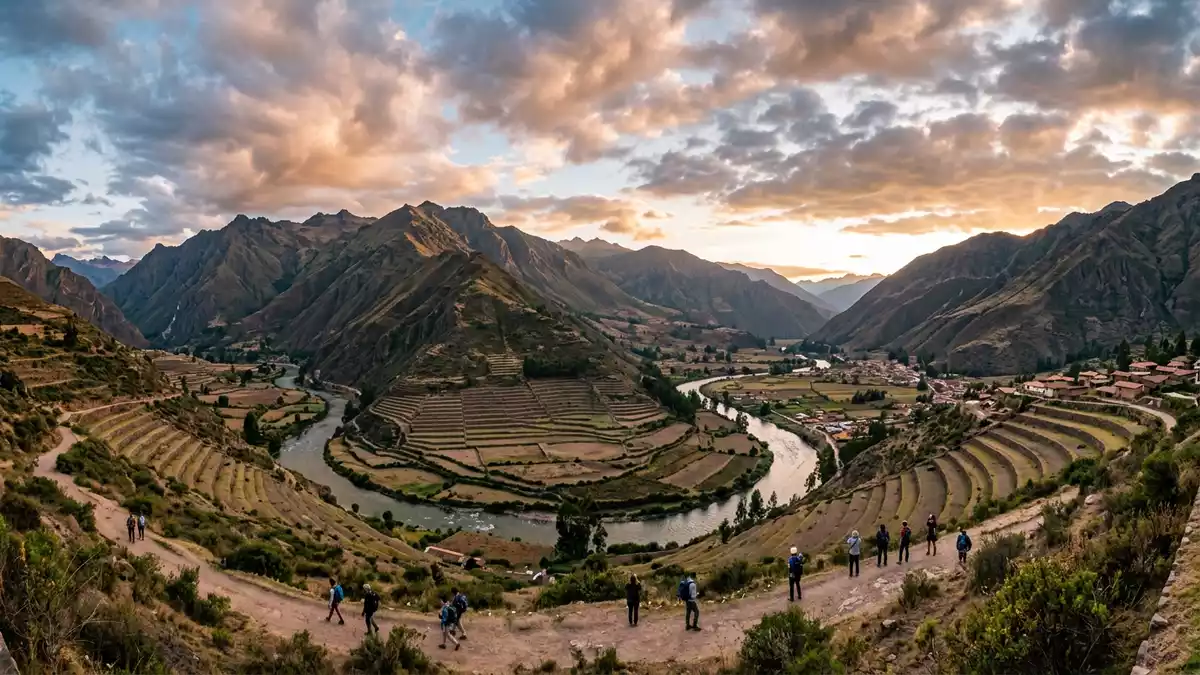
Valle Sagrado de los Incas is an Andean river valley in Peru, centred around Urubamba and shaped by the course of the Urubamba River. Terraced slopes, cultivated valley floors and Inca archaeological sites appear within the same long landscape.
The valley’s visible character comes from this meeting of water, agriculture and stone. Its settlements and ruins extend through the Cusco Region, north of Cusco, with the river known in different stretches as the Vilcanota.
Valle Sagrado de los Incas and the Urubamba River
The Urubamba River runs through the valley before continuing into the wider Amazon drainage system. Its upper course is known as the Vilcanota, a name that remains associated with the river and the surrounding valley. Urubamba River facts place the waterway within southern Peru’s Andes and identify Urubamba among the settled towns along its course.
Valle Sagrado de los Incas is commonly identified with the corridor between Písac and Ollantaytambo, although broader descriptions connect it with the route towards Machu Picchu. Urubamba occupies a central position within the valley, surrounded by steep mountain slopes, cultivated land and smaller settlements.
Terraces, maize and the Inca landscape
Agriculture gives the valley a second visible layer. Fields occupy flatter ground beside the river, while terraces climb the lower slopes in carefully stepped bands. Maize became a major crop in the Inca heartland, and the valley’s fertile soils supported intensive cultivation.
The Inca Empire incorporated the region during its expansion between the eleventh and fifteenth centuries. Earlier communities also lived in the valley, including the Chanapata, Qotacalla and Killke cultures. The Inca period left administrative centres, royal estates, ceremonial places, roads and agricultural terraces across the landscape.
These remains are not gathered into one isolated monument. They appear in relation to villages, farmland and the river corridor. This combination gives the valley its archaeological character as a cultural landscape rather than a single ruin.
Písac and Ollantaytambo in the valley
Písac occupies the eastern side of the familiar valley route. Its Inca remains extend across a mountain ridge above the modern settlement, with terraces and stone structures connected to the slopes. The town below is also associated with craft markets and Quechua cultural life.
Ollantaytambo lies towards the western end of the valley. Its stone terraces rise above the settlement, while the town retains a distinctive grid of narrow lanes and Inca-era foundations. Cuzco’s regional road network links the town with Písac, Urubamba and Chinchero. Cuzco’s valley connections include the settlements and archaeological places that define this part of the Andes.
The valley also belongs to the wider historical setting of the Inca capital at Cusco. Its estates, farming areas and ceremonial sites formed part of an organised highland world that reached from the imperial centre towards the eastern slopes.
Visiting Valle Sagrado de los Incas: what travellers from Western Europe should know
- Valle Sagrado de los Incas lies north of Cusco in Peru’s Cusco Region. Roads connect Cusco with Písac, Urubamba and Ollantaytambo.
- The valley combines river plains with steep mountain slopes. Visits to Písac and Ollantaytambo include uneven stone surfaces, terraces and substantial climbs.
- Urubamba is a practical base within the valley, with the Urubamba River and cultivated land close to the town.
- The official language is Spanish and the currency is the Peruvian sol.
Searching for Valle Sagrado de los Incas on social platforms
These links open searches for Valle Sagrado de los Incas on each platform.
Frequently asked questions about Valle Sagrado de los Incas
Where is Valle Sagrado de los Incas?
It is an Andean valley in Peru’s Cusco Region, north of Cusco and around the Urubamba River. Urubamba is one of its principal settlements.
What can visitors expect in the valley?
The landscape includes river plains, cultivated fields, mountain slopes, stone terraces and archaeological sites. Písac and Ollantaytambo contain prominent Inca remains.
What makes the valley distinctive?
Its distinctive feature is the close relationship between the Urubamba River, agricultural terraces, living settlements and Inca stone architecture.


