
Wadi Al-Hitan and the fossil valley of Fayyum
Published on 09/14/2026 at 16:50 | Editorial responsibility: Rafael Müller, Editor-in-Chief AD HOC NEWS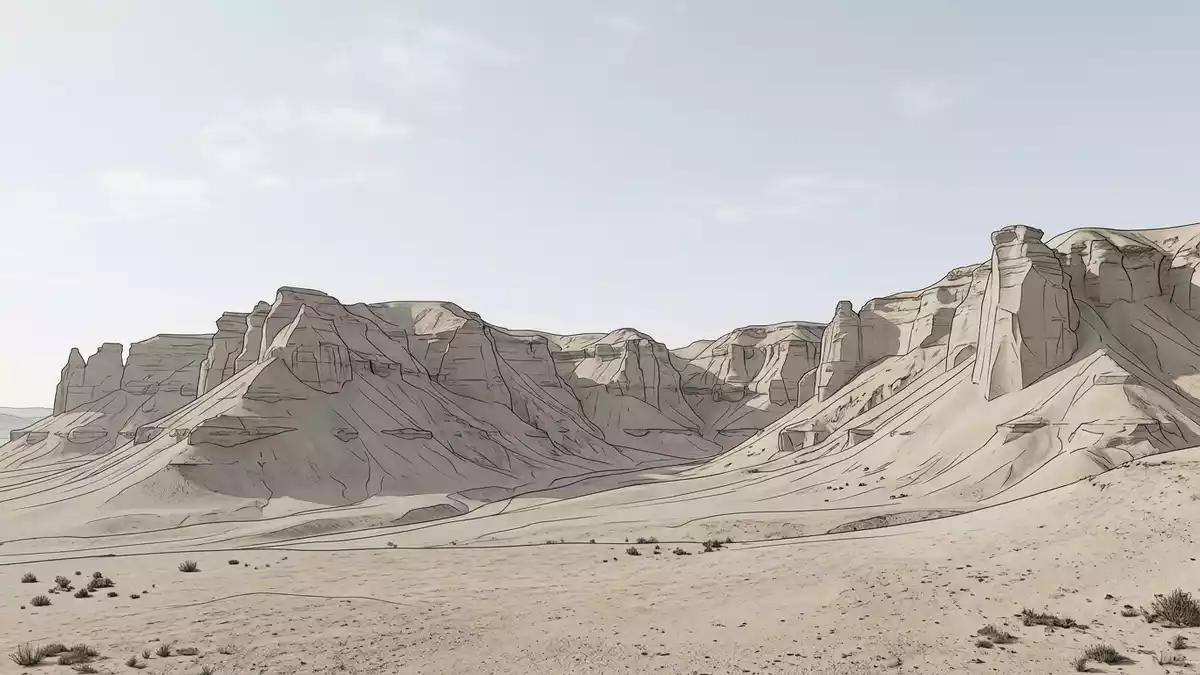
Wadi Al-Hitan in Fayyum is a desert valley of fossils, open ground and exposed rock. Its World Heritage status rests on fossil whale remains, and the site name has travelled well beyond Egypt.
Wadi Al-Hitan’s fossil ground and open desert
The place lies in Egypt’s Western Desert, in the wider Wadi El-Rayan protected landscape. The World Heritage listing dates to 2005, and the name Wadi Al-Hitan means Whale Valley.
The setting is not a museum hall but a paleontological landscape. Rock surfaces, low ridges and weathered beds keep the fossils in view as part of the terrain, rather than separating them from it.
Whales, Archaeoceti and the Eocene record
The core significance of Wadi Al-Hitan lies in the fossil remains of early whales, the extinct Archaeoceti. UNESCO’s listing describes the place as a key record of whale evolution, with fossils preserved in their geological setting.
The strata belong to the Eocene, a named geological period that places the site deep in Earth’s past. That makes the valley a fossil landscape as much as a heritage site, with the ground itself carrying the evidence.
Wadi Al-Hitan is also a named reference point for the wider story of marine life in North Africa. The fossil record includes more than whales, and the valley sits within a desert basin whose exposed beds keep the site legible to the eye.
From valley name to World Heritage landscape
The modern English form Wadi Al-Hitan is paired with the older, descriptive name Whale Valley. The title fits the place without strain: the valley is marked by fossils, not by ruins or monumental architecture.
The site’s status as a World Heritage property gives it a formal place in global heritage mapping. Its appeal for travellers lies in the landscape itself, where the visible fossil ground is the main object of attention.
The most striking thing about Wadi Al-Hitan is that the record is not hidden behind glass. It lies in the open, across a desert valley in Fayyum, and the setting remains part of the story.
Visiting Wadi Al-Hitan: what travellers from Western Europe should know
- The site lies in the Western Desert of Egypt, within the Fayyum area and the Wadi El-Rayan protected landscape.
- The ground is desert terrain with exposed fossil beds and open surfaces; the place is known for paleontological rather than urban walking.
- Wadi Al-Hitan is a World Heritage site inscribed in 2005, and the English name Whale Valley is also used.
- The official language is Arabic and the currency is the Egyptian pound.
Searching for Wadi Al-Hitan on social platforms
These links open searches for Wadi Al-Hitan on each platform.
Frequently asked questions about Wadi Al-Hitan
Where is Wadi Al-Hitan?
Wadi Al-Hitan is in Egypt’s Western Desert, in Fayyum, within the Wadi El-Rayan protected landscape. It is known internationally as Whale Valley.
What does a visit involve?
The place is an open desert fossil landscape rather than a built monument. Expect exposed ground, fossil-bearing strata and a setting shaped by geology.
What makes Wadi Al-Hitan distinctive?
Its UNESCO status is tied to early whale fossils, especially Archaeoceti, preserved in their geological context. The valley is a rare place where a fossil record forms the main landscape feature.


