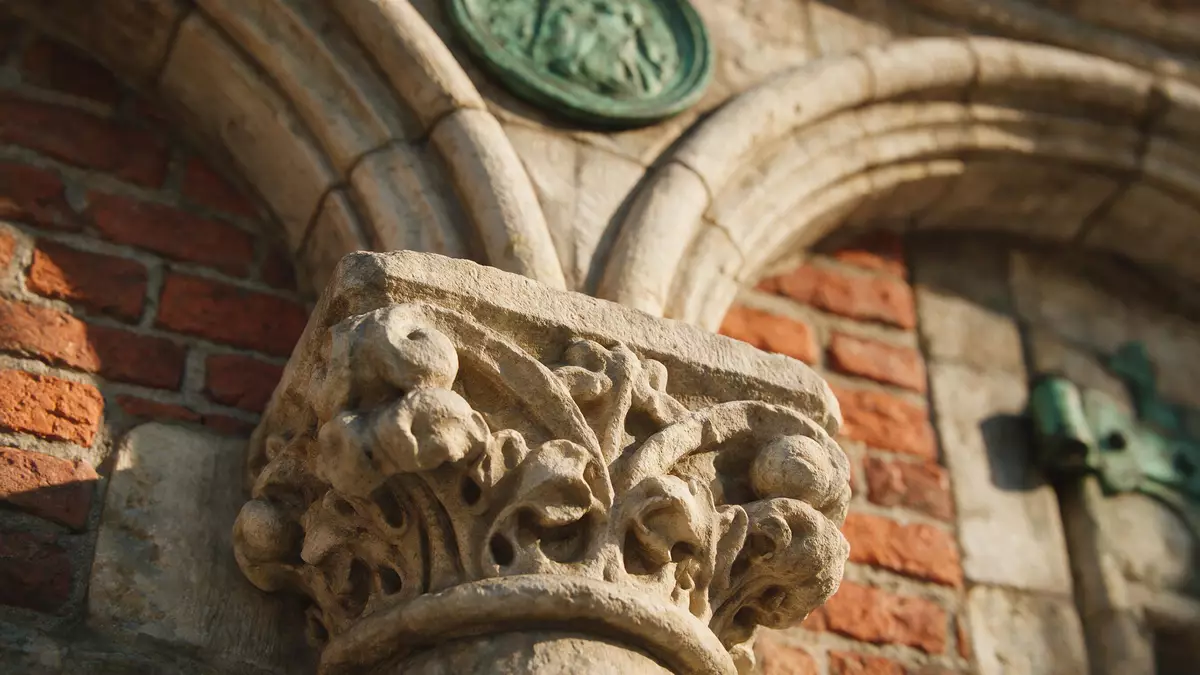
Zamek Krolewski na Wawelu above Krakau's hill
Published on 08/08/2026 at 15:09 | Editorial responsibility: Rafael Müller, Editor-in-Chief AD HOC NEWS
Zamek Krolewski na Wawelu crowns Wawel Hill above the Vistula in Krakau, and the complex combines royal residence, cathedral precinct and defensive masonry in one historic ensemble. Its stones, courtyards and chapels make the hill read as a layered royal site rather than a single palace.
Wawel Hill and the royal residence
The castle’s long association with Polish rulers gives the hill its enduring importance, and the royal apartments sit within a wider complex that includes courtyards, towers and chapels. The residence belongs to the Polish Renaissance in parts of its surviving fabric, while earlier Gothic elements remain visible in the overall setting.
Among the best-known names linked with Wawel is Sigismund I the Old, under whom Renaissance rebuilding gathered force, and the hill also forms part of the wider story of the Jagiellonian dynasty. The result is a place where state power, ceremony and stone architecture occupy the same slope.
Courtyards, towers and the royal chapels
The courtyard gives the clearest first impression: arcaded galleries, pale stone surfaces and a sequence of openings around the inner space. The castle’s towers and enclosing walls add a defensive outline that remains legible even when the visitor focuses on the more ornamental palace fabric.
The Sigismund Chapel in the cathedral complex on Wawel is one of the site’s most celebrated Renaissance interiors, with a distinct dome and a rich decorative programme. Nearby royal burial spaces and chapels extend the sense of the hill as a dynastic centre, not just a former seat of government.
Stone, memory and the hill above the river
Wawel matters as a landscape as much as a monument, because the elevation, the river edge and the clustered buildings work together in a compact historic district. That close setting makes the castle read in sections: walls, roofs, courtyards and church forms appear one after another as the visitor moves around the hill.
The site has long carried national meaning in Poland, and that meaning is visible in the range of architecture concentrated there: medieval, Renaissance and ecclesiastical forms stand close together. The castle therefore rewards a slower look at materials and transitions, from heavy masonry to lighter arcades and chapel decoration.
Visiting Zamek Krolewski na Wawelu: what travellers from Western Europe should know
- The site is in Krakau on Wawel Hill, reached on foot from the city centre and by local transport in the surrounding streets.
- Admission arrangements and opening hours are set by the site's operator and change with the season; the official website is the only binding source.
- Spring and early autumn are often the most comfortable times for a walk up the hill and around the courtyards.
- The approach includes slopes, steps and uneven paving, and the hill setting means some parts require a steady walk.
- Polish is the main local language, card payment is widely used in the city, and some smaller services may prefer cash.
- Entry requirements depend on your nationality. UK travellers should check the FCDO travel advice at gov.uk/foreign-travel-advice; Irish travellers the Department of Foreign Affairs at ireland.ie; EU and EEA citizens their own national foreign ministry.
Searching for Zamek Krolewski na Wawelu on social platforms
These links open searches for Zamek Krolewski na Wawelu on each platform.
Frequently asked questions about Zamek Krolewski na Wawelu
Where is Zamek Krolewski na Wawelu?
It stands on Wawel Hill in Krakau, above the Vistula and close to the historic centre. The hill contains both the royal castle and the cathedral precinct.
What should a visit involve?
A visit usually means walking the hill, crossing courtyards and viewing selected interiors or exterior ranges. The setting rewards attention to stonework, arcades, towers and chapel architecture.
What makes it distinctive?
The castle is distinctive for the way royal residence, cathedral spaces and fortified fabric sit together on one prominent hill. Its Renaissance and medieval layers remain visible in the same complex.