Canada Reaches World Cup Knockouts For First Time After Dramatic Win
29.06.2026 - 15:21:04 | ad-hoc-news.de
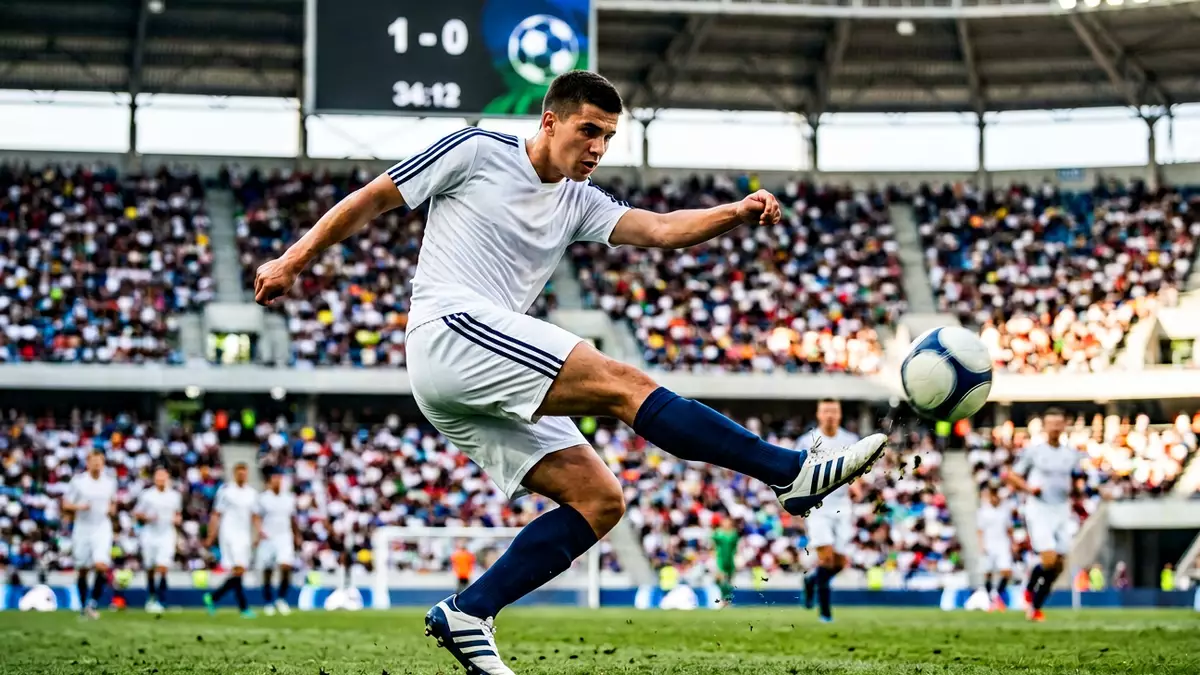
Co-hosts Canada have written a historic new chapter in their soccer story, advancing to the FIFA World Cup 2026 knockout stage for the first time ever thanks to a dramatic stoppage-time winner against South Africa in Los Angeles. The tight Round of 32 contest was decided deep into added time when a stunning volley from midfielder Stephen Eustaquio clinched a 1–0 victory, sending Canadian fans into delirium and confirming the team’s place in the last 16 of the expanded 48-team tournament.
The match, played in front of a raucous crowd at one of the United States’ key World Cup venues, showcased the resilience and growing tactical maturity of a Canadian side that arrived as co-hosts carrying the hopes of a nation eager to see soccer take its place alongside hockey in the country’s sporting hierarchy. Reports from multiple outlets describe a tense encounter in which Canada gradually seized control, with their star full-back and attacking outlet Alphonso Davies again central to their dynamic transitions and pressing game, even as he managed an earlier minor injury setback that had prompted concerns over his availability for the knockout rounds.
South Africa proved stubborn and well-organized throughout the contest, limiting clear-cut chances and relying on disciplined defensive lines and quick counters to trouble Canada. Goalkeepers on both sides were called into meaningful action, but as the second half wore on, the co-hosts increasingly turned the screw, pushing higher up the pitch and committing numbers in search of a breakthrough. The decisive moment arrived in stoppage time when Eustaquio, timing his forward run perfectly, latched onto a loose ball near the edge of the area and unleashed a controlled volley that arrowed past the South African goalkeeper, a finish widely described as one of the most dramatic goals of the tournament so far.
The impact of that goal is far larger than a single result. This victory marks Canada’s first progression into a World Cup knockout stage in men’s soccer, a milestone that has been decades in the making and aligns with broader efforts to expand the sport’s footprint in North America. Coverage of the match emphasizes the emotional scenes that followed the final whistle, as Canadian players, many of them veterans of the team’s qualification journey, celebrated with traveling fans and local supporters who have embraced the co-host narrative of the 2026 edition. For South Africa, whose national team fought through a competitive group to reach the Round of 32, the exit is described as heartbreaking but honorable; coach Hugo Broos reportedly urged his players to take pride in their tournament performance and highlighted the experience gained on the global stage.
On the tactical side, analysts note that Canada’s progression reflects the evolution of its playing style since its previous World Cup appearance. Under the current technical leadership, the team has blended athleticism with a more sophisticated understanding of pressing triggers and build-up patterns, using Davies’ explosive pace, Eustaquio’s distribution, and a well-drilled defensive unit to compete against diverse opposition. The Round of 32 contest against South Africa tested Canada’s patience and game management, forcing them to balance the risk of chasing a late goal with the need to avoid being exposed on the counter. That they secured the winner in stoppage time is seen as evidence of their improved mental strength and fitness, both key aspects for any side hoping to survive the knockout grind in an expanded schedule.
Several reports highlight that Eustaquio’s contribution carries extra resonance because it comes after his own return from injury, underlining the role of squad depth and medical support in modern tournament campaigns. His volley is already being replayed widely across highlight packages and social media, reinforcing his status as one of Canada’s key midfield figures and showcasing the technical quality that has emerged from the country’s player development pipeline. Meanwhile, Davies’ ability to participate effectively despite a recent setback, as mentioned in broader news roundups, reassures Canadian supporters that their talisman remains available for the next phase. Together, these narratives feed into a sense that Canada is no longer simply a plucky outsider but a credible competitor capable of influencing the later stages of the World Cup.
From a psychological perspective, the timing and nature of the winning goal may transform the team’s internal belief. Late winners in knockout football often serve as foundational memories, cementing trust between players and technical staff and giving the group a reference point when future matches become tense. The Canadian locker room, according to match reports, was a scene of jubilant celebration, yet the messaging from coaches and senior players has emphasized the need to quickly refocus on the tactical demands of the last 16. The expanded format of World Cup 2026, with a Round of 32 preceding the traditional Round of 16, adds extra physical and strategic challenges, making recovery cycles, rotation policies, and opponent analysis even more crucial.
For South Africa, the exit at this stage is inevitably painful but not devoid of positives. Their journey through the group phase and into the knockout rounds has been framed by observers as an example of how African teams continue to challenge traditional hierarchies in international football. Broos’ comments about pride and long-term growth fit into a broader narrative in which participation in the later stages of the tournament is seen as a springboard for domestic league development, investment in youth academies, and increased visibility for players seeking opportunities abroad. The narrow nature of the defeat, sealed only in stoppage time by a moment of individual brilliance, reinforces the perception that South Africa can compete with rising mid-tier powers such as Canada.
Canada’s breakthrough also intersects with the wider North American hosting project. As one of three co-hosts alongside the United States and Mexico, Canada entered the tournament under pressure not only to deliver stadiums and local infrastructure but also to field a team capable of engaging domestic audiences in a sustained way. The stoppage-time win over South Africa accomplishes precisely that, giving broadcasters, sponsors, and organizers a compelling storyline anchored in local success. Viewership figures for Canada’s matches are likely to climb as the team moves deeper into the tournament, strengthening the case for continued investment in professional clubs and grassroots programs in Canadian cities.
The historic nature of Canada’s advancement has been widely recognized in global coverage, which often frames the result as emblematic of the changing geography of soccer power. The expanded format of World Cup 2026, with 48 teams and more knockout fixtures, has opened the door for new nations to experience later-stage football. Canada’s progression demonstrates that co-hosting duties can align with competitive performance, countering a historical pattern in which some hosts have struggled once the pressure of home expectations sets in. Analysts suggest that Canada’s strong performance could inspire similar ambitions among other nations in future multi-host tournaments, showing that logistical responsibilities and sporting excellence can coexist.
At the tournament level, the result adds another layer to what has already been described as a World Cup of firsts. Canada’s qualification for the last 16 joins other historic moments, such as DR Congo’s reported end to a 52-year knockout stage drought and the shattering of all-time attendance records mentioned in broader news roundups, as evidence of how the 2026 edition is reshaping historical trends. In a field that includes traditional heavyweights like Brazil, Germany, and the Netherlands, the presence of co-host Canada in the latter stages underscores the increasing parity and unpredictability that fans and broadcasters find so compelling.
The knockout bracket now features Canada awaiting its next opponent, with scheduling placing their last-16 tie later in the week at another marquee North American venue. The path ahead will be more challenging, likely involving teams with deeper tournament experience and greater tactical variety. Yet the psychological advantage of having already won a high-pressure elimination match, particularly via a stoppage-time strike, cannot be understated. Coaches will look to build on the compact defensive shape and rapid wide attacks that proved effective against South Africa, while sports scientists and medical staff concentrate on maintaining fitness levels and managing the workloads of key players like Eustaquio and Davies.
Beyond the immediate sporting implications, Canada’s success carries cultural and political weight. The co-hosting agreement for World Cup 2026 was conceived in part as a regional showcase, and the Canadian government and municipal authorities in host cities have invested in transport upgrades, fan zones, and stadium enhancements with the expectation that soccer would galvanize local communities. A historic knockout-stage appearance provides a powerful narrative for those efforts, validating the infrastructure spending and offering a focal point for public celebrations, from downtown viewing parties to grassroots pitch events in suburbs and smaller towns.
Media coverage has also stressed the diversity of Canada’s squad, reflecting the country’s multicultural demographics and the global pathways of modern player development. Many of the team’s key contributors have backgrounds in European club systems or Major League Soccer, and their success resonates with immigrant communities that have long followed international football while waiting for Canada to stake a stronger claim on the world stage. The South Africa match, with its late drama and emotional resolution, serves as a symbol of that convergence, blending local pride with global football culture in a way that aligns with the broader themes of the 2026 World Cup.
From a commercial perspective, the historic win is likely to boost sponsor interest and merchandising opportunities. Replica jerseys featuring Eustaquio’s name and number may see increased demand following his heroics, while the visibility of Davies and other leaders reinforces their marketability as faces of Canadian soccer. Tournament partners, including broadcasters and apparel manufacturers, are expected to leverage Canada’s continued participation in their marketing campaigns, accentuating the storyline of a host nation on the rise and tapping into the emotional resonance of that stoppage-time volley.
Looking outward, Canada’s achievement feeds into the global discussion about the benefits and challenges of expanding the World Cup. Critics of the 48-team format have expressed concerns about diluted quality and logistical complexity, but moments like Canada’s late winner against South Africa provide tangible evidence that the expanded layout can foster new competitive narratives without losing the intense drama that defines knockout football. The co-hosts’ progression demonstrates that the Round of 32 can generate genuine high-stakes matches, enriching the tournament’s overall tapestry and creating more points of engagement for fans around the world.
In terms of competitive balance, Canada’s rise contributes to a more varied field in the later rounds. Rather than a bracket dominated exclusively by traditional European and South American powers, the last 16 now includes co-host representation alongside resurgent nations and familiar giants. That blend enhances the World Cup’s status as a truly global competition, one in which emerging federations can realistically aspire to meaningful runs if they invest in coaching, player pathways, and sports science. Canada’s example will likely be cited by administrators and technical directors in other countries seeking to chart a similar course.
Attention now shifts to the tactical preparations for Canada’s next opponent. Match analysts expect the coaching staff to carefully review the South Africa game, identifying both the strengths that led to the late breakthrough and the vulnerabilities that could be exploited by more experienced sides. The need to convert territorial dominance into clearer scoring opportunities will be a focus, as will the continued refinement of set-piece routines, which often decide close contests in tournament football. Eustaquio’s striking technique on the winning volley underscores the importance of having players capable of executing under pressure when those opportunities arise.
For neutral fans, Canada’s story adds emotional depth to the World Cup’s knockout phase. The narrative of a co-host nation breaking through historical barriers via a stoppage-time strike is inherently compelling, and it dovetails with other dramatic arcs unfolding elsewhere in the bracket. With traditional favorites confronting their own challenges and surprise packages emerging from less heralded confederations, the presence of Canada in the last 16 reinforces the sense that no single pathway to success exists in this tournament; instead, resilience, tactical clarity, and timely individual brilliance combine to determine who advances.
As the Round of 32 continues with high-profile fixtures featuring Brazil, Germany, and the Netherlands, Canada’s victory stands as a reminder that the World Cup remains fertile ground for new heroes and transformative moments. Eustaquio’s volley joins a long list of iconic goals scored under extreme pressure, while the collective performance of the Canadian team signals that their journey is far from over. The coming days will reveal whether this historic win becomes a stepping stone to an even deeper run or remains a singular highlight in the nation’s soccer history, but its immediate impact on fans, players, and the broader tournament narrative is already unmistakable.
Even as analysts dissect tactics and project potential matchups, the human dimension of Canada’s achievement continues to resonate. For young players watching across Canada—whether in major cities or remote communities—the sight of their national team winning a World Cup knockout game on home soil provides a powerful source of inspiration. Grassroots coaches and local clubs will be eager to harness that energy, translating heightened interest into increased participation and renewed funding. In that sense, the stoppage-time victory over South Africa is not merely a result on a scoreboard; it is a catalyst for long-term growth and a symbol of what sustained investment and collective belief can accomplish.
With the historic win secured, Canada now stands at a crossroads between celebration and focus. The squad must balance the emotional high of their first-ever knockout victory with the practical demands of preparing for elite opposition in the last 16. Whether they go on to challenge for a place in the quarterfinals or beyond, they have already ensured that World Cup 2026 will be remembered in Canada as the tournament that transformed expectations and marked the nation’s true arrival on international soccer’s biggest stage.