Canada’s Historic World Cup Knockout Berth Reshapes 2026 Tournament Narrative
29.06.2026 - 16:20:45 | ad-hoc-news.de
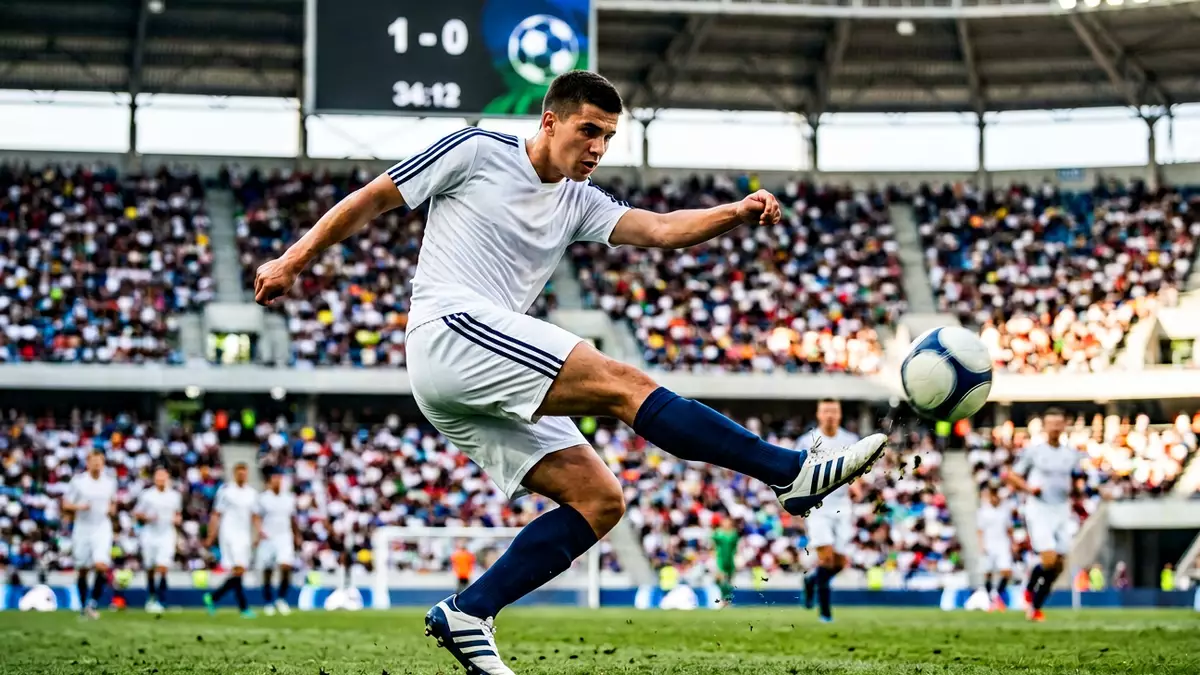
Canada has reached the FIFA World Cup knockouts for the first time in its history, delivering one of the most dramatic moments of the 2026 tournament with a late, stoppage-time winner against South Africa in Los Angeles that sent the co-hosts into the Round of 16 and electrified home crowds across North America. The decisive goal came deep into added time, when midfielder Stephen Eustaquio struck a stunning volley to seal a 1–0 victory and secure Canada’s first-ever place in the men’s World Cup knockout phase. In a match that had seemed destined for a tense, goalless draw, Canada pushed relentlessly in the closing minutes, rewarded by a finish that instantly entered the country’s footballing folklore and underscored the competitive edge of the co-hosts in the expanded 48-team format.
For Canada, a program long regarded as an emerging force rather than an established contender, the breakthrough in Los Angeles represents a tangible payoff for years of investment, infrastructure development, and talent cultivation leading into 2026. Alphonso Davies, the Bayern Munich star who has become the global face of Canadian soccer, played a central role in driving the team forward throughout the group phase, providing the pace, pressing and creative spark that repeatedly unsettled South Africa’s back line and helped set the stage for Eustaquio’s late heroics. While the final moment belonged to the Porto-based midfielder, Davies’s two-way performance reinforced the notion that Canada now has multiple players capable of influencing games at the highest level, a key benchmark for any nation attempting to transition from World Cup participant to serious knockout-stage challenger.
The significance of the win stretches beyond the scoreboard. According to consolidated tournament updates, Canada’s victory over South Africa delivered the country’s first knockout-stage appearance after prior World Cup campaigns ended in the group phase. The result has been framed across international coverage as a turning point that could ‘transform the future of football in the country’, a signal that Canada’s co-hosting role in 2026 is not merely ceremonial but sporting as well. Stadium scenes in Los Angeles captured thousands of Canadian fans celebrating in red and white, a visual that may resonate throughout the competition as supporters in the United States and Mexico respond to the co-hosts’ success and envision their own paths through the newly expanded Round of 32.
South Africa, meanwhile, exits the tournament with a mixture of pride and heartbreak. The team had navigated a demanding group schedule to reach the knockout stage, only to be undone by one moment of quality in stoppage time that turned a resilient defensive display into a narrow defeat. Coach Hugo Broos urged his squad to ‘take pride’ in their overall World Cup performance despite the elimination, emphasizing that their run to the Round of 32 exceeded many external expectations and provided valuable experience against a co-host under intense pressure to deliver. From a tactical perspective, South Africa’s compact structure limited Canada to half-chances for long stretches, but the strain of defending in front of a partisan crowd eventually opened up the space that Canada exploited in the dying seconds.
In the broader context of the 2026 knockout bracket, Canada’s progression adds a fresh storyline to a Round of 32 already featuring heavyweight campaigns from Brazil, Germany and the Netherlands as they chase their own places in the last 16. Canada’s win came as part of a pivotal sequence of knockout fixtures that has also seen DR Congo break a 52-year drought by reaching the knockout stage with a 3–1 victory over Uzbekistan and powerhouses such as England secure top spots in their groups. These developments underscore the blend of traditional favorites and emergent contenders that characterizes the first edition of the 48-team World Cup, where the path to the latter rounds demands consistent performance across an expanded set of opponents.
On a competitive level, Canada’s Round of 16 berth enhances the strategic complexity facing more established football nations. Analysts point to Canada’s pace on the flanks, pressing intensity and improving defensive structure as attributes that can trouble higher-ranked sides, especially in single-elimination scenarios where momentum and crowd energy can amplify tactical advantages. With the knockout stage officially underway and the margin for error reduced to zero, tournament favorites must now account for the possibility of facing a co-host that has already demonstrated resilience under pressure and the ability to convert late chances into historic wins. In that environment, Canada’s achievement is more than a national milestone; it is a competitive variable in a bracket where every path to the final is subject to sudden disruption.
From a North American perspective, the victory feeds directly into the wider narrative of the 2026 World Cup as a catalyst for regional growth in the sport. The presence of high-profile venues across the United States, Canada and Mexico, coupled with packed fan zones and significant public investment in host infrastructure, has been matched on the pitch by tangible progress from at least one co-host. Coverage from tournament digests highlights that Canadian authorities and football stakeholders view this knockout berth as validation for long-term planning, youth development and strategic partnerships with European clubs, all aimed at ensuring that the opportunity to host the World Cup translates into sustainable gains for the domestic game. For a fan base accustomed to supporting the national team through qualifying campaigns rather than deep tournament runs, the prospect of a Round of 16 appearance on home soil represents a new psychological baseline.
In the immediate aftermath of the win, attention shifts to how Canada will manage the physical and mental demands of a compressed knockout schedule. With the Round of 32 giving way rapidly to the Round of 16, recovery protocols, squad rotation and tactical flexibility become crucial elements of the co-hosts’ planning. Reports across the daily World Cup news cycle indicate that teams entering the last 16 are balancing celebration with rigorous preparation, aware that the next match could pit them against an opponent such as Brazil, Germany or the Netherlands, all of whom are playing their own Round of 32 ties as the knockouts intensify. For Canada, maintaining the balance between emotion and discipline will be central to avoiding a letdown after the high of their historic win.
The psychological impact of the stoppage-time victory may also influence the tournament’s broader atmosphere. Late goals have long been a defining feature of World Cup history, and Eustaquio’s volley now joins the catalog of iconic moments that shape perceptions of a particular edition. Supporters, commentators and neutrals often rally around emergent narratives, and in 2026, the idea of a co-host surging into the knockouts through sheer determination aligns neatly with the World Cup’s traditional underdog arcs. In parallel, those same narratives can recalibrate expectations, positioning Canada as a potential spoiler capable of upsetting more established football hierarchies in the rounds to come.
For South Africa, the exit prompts a different kind of reflection. While the defeat is painful, their journey through the tournament demonstrates that teams from outside the traditional power blocs can still carve meaningful roles in the expanded format. The competitive experience gained in facing a co-host in front of a partisan crowd, along with the tactical lessons learned from holding their own for nearly an entire knockout match, may contribute to longer-term development as the federation looks ahead to future continental and global campaigns. In a World Cup where the sheer number of matches has increased, each eliminated side leaves behind data points and strategic insights that can influence how they approach subsequent cycles.
As the knockout stage continues, Canada’s advancement serves as both a milestone and an invitation. For the host region, it invites more fans into the stadiums and fan zones, amplifying the local atmosphere that FIFA has highlighted as one of the key reasons for awarding the 2026 tournament to three North American nations. For the global audience, it invites a recalibration of how World Cup narratives are constructed, foregrounding not only the traditional giants but also the co-hosts whose success helps justify the logistical and commercial scale of the modern competition. In that sense, Canada’s stoppage-time winner against South Africa is not merely one match-winning moment but a pivot point in the evolving story of World Cup 2026.
With more Round of 32 fixtures on the docket, including high-stakes clashes involving Brazil, Germany and the Netherlands against Japan, Paraguay and Morocco respectively, the stage is set for further twists that could reshape the bracket again. Yet for now, Canada’s breakthrough stands out as the defining narrative of the current phase: a co-host breaking through historical barriers, energizing home support, and forcing the rest of the field to reconsider the dynamics of a World Cup being played across an entire continent. As the last 16 takes form, all eyes will be on whether Canada can extend its run and deepen the impression that 2026 is not just a tournament being hosted by North America, but one being actively shaped by its teams on the pitch.